
Nine Industrial Jobs Hemp Already Performs While Congress Splits the Intoxicating Cannabinoid Deadline
Unveiling the Underrated Benefits of Industrial Hemp: Insights Corporate Media Frequently Overlooks

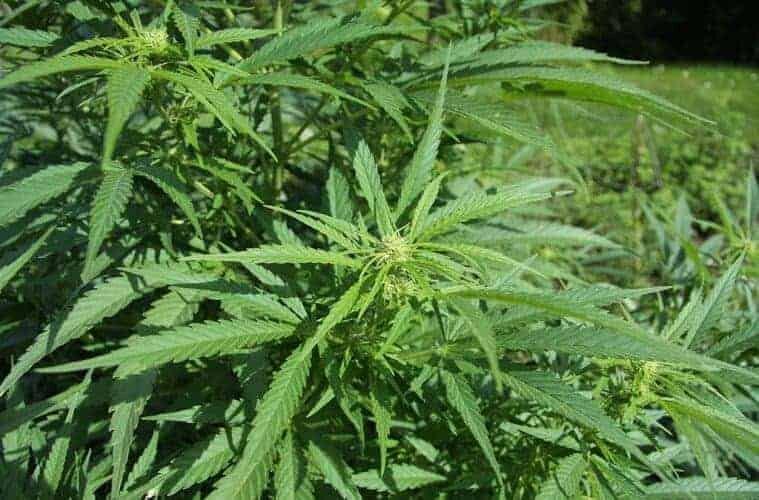
Hemp already had a job before anyone bottled it. On September 2, 2026, the President signed H.R. 6500, now Public Law 119-103. Section 2019 does not repeal the hemp rewrite Congress passed the previous November. It splits the clock.
That rewrite is Section 781 of Public Law 119-37, signed November 12, 2025, and written to take effect one year later. Under the 2018 Farm Bill, hemp meant Cannabis sativa L. with no more than 0.3 percent delta-9 THC on a dry-weight basis. Flower rich in THCA could be sold as hemp because the acid had not yet become delta-9. Chemists converted CBD into delta-8. Processors treated a drafting choice like a business model.
Section 781 closes the door in several places at once. Hemp becomes a total-THC crop: delta-9 plus THCA, still capped at 0.3 percent dry weight. Finished cannabinoid products are capped at 0.4 milligrams of total THC per container. Cannabinoids the plant cannot make, and cannabinoids synthesized outside the plant, fall out of the definition. What the statute keeps is industrial hemp: the stalk, whole grain, oil, cake, nut, hull, and other non-cannabinoid seed derivatives, plus fiber and research material that never enters a cannabinoid shop. The Congressional Research Service described that structure in an August 17, 2026, In Focus, IF13136, while November 12 was still the headline date.
Public Law 119-103 moves most of those changes to December 11, 2026. The Senate passed the resolution on August 8 by 90 to 6, after tabling Senator Ted Budd’s amendment to strip the delay, 61 to 32. The House agreed on September 1 by 370 to 48. The delay is not a pardon. Cannabinoids the plant is not capable of producing naturally are still set to lose hemp status on November 12. The total-THC test, the 0.4-milligram cap, and the exclusion for compounds that can occur in the plant but were manufactured outside it ride with December. Illinois had already written the older date into state law. On June 12, 2026, Governor JB Pritzker signed a hemp act that repeals the old industrial statute on November 12. State clocks and the federal clock are no longer the same day.
None of that is a secret about the crop. It is a fight over a retail shelf. The nine jobs below are the part of the plant Section 781 tried to protect, and they were never waiting on a gummy.
1. Fuel that a farm can grow
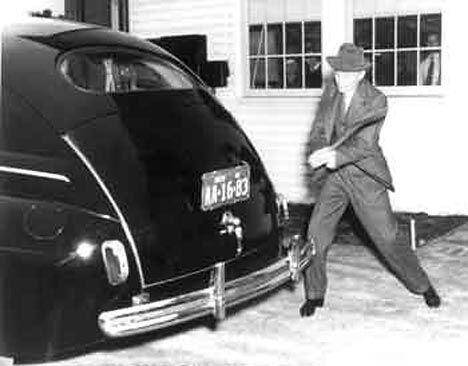
Hempseed oil can be transesterified into biodiesel. Cellulose in the stalk can be fermented toward ethanol. Neither path has displaced petroleum. The useful fact is agronomic: the crop finishes in a season, and the seed and the stalk are different products from the same harvest. Henry Ford’s 1941 prototype is usually remembered as a hemp car. It was an agricultural-fiber experiment, with hemp among the plant materials his labs tried in body panels, not a production vehicle. The oil century buried the prototype. It did not erase the chemistry.
2. Carbon for storing electricity
The hurd left after fiber is pulled is not trash. In 2014, David Mitlin’s group turned hemp bast into carbon nanosheets for supercapacitors, in the neighborhood of graphene, from a feedstock that does not begin in a graphite mine. A May 2026 paper in Biomass and Bioenergy went after the waste stream: nitrogen-and-sulfur-doped carbon from hemp cores, with pyroligneous acid from the same biomass as the electrolyte. The best electrode, AC700-NS10, had 1,662.6 square meters of surface per gram. With that electrolyte it reached 762 farads per gram and 105.8 watt-hours per kilogram, holding 67 percent of its capacitance after 10,000 cycles. A lab cell, not a car battery. The waste of a fiber mill is an electrode recipe, and it still has to beat cheap lithium packs, the market The AEGIS Alliance covered here.
3. Walls that cure by breathing carbon dioxide
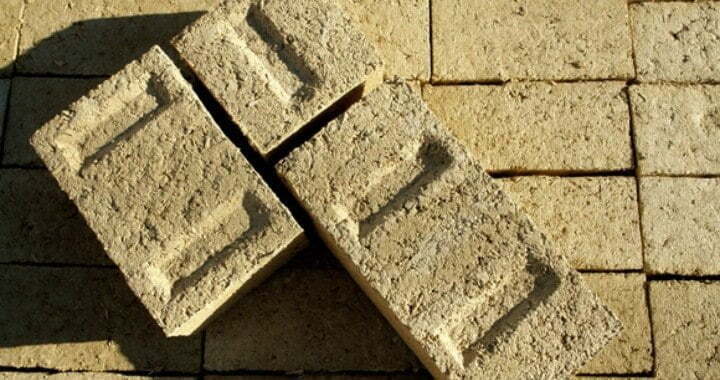
Hempcrete is hurd, a lime binder, and water. It is not structural concrete. A wall still needs a frame. What the mix does, and what French and British builders have specified for decades, is insulate, buffer moisture, and avoid the mold trap of a plastic vapor barrier over fiberglass. As the lime cures it carbonates, pulling carbon dioxide out of the air and locking it in the wall. A review published May 6, 2026, in Innovative Infrastructure Solutions went through newer binders, fiber reinforcement, and the awkward truth in the life-cycle studies: burn the leftover biomass and most of the field-captured carbon comes back. Leave it in a wall for the life of a house and the arithmetic changes. American building codes are still catching up to a material Europe already uses.
4. Feed, but not for the cow in the picture
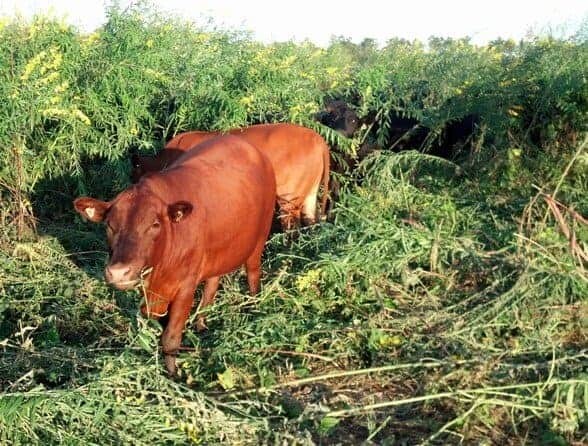
Hempseed is dense in protein and in omega-3 and omega-6 fats. The door that actually opened is narrower than a pasture. On August 7, 2024, the Association of American Feed Control Officials approved an ingredient definition for hempseed meal in laying-hen diets, after review with the FDA’s Center for Veterinary Medicine. The definition later made the AAFCO Official Publication. Minnesota, among the first states to allow it, caps the meal at 20 percent of the ration and follows FDA limits of 2 parts per million THC and 20 parts per million CBD. Cattle, the animal most people picture, are not the approved species. AAFCO’s vote is not a national permit. Feed companies still register state by state. The science moved. The co-op counter did not move with it.
5. Paper that does not begin with a clear-cut
Hemp bast is a long fiber, and an acre of it can outproduce an acre of trees on pulp in a single season. Trade sheets often say the fiber can be recycled on the order of seven or eight times, against about three for typical wood pulp. Treat that as an industry estimate, not a federal standard. Rag paper in early modern Europe was routinely made from hemp and flax, which is why monastery records and some printed Bibles share a crop. Early American documents were often set on that same rag stock. The cleaner claim is not that one famous parchment was a hemp billboard. It is that a republic that needed durable paper already knew the plant, and then spent the twentieth century pulping forests.
6. A seed the FDA already cleared for the table
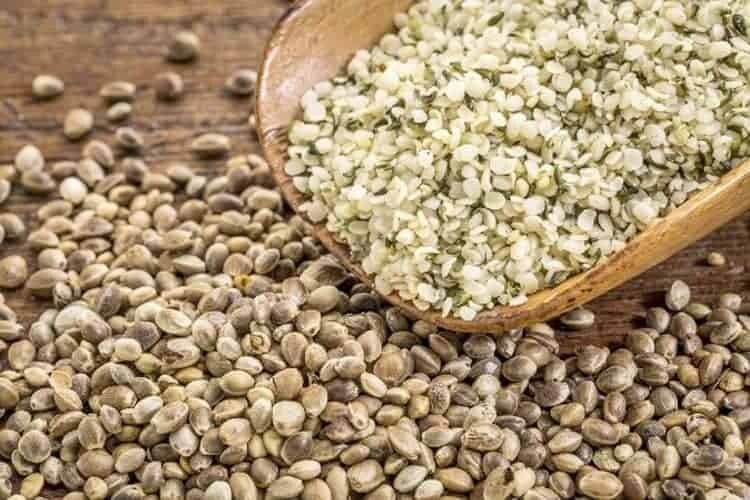
On December 20, 2018, the FDA said it had no questions about three GRAS notices from Fresh Hemp Foods: hulled hemp seed, hempseed protein powder, and hempseed oil. The seeds carry only trace cannabinoids from harvest and processing. They do not intoxicate. Shelled hearts supply all nine essential amino acids, and the oil is a cooking fat in countries that never scheduled the plant. The GRAS letters are public. The smoothie marketing came later.
7. Cloth that gave canvas its name
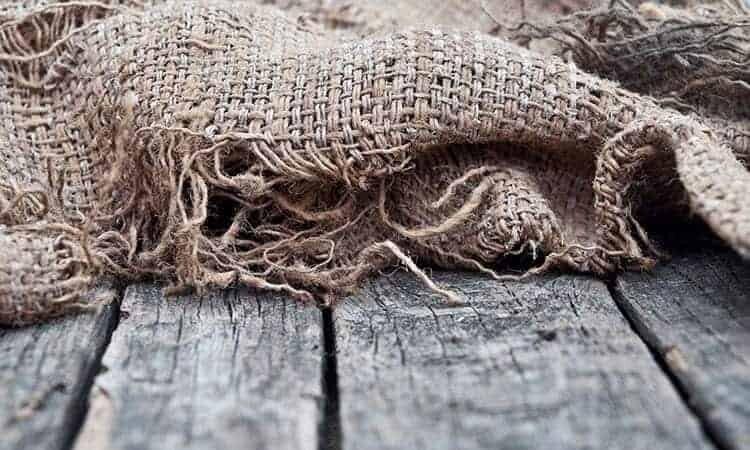
The word canvas comes down from cannabis. Sailcloth, rope, and workwear were hemp jobs because the bast fiber is long, strong when wet, and slower to rot than many plant yarns. Cotton drinks more water for a softer hand. Hemp does not replace every T-shirt. It does replace cordage industrial societies used to import, before nylon and before the plant was policed as if it were the flower. A field of it still looks, to a deputy who has not been briefed, like a grow. The AEGIS Alliance has reported on the busts that turned out to be hemp.
8. Dirt that needs a crop, not a speech

Hemp will take up metals. Experimental plantings near Chernobyl in the 1990s were studied for radionuclide uptake, which is not the same thing as saying the plant cleaned the exclusion zone. Later work has tracked cadmium, lead, and nickel in hemp tissue on contaminated ground. Biomass that has pulled metals out of a field cannot become food, feed, or a clean building product. Phytoremediation is a disposal problem with leaves. Done honestly, it is one of the few crops that can pay part of its way while a brownfield is still too dirty for vegetables.
9. Plastics that start as a harvest
The outer fiber and the inner hurd both show up in biocomposites: automotive panels, packaging, and cladding that would otherwise begin as a barrel. Ford’s body panel was the press photograph. The modern version is a specification sheet. Hemp does not make the polymer industry optional. It gives a manufacturer a fiber that regrows in months and does not require the intoxicating flower at all. That last point is the one the statute finally says out loud.
December 11 will redraw the cannabinoid shelf if Congress does not move the date again. November 12 still matters for compounds the plant cannot make. Fiber, grain, hurd, seed oil, and the meal that hens are finally allowed to eat were carved in on purpose. The crop’s older résumé never needed a gummy to be news.
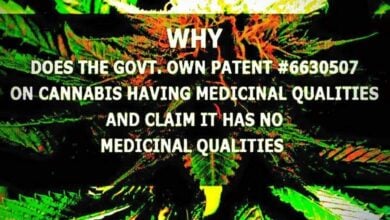
The federal government patented cannabinoids as medicine while listing the plant in Schedule I. That contradiction is spelled out in the record of U.S. Patent 6,630,507. What CBD has and has not done for opioid craving is a separate argument, covered here. The chemistry majors training on the legal plant are at Northern Michigan University. More reporting sits in environment, science, and health coverage from The AEGIS Alliance.



Our vehicle is already an raging alcoholic, sucks down e85 likes it’s water. If I introduce weed fuel she’ll never leave the house because she’s paranoid
Garrett Burrows Nice to meet you here, please send me a friend request.
Thanks for sharing
True.
HỖ TRỢ VAY VỐN TOÀN QUỐC Ai đang có nhu cầu vay vốn, đang vướng nợ xấu,nợ chú ý Liên Hệ ZALO: 0988.553.120 – 0988.553.120 để được tư vấn làm hồ sơ đăng ký khoản vay từ 20-300tr
Look up Henry Ford hemp car 🤐
My Tahoe is already a alcoholic, some hemp fuel might sober it up