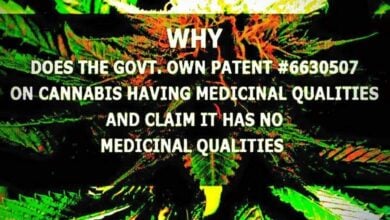
The United States Government Patented Cannabis as Medicine and Then Kept the Plant on Schedule I

The federal government has spent decades telling Americans that cannabis has “no currently accepted medical use.” It has also spent decades owning a patent that says the opposite.
U.S. Patent 6,630,507, titled “Cannabinoids as antioxidants and neuroprotectants,” was issued on October 7, 2003, and assigned to the Department of Health and Human Services. The inventors, Aidan Hampson, Julius Axelrod, and Maurizio Grimaldi, working out of the National Institute of Mental Health, described cannabinoids as useful against oxidative damage in the brain, including in ischemic stroke, Alzheimer’s disease, and Parkinson’s disease. The grant is still sitting in the USPTO record. The National Cancer Institute’s PDQ summary on cannabis and cannabinoids has, for years, catalogued the same medical literature the patent was built on. That is not a footnote. That is the state talking out of both sides of its mouth: Schedule I in the criminal code, neuroprotectant in the patent office.
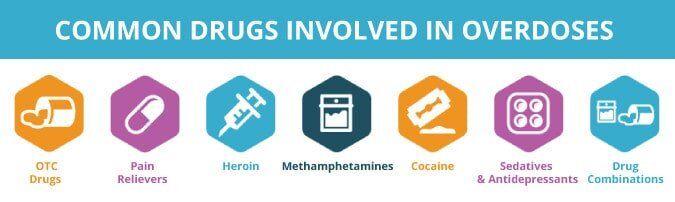
Mexico’s courts treated adult-use cannabis as a rights question. Canada legalized nationwide in 2018. The United States kept the plant beside heroin on the federal schedule while states built medical and adult-use markets around the prohibition. The death tables never matched the classification. Alcohol, prescription opioids, and ordinary over-the-counter drugs fill the overdose counts. Cannabis does not. A substitution pattern that clinicians and reformers have described for years, patients dropping pills, alcohol, and street drugs once they had a legal supply, is exactly the market threat that made Schedule I so useful to anyone selling a molecule with a patent of their own.
The schedule finally moved, and then it stalled in the way Washington stalls a file it does not want to finish. President Biden ordered a scientific review in 2022. HHS recommended Schedule III in 2023. DEA published a proposed rule in 2024. On December 18, 2025, President Trump signed an executive order aimed at expanding medical marijuana and cannabidiol research. On April 23, 2026, Acting Attorney General Todd Blanche issued an order immediately placing FDA-approved marijuana products, and state-licensed medical marijuana products, into Schedule III. DEA set an expedited hearing on the larger question: whether marijuana as a whole, not just those two buckets, should move with them.
That hearing ran from June 29 to July 15, 2026, at the DEA facility in Arlington, Virginia, before Chief Administrative Law Judge Derek Julius. The agency came in as the proponent of Schedule III. The seven “interested persons” it seated as parties all opposed the move. NORML and other reform groups were told they had not shown they were “adversely affected.” NORML’s answer was the obvious one. It wants the plant off Schedule I entirely, under a cannabis-specific statute, so a half-step to Schedule III does aggrieve its members. Julius declined to reopen the participant list. The room was therefore a hearing about medical acceptance in which the people who have spent decades arguing for medical acceptance were largely locked outside, and the people seated at the table were there to keep the old classification.
Inside the room, government attorneys argued that cannabis has a currently accepted medical use for pain, nausea, and anorexia, that millions of patients already use it under state programs, and that its risks line up with substances already sitting in less restrictive schedules. One government attorney, James Schwartz, said the part the patent had been saying since 2003: cannabis can no longer remain in Schedule I. Opponents leaned on impaired driving, youth access, and the claim that a Schedule III label would be read as a federal blessing. Post-hearing briefs were due August 17, 2026. On August 21, Julius ordered 294 mostly technical corrections to a 2,533-page transcript and said the cleaned record would be posted. By August 26 the cleaned record was live on DEA.gov. DEA’s own closing ask was that Julius “expeditiously recommend” a move from Schedule I to Schedule III.
Then a report that does not evaluate cannabis became the reason the recommendation did not arrive.
On September 23, 2026, the Government Accountability Office published GAO-26-108623, a review of how DEA and FDA schedule drugs. Of 95 substances the auditors looked at across six calendar years, DEA’s final decision matched the HHS recommendation for all 84 substances that had a final rule by December 31, 2025. The other 11 were still under temporary orders. The auditors also found gaps. DEA does not have written policies that spell out roles, responsibilities, and procedures for the scheduling work, including how staff collect data, how they handle new-drug scheduling, and how they weigh an HHS recommendation. FDA does not have procedures that tell its own scientists how to run an eight-factor analysis or how to judge “potential for abuse.” GAO’s worry is continuity. When the process lives in people’s heads, it walks out the door when they do. The report mentions marijuana. It does not conduct a cannabis-specific eight-factor analysis, it makes no finding on accepted medical use, and it recommends nothing about where the plant belongs. Its three recommendations are bureaucratic: DEA write the policies, FDA write the policies, and FDA and NIH update a memorandum of understanding. The agencies concurred.
Three of the seven outside parties, the National Drug and Alcohol Screening Association, DUID Victim Voices, and Dr. Kenneth Finn, asked Julius to add that report to the hearing record, to allow more briefing, and to hold his recommended decision until the briefing was done. On September 29, 2026, he stayed the case. His order says that if the record were expanded to include the GAO report, a pause for briefing would be warranted, and that a pause is warranted while he decides whether to expand the record at all. He gave DEA until October 13, 2026, to respond, in no more than 20 pages. The other parties may answer by the same date. They do not have to. Until that Tuesday, the only remaining step anyone was waiting on was Julius’s recommendation to the DEA administrator.
The stay is a pause in a hearing. It is not a scientific finding, and it is not a return of the plant to a world in which HHS never filed 6,630,507. It also does not, by itself, unwind the April 23 order that moved FDA-approved products and state-licensed medical products into Schedule III. Anti-rescheduling groups have asked courts to freeze that order separately. Schedule III, even if the administrator eventually adopts it for marijuana as a whole, is not descheduling. It would ease research and the punitive tax treatment under section 280E. It would not, on its own, turn a state dispensary into a federally legal storefront, and it would not vacate the prosecutions of people still charged for the same plant the patent office has treated as medicine since 2003.
Traders spent September 30 treating the stay as a crash in cannabis equities, which tells you who was betting on a signature and who was reading the docket. A procedural motion about missing paperwork is not a discovery that cannabinoids stopped being antioxidants. Julius has not recommended anything yet. The administrator has not signed a final rule on the whole plant. The patent has not been withdrawn. The contradiction The AEGIS Alliance has pointed at for years is still the contradiction: a government that filed 6,630,507 and then kept the plant on Schedule I was never confused about the chemistry. It was protecting a classification.

The industrial cousin of the same plant, fuel, hempcrete, feed, and fabric, is covered in our report on nine uses for hemp the mainstream press still undersells. The opioid-craving research sits in the CBD trial that tested cannabis against addiction. For how Washington shields other monopolies while calling the audit dangerous, see the senators who voted against auditing the Federal Reserve. More of this beat is in Health News from The AEGIS Alliance.









“The Emperor wears NO clothes”… Jack HererMedia: https://l.facebook.com/l.php?u=https%3A%2F%2Fmedia0.giphy.com%2Fmedia%2F10Jpr9KSaXLchW%2Fgiphy.gif%3Fcid%3D120c0147zv5r2uhb13ey2zzkucjnrgr3mbselc3iicoh97kv%26ep%3Dv1_gifs_search%26rid%3Dgiphy.gif%26ct%3Dg&h=AT3OJyp2bg4S4bC_D2cQIDJAqAINtS4bOi3IHqAu7d21m4S0djR2sPkzUGAwiINN7XOy5KiWSONzP9iI9yu8SN0AgknMI5Flfn_nP8bTOWdZ5_pB2cdR_kU2XAlTrouo&s=1
To prevent others from developing medicines from cannabis. The us government is a corrupt institution, beholden to its corporate and zionist enablers.
TBG – Bilderberg Music https://youtu.be/XoiXc2gr8mM?si=2qAZnZmwxMcSV0Ql
Because they are still controlled by Big Tobacco !!
The Green Revolution
https://fb.watch/dOrZEpPaVK/
All about the $
There just a drug dealer that has no clue to what there doing , I need pure oil for my condition and flower, but it has costed me since 2021 Jan thousands of dollars to figure out what there selling , and the amount of oil is so small to buy , I can’t afford it ,, if I could make my own it would be much cheaper and , look at Willie Nelson , he’s smoked forever lol. Thank you for sharing