The Rifles on a Sussex County Sedan Were Not the Gun Byram Township Police Later Charged

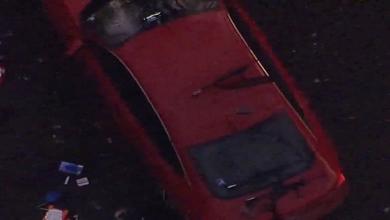
The picture that left Sussex County was a red sedan in the trees with long guns fixed to the body of the car. NBC New York’s Chopper 4 put that frame on television on January 13, 2025, and national desks wrote the caption before the prosecutor wrote the charges. “Assault rifles mounted on a car” is a sentence that travels. The charging sheet that arrived four days later was a different sentence. It named a 9mm pistol, hollow-point ammunition, and a woman who was shot once by an officer and lived.
The AEGIS Alliance is going to hold both records in the same article without letting the helicopter still veto the affidavit. Byram Township police shot Rachael Noviskey, 31, during an armed encounter near a Boy Scout reservation. She was charged. A second prosecutor’s office was assigned to examine the police gunfire. The public still does not have a released body-camera video, an inventory of every object on that sedan, or a widely published end to the use-of-force review. What it does have is a lesson in how the first hour of a police shooting becomes the story, and how New Jersey’s argument over rifles kept moving in federal court long after the sedan was towed.
The afternoon in the woods, according to the people who fired
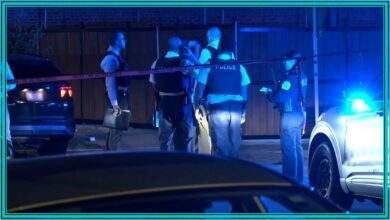
Acting Sussex County Prosecutor Carolyn A. Murray and Byram Township Police Chief Daniel J. Dewald said officers answered a 911 call around 3:30 p.m. and found Noviskey alone in a parked vehicle at Camp Wheeler Road and Camp Allamuchy Road. The intersection sits on the edge of the Mount Allamuchy Scout Reservation, a large wooded tract near the Stanhope line. Officials said she was armed. They said a crisis negotiator was brought in. They said attempts to de-escalate failed. She got out of the car. An officer shot her once. First responders treated her on the ground and took her to Hackettstown Medical Center in stable condition. She was still listed as hospitalized and stable when charges were announced on January 17.
The gun prosecutors attached to her name was a Kahr K9 9mm. The joint release said she “possessed and used” it. NJ.com reported that she pointed the handgun at officers and that her gun was also fired, without hitting any of them. Officers went to Newton Medical Center to be checked. None was reported injured. The charges, as described by the prosecutor’s office and by NorthJersey.com, were two counts of second-degree unlawful possession of a firearm, third-degree aggravated assault for pointing a firearm at a law-enforcement officer, and fourth-degree possession of hollow-point bullets. NJ.com, reading online court records, also listed addresses associated with her in Jersey City, Brooklyn, and Los Angeles. Sussex County’s identification was Hackettstown, in Warren County. Age and town were confirmed to NorthJersey.com by Acting Assistant Prosecutor Jonathan McMeen after the first briefings withheld them.
That is a handgun case with a negotiator, a single police round, a returned shot that missed, and a woman who left the woods alive. It is not, on the paper the prosecutor released, a case about a rolling arsenal of rifles. The paper and the picture have not been reconciled in public.
What the helicopter said before the name did
NBC New York’s first story was built on a senior law-enforcement official and on Chopper 4 video. It said a person armed with multiple assault rifles, including some attached to the car, was shot. It said she was hit in the neck and rushed to a hospital, and that it was not immediately clear whether the neck wound was self-inflicted or fired by police. The New York Post and other national outlets repeated the rifle frame. By Friday the prosecutor’s office was describing a Kahr pistol, one police shot, and a suspect gun that discharged without injuring officers. The neck detail did not reappear in the charging release. A wound location and a weapon class are the two facts a push alert cannot resist. Both can be revised by the end of the week. The alert does not send a correction to everyone who saw the sedan.
Two facts can share a paragraph. Aerial video showed objects on that red car that looked like long guns. The charges that followed centered on a pistol. If the rifles were real, loaded, and within reach, the public is entitled to the inventory and an explanation of why they do not appear in the charging language. If they were display, unloaded, or inoperable, the public is entitled to that too. A roof line is not a lab report. A lab report that is never released becomes a rumor with a better haircut. How many commands were given, how many seconds passed after the last one, and whether she was advancing or standing still are questions for body-worn and dashboard cameras. A still frame from a helicopter answers a different question: whether the scene looked frightening from the air.
The rifle fight New Jersey kept having without her
The phrase “assault rifle” was not a neutral description in this state. New Jersey has spent years defending a statute that criminalizes listed semi-automatic rifles and magazines holding more than ten rounds. On July 17, 2026, the U.S. Court of Appeals for the Third Circuit, sitting en banc in Association of New Jersey Rifle and Pistol Clubs v. Attorney General, held that the ban on semi-automatic rifles violates the Second Amendment, and not only as applied to Colt AR-15s. Judge Arianna J. Freeman’s majority said the platforms are largely interchangeable. The court also threw out the state’s ban on magazines holding more than ten rounds. It said the record was not developed enough to decide semi-automatic pistols, shotguns, and other regulated parts.
New Jersey then won a stay of the mandate while it sought Supreme Court review. While that stay held, the July 17 decision was not operative and the existing restrictions remained in effect. A federal appeals court can declare a rifle ban unconstitutional and leave the ban in force because the mandate has not issued. Anyone reading the Byram sedan through that ruling should not pretend the woods encounter changed the criminal code that week. Noviskey was not charged under the assault-firearm provisions. She was charged over a pistol, hollow points, and pointing a gun at an officer. The national headline used the weapon class New Jersey has been most eager to ban. The county headline used the weapon the prosecutor could put in a complaint.
A crisis label is not a video
Murray’s office did the procedural minimum. It named the woman who was shot, listed charges with degrees, and sent the police use of force to the Morris County Prosecutor’s Office under an Attorney General directive that stops the agency that fired from grading its own rounds. That handoff is real. It is not transparency. Transparency is the 911 tape, the number of police rounds, the condition of anything attached to the car, and the medical findings on Noviskey and on the officers who went to Newton.
“Crisis incident” can mean a negotiator was trying to keep someone alive. It can also become a label applied after a shooting so the shooting sounds inevitable. One police round and a stable hospital admission cut against the idea of a firefight measured in magazines. The first narrative, a neck wound of unclear origin, and the second, a single officer’s shot after a pointed 9mm, are not interchangeable. One of them has to yield to evidence.
This newsroom has priced that demand in other files. A jury later put a number on an Atlanta encounter in a $21 million judgment against an officer whose use of force paralyzed a man. The camera record in a Jersey Shore chokehold over a beach pass did not look like a scout-camp road, and neither did the Alabama 911 call that ended with a man dead after he asked for help. The shared question is what an officer does when the scene is confusing and a camera is already rolling, even if that camera is in a helicopter.
What a finished public file would still contain
No widely published disposition of Noviskey’s charges had replaced the January 17 complaint in the prosecutor’s release, the local papers, or the federal rifle litigation that followed. That absence is part of the story. A woman can be shot by police, charged with weapons counts, and then slip out of the national memory because the picture was more interesting than the docket. The Morris County review can exist for a long time as a sentence in a press release. Until it produces a public finding, the honest summary is the dull one.
Police in Byram Township shot a 31-year-old woman during an armed confrontation in the woods beside a scout reservation. She lived. Her pistol was fired. Officers were evaluated and not reported hurt. Charges followed. The rifles that made the sedan famous still need an evidence sticker, a serial number, or a retraction. The Third Circuit’s 2026 ruling changed the constitutional argument about semi-automatic rifles in New Jersey and then paused itself. It did not identify the objects on that red car.
The AEGIS Alliance will not close this piece on a roof line. For the desk that treats official narratives as claims, start with police accountability news, crime news, and how this newsroom reads a first briefing that arrives ahead of proof. The sedan was in Sussex County. The habit of letting the first image write the charge is not.