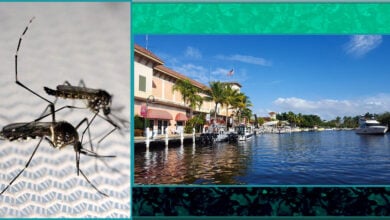
Florida Keys Proved Genetically Modified Mosquitoes Can Shrink Aedes aegypti, and the EPA Still Will Not Let Anyone Sell Them

MONROE COUNTY, FLORIDA — The Florida Keys did not theorize about a genetically modified mosquito. The Florida Keys Mosquito Control District put Oxitec’s OX5034 males into the air, season after season, then stopped. The release phase of that trial ended in the summer of 2024. On May 27, 2026, the U.S. Environmental Protection Agency published a fact check that is easy to miss and hard to misread: a previously issued Experimental Use Permit expired in 2024, no genetically engineered mosquito releases are currently authorized in the United States, and the agency is not aware of any releases after that permit died. An unauthorized release, the EPA said, would violate the Federal Insecticide, Fungicide, and Rodenticide Act and would be an enforcement case, not a science fair.
That is the hinge the old headlines keep missing. The story is no longer “Florida is about to release gene-edited mosquitoes.” The story is that a finished American field trial is sitting in a registration queue while the same islands keep fighting Aedes aegypti with a different box, and while a White House order signed on September 29, 2026 told the EPA Administrator to stop treating novel mosquito tools as a curiosity. The order, Eliminating Disease-Carrying Pests and Restoring Enjoyment of the Great Outdoors, sets a campaign goal of cutting Asian tiger mosquito and Egyptian mosquito populations by 90 percent. Aedes aegypti is the Egyptian mosquito. It is the species the Keys spent three pilot seasons trying to breed against itself.
Andrea Leal, the district’s executive director, has been waiting on that federal yes since the boxes came down. In an interview published September 28, 2026, she described the result the district was shown: the local population dipped, only males survived the inheritance, and the inserted gene faded in two to three months after releases stopped, about three mosquito generations. “It worked exactly as designed,” Leal said. Flyttr, the name Oxitec now uses for the same product line, did not answer the reporter’s questions. The district’s own project page is plainer than any press release: it is up to the EPA to decide whether OX5034 becomes a registered control product.
What actually left the box
OX5034 is a male-only release of Aedes aegypti. Males do not bite. The engineered trait is meant to kill female offspring before they become adults, while sons that inherit it can mate again and carry the same dead end forward for a short chain of generations. The EPA’s human-health and environmental risk assessment, written before the Keys trial, reviewed laboratory crosses and foreign field data and concluded the female-killing trait was fully penetrant when the mosquitoes were reared without the tetracycline antidote used in the factory. That is the scientific claim. It is not a promise that every island in Florida will be empty of this mosquito, and it is not a claim that dengue, Zika, chikungunya, or yellow fever have been retired as American problems.
The path to the first open release was a decade of no. In 2016 the Food and Drug Administration had cleared a small look at Oxitec’s earlier strain, OX513A, and a nonbinding Keys referendum split the room. Key Haven largely said no. Monroe County as a whole voted to let a trial proceed. The EPA announced the Experimental Use Permit on May 1, 2020, covering defined acres in Monroe County and a smaller Harris County, Texas plot. On August 18, 2020, the Florida Keys Mosquito Control Board voted 4–1 to go ahead in 2021. The first U.S. releases began in April 2021. The joint project site now describes three pilot seasons, a just-add-water egg device, and a 2024 year in which the team studied how the non-biting males might fit operations and did not release any more of them. A wider experimental footprint that pointed toward California did not become a second Florida. Public opposition stopped that expansion.
The politics were never only about a gene. Aedes aegypti in the Keys has been showing resistance to the sprays crews already own. The district’s June 16, 2026 board workbook still reads like a weather report from a war that did not end when the Oxitec boxes were packed up: salt-marsh counts above or below historical averages depending on the island, dozens of truck adulticide missions, and a lab where biologist Heidi Murray walks visitors through traps and bioassays that forecast which products the local insects have learned to survive. Alachua County was under a mosquito-borne illness advisory. Miami-Dade County was under an alert. The Keys inherited a mosquito that likes human houses, lays eggs in bottle caps, and carries viruses that do not care about a referendum.

The bacteria the Keys used while the gene waited
The district did not sit in the queue. Beginning in June 2025 it ran a Wolbachia male project on three 20-acre sites. Males infected with that bacterium do not bite. When they mate with local Aedes aegypti females, the eggs do not hatch. Lower Keys biologist Catherine Pruszynski was photographed releasing them. The district’s page says the quiet part: it had already worked with Oxitec’s genetically manipulated males, and both “novel” tools use the mosquito against itself. By the June 2026 board meeting, staff were still describing a Wolbachia release trial in the lab tour, which is another way of saying the operational question outlived the headline.
Wolbachia is not one trick. The version spreading through parts of Brazil is closer to a population replacement: females pass the bacterium to their offspring, and the infected line is worse at amplifying dengue virus. Researchers have reported sharp drops in dengue in cities such as Niterói where that approach was used at scale. The version the Keys, and now parts of the Washington region, are using is closer to birth control. On September 28, 2026, The Washington Post described a pest-control company releasing about 600,000 Wolbachia-infected males across 25 Maryland and District of Columbia properties, aimed at the Asian tiger mosquito. Same microbe. Different goal. Different species. Anyone flattening all of it into “Bill Gates mosquitoes” is selling a cartoon. The Gates Foundation has funded mosquito work abroad. It did not fund the Florida Keys OX5034 releases, and the EPA’s May 2026 fact check exists because viral posts kept claiming a fresh federal authorization the permit file does not contain.
A registration is a decision, not a vibe
Commercial sale of OX5034 still requires a pesticide registration built on the field data. A scientific advisory panel that was supposed to convene in November 2025 was postponed, and no replacement date had been set when magazine reporting checked the docket in September 2026. Leal has called the wait the district’s biggest practical obstacle. The September 29 executive order does not register the product by itself. It does something more specific, and more uncomfortable for an agency that has been reviewing this insect since 2020. It tells the EPA Administrator, consulting the Agriculture and Health and Human Services secretaries, to send the President a regulatory framework for the planned environmental release of advanced tick and mosquito technologies. That framework must consider sterilization techniques, safe genetic modification, and the use of safe, beneficial bacteria, in line with the May 5, 2025 order on the safety of biological research. The same order tells the Administrator to prioritize and expeditiously advance or register novel products the Administrator actually finds safe and effective.
Read the order as a deadline, not a blessing. “Expeditiously” is not “approve.” A framework is not a box of eggs on a porch in Marathon. The order also tells agencies to prefer commercial tools and cooperative agreements, including sterile-insect techniques, over the fantasy that spraying harder will permanently solve an invasive mosquito. The AEGIS Alliance has watched this pattern in other technical fights: a pilot that works on defined acreage gets narrated as either salvation or contamination, and the regulatory middle disappears. The Keys referendum was a real split. The EPA’s female-lethality finding was a real finding. The absence of a current release authorization is a real legal fact. Residents who opposed the trial in Key Haven were not imaginary, and neither were the dengue years that made the board vote 4–1.
What the order changes is the excuse. For five years the honest answer from Marathon was that the federal file was open and the local file was closed. After September 29, 2026, the White House has told the EPA that invasive Aedes are a national population target, not a Keys eccentricity, and that genetic and bacterial tools belong in the framework rather than in the rumor mill. If the agency finds the Flyttr data safe and effective, the order says to move the registration. If it does not, it should say so in public, with the trial numbers attached.
The AEGIS Alliance will not sell a biotech brochure as a miracle, and it will not pretend a self-limiting gene is a secret spray. Males that do not bite were released under a permit that has expired. Females that inherit the trait were not supposed to grow up, and the district says the field behaved that way until the gene burned out. The mosquitoes that still bite in the Keys are the wild ones, increasingly rude to the chemicals aimed at them. Related reading on this site includes how researchers have tried to turn salt water into drinking water with solar power, the science desk, environment coverage, and health reporting on what vector control is actually for: keeping a virus out of a person, not winning an argument on the internet.