Gum-Disease Bacteria Turned Up in Calcified Heart Valves After Cardiologists Refused to Call the Link Proven

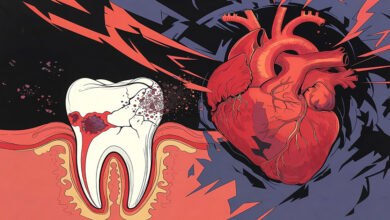
The American Heart Association still will not say that a dental cleaning prevents a heart attack. Seven months after it published that hedge, a separate lab study presented at its own science meeting found the keystone bacterium of gum disease inside calcified human aortic valves and watched that bacterium harden mouse valves. The two papers do not cancel each other. One is a careful review that refuses causation. The other is a preliminary abstract that offers a mechanism and then warns that the mechanism is not yet a treatment.
“Periodontal Disease and Atherosclerotic Cardiovascular Disease” went online December 16, 2025, and into the February 10, 2026, issue of Circulation (153(6):e73–e88). The writing group, chaired by pediatric cardiologist Andrew H. Tran of Nationwide Children’s Hospital, says gum disease is independently associated with higher risk of heart attack, stroke, atrial fibrillation, heart failure, peripheral artery disease, chronic kidney disease, and cardiac death. It updates a 2012 statement that called the link real and the treatment evidence thin. The 2025 version adds Mendelian randomization studies, intervention trials, cytokine data, and vascular measures. It still says a cause-and-effect relationship has not been confirmed, and that randomized trials are needed before anyone can claim periodontal treatment prevents a first heart attack.

What showed up in the valves in Boston
On July 12, 2026, at the American Heart Association’s Basic Cardiovascular Sciences Scientific Sessions in Boston, Chenyang Li, M.D., a Ph.D. candidate at Fuwai Hospital and Peking Union Medical College, presented poster WED002. The lab work, not yet a peer-reviewed paper, looked at human valve tissue taken at surgery and at mice exposed to live Porphyromonas gingivalis, the bacterium that drives advanced periodontitis. Li said the team was surprised by how much P. gingivalis was present in calcified aortic valves. It was not one of the most abundant bacteria overall, but it showed one of the largest differences between valves with calcific aortic valve stenosis and valves without it.
In the mice, live bacteria accumulated in the aortic valve, increased calcification, and produced signs of stenosis. Antibiotic treatment reduced those effects. The bacterium activated interleukin-1 beta, an inflammation protein, inside valve cells. Mice genetically unable to make that protein had less calcification even when the bacteria were present. Heat-inactivated bacteria did not tell the same story as live ones. Li was explicit about the limit: there is no medication proven to prevent or slow calcific aortic valve stenosis, and it is too early to recommend a specific dental protocol as valve prevention. “The key message is simple: take good care of your oral health,” he said. A clinical study has started. Abstracts at the meeting are not peer-reviewed. Eduardo Sanchez, M.D., the Association’s chief medical officer for prevention, said the work adds to evidence that oral health and heart health are connected, and that for many people a dental visit is the only regular contact with a clinic.
Bacteria in the gums, inflammation in the arteries
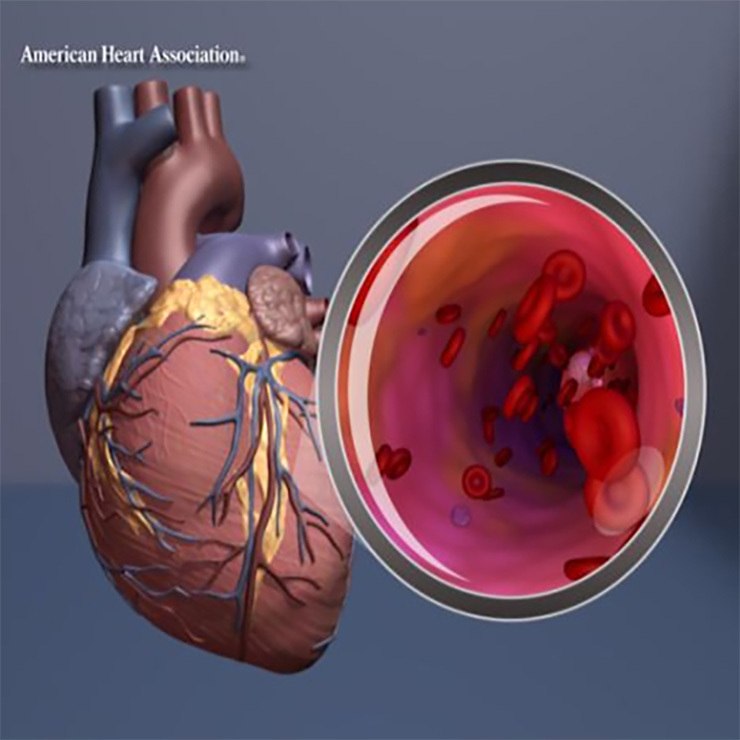
The December statement describes two paths, and neither requires a reader to believe a toothbrush replaces a statin. The direct path is bacteremia. Inflamed gums bleed. Organisms that live in those pockets, including P. gingivalis, have been found in arterial plaque. The indirect path is quieter and, for a cardiologist, just as useful: chronic oral inflammation raises cytokines and C-reactive protein, stiffens arteries, and favors clots. The writing group also notes that the same inflammation can feed strokes tied to small-vessel or large-artery disease.
People with severe periodontitis show about two to three times the odds of major cardiovascular events compared with people who have healthy mouths. Models cited around the statement have put a 10-year atherosclerotic risk figure dropping from 13.7 percent to 7.35 percent with frequent brushing alone. That is an association dressed as a percentage, not a randomized verdict. A January 2026 note in The Cardiology Advisor kept the limit in one sentence: higher inflammatory markers, and still no direct evidence that periodontal therapy prevents cardiovascular events. The newsroom summary is on the American Heart Association site. The full statement is on Circulation. The valve abstract is a different document, published as a meeting highlight on July 12, 2026.
A stroke study that counted cavities, not just gums
A prospective analysis tied to the Dental Atherosclerosis Risk in Communities work, covered after it appeared in Neurology Open Access in the fall of 2025, pushed the oral side of the ledger past gums alone. Senior author Souvik Sen, M.D., of the University of South Carolina School of Medicine, said people with both cavities and gum disease had almost twice the risk of stroke compared with people with good oral health, even after cardiovascular risk factors were accounted for. The reported figure was an 86 percent higher risk of ischemic stroke when periodontal disease and caries traveled together, and about a 44 percent higher risk with periodontal disease alone. In the cohort, about 4 percent of people with good oral health had a stroke, compared with about 7 percent of those with gum disease and about 10 percent of those with both gum disease and cavities. Participants with periodontal disease alone had roughly a 47 percent higher risk of major adverse cardiovascular events. Those with both conditions were closer to 88 percent. Subtype analysis was sharpest for thrombotic stroke.
“Your mouth and your heart are connected,” Tran said when the Circulation statement landed. “Brushing, flossing, and regular dental checkups aren’t just about a healthy smile — they’re an important part of protecting your heart.” Co-author Lauren L. Patton, D.D.S., has noted that treatments which cut oral inflammation can move blood pressure and lipid markers. During American Heart Month in February 2026 the American Academy of Periodontology pointed at the statement as a warning, not a miracle protocol. Cleveland Clinic periodontist Sasha Ross, DMD, told Bottom Line in August 2026 the same thing the writing group said in December: dentists and cardiologists know the association, and they still cannot prove periodontal disease causes atherosclerotic disease. More than 40 percent of U.S. adults over 30 already have some form of gum disease. It starts as gingivitis from plaque and becomes periodontitis that pulls gum from tooth, traps bacteria, and destroys bone.
Who carries both diseases at once
Rates of periodontitis run highest among men, adults over 65, people who sit still, and households with weak dental access. Patients who already have hypertension, obesity, or diabetes get the worst overlap. A 2025 meta-analysis found people with periodontitis were more likely to develop atherosclerotic disease when hypertension was already present, with systolic pressure about 4.49 mmHg higher in affected patients. Tooth loss tracks with stroke and cardiovascular death in coronary cohorts. The writing group flagged the disparity directly: under-resourced communities carry more untreated periodontitis and more untreated heart disease at the same time.
Food insecurity and skipped dental visits feed both. Medicaid adult dental benefits vary by state. Employer plans often cap cleanings and ignore periodontal surgery. The mouth is not a boutique organ. It is a billing problem that happens to spill bacteria into blood. Atherosclerotic disease still kills more people in the United States each year than cancer and chronic lower respiratory disease combined. A cheap bathroom habit that might cut risk is not a small thing. It is also not a substitute for blood-pressure drugs, statins, or a valve replacement when those are indicated. Related reporting on this desk includes how imaging of the tongue is being tested as a diagnostic signal and the wider health news file.
What a person can do while the trials are unfinished
Brush twice a day. Clean between the teeth. Keep the cleaning appointment. Tell a cardiologist when the last dental visit was, and tell a dentist about hypertension, a prior stroke, or a valve problem. Scaling and root planing cut local inflammation and often drop C-reactive protein. Quitting smoking helps the gums and the coronaries with the same decision. Night grinding, dry mouth from blood-pressure pills, and a cleaning skipped after a job loss all land on one chart. None of that requires the Boston abstract to survive peer review. It requires a dentist who will still see the patient after the insurance company has already said no.
The Circulation authors wrote that if the associations are causal, treating periodontal disease could cut major adverse cardiovascular events. They used the word if. Li used a different if: if P. gingivalis is driving valve calcium through interleukin-1 beta, then oral infection is a candidate target, and nobody should pretend a poster is a prescription. Social posts have already flattened both documents into “gum disease causes heart attacks.” The studies do not say that. They say the association is too consistent to ignore and too unfinished to sell as a cure. For more science coverage from The AEGIS Alliance, see the science desk. Adding “last dental visit” to a cardiology intake sheet takes ten seconds. It is the part of this literature a clinic can use before the next trial prints.