July Floodwater and Cleanup Trucks Split Georgetown’s 42-Inch Sewer and Poured 100,000 Gallons Into the San Gabriel


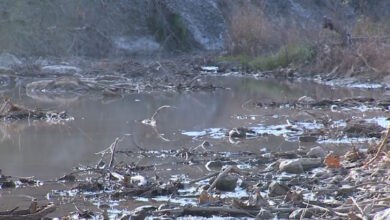
Georgetown did not find a mystery on the morning of January 5, 2026. Water utility crews found a lift station running hot. At 10 a.m. they traced the Wolf Ranch station to a 42-inch gravity wastewater main in the south fork of the San Gabriel River, about a quarter mile west of Interstate 35, behind Wolf Ranch Shopping Center. Untreated sewage was already in the channel and downstream. The city put the volume above 100,000 gallons and called the Texas Commission on Environmental Quality. Drinking water, City Manager David Morgan said, was not part of the failure. “I want to reassure our water customers that our water remains safe for consumption,” he said. “Please avoid the area and river water through the San Gabriel and Blue Hole parks while we work to isolate and repair the wastewater line.”
That sentence split the story into the part residents wanted and the part the river got. Taps were declared safe. The swimming hole that sells Georgetown as a river town, not a suburb of Austin, was not. A section of the South San Gabriel River Trail closed. Pets were supposed to stay out. By Tuesday afternoon crews had isolated the broken line and put a dam in the south fork so they could work in the channel instead of watching the plume travel. KXAN’s crew described roughly 2,000 feet of piping along the riverbed and a break sitting farther out, in the middle of the river, found because the volume in the channel jumped. Isolation is a construction update. It is not a lab sheet.
The break started in a July flood, then a cleanup truck finished it
On Thursday, January 8, the city stopped calling the cause unknown. CBS Austin reported Georgetown’s preliminary finding: flooding on July 4 and July 5, 2025, shifted the river channel, moved a manhole and the wastewater line from the bank into the channel, and washed out the bedding that held the pipe. After the flood, private cleanup companies ran heavy trucks and construction equipment across the river near the failure site. The city said the combination produced too much movement, joint separation, and failure of the 42-inch main. Repair work was nearly complete that Thursday morning. The keep-out warning for San Gabriel River water stayed up. A clamp is not an all-clear.
One hundred thousand gallons is a floor, not a portrait. The phrase the city used was “in excess of 100,000 gallons” and “more than 100,000.” Metered bypasses often revise the first-day number. Thirteen residential pools is a fair picture of the floor. It is also a rounding error next to the disaster that started fourteen days later on the Potomac, when a section of the Potomac Interceptor collapsed on January 19 beside the C&O Canal and, by DC Water’s later count, released on the order of 240 million gallons of raw sewage before a bypass finally returned flow on March 14. Sampling there found E. coli as high as 570,000 MPN per 100 milliliters. The public-health line for swimming is about 410. Georgetown’s spill was roughly 2,400 times smaller. The failure mode was the same family: a large pipe living in a waterway, a utility assuring people the drinking supply was untouched, and bacterial truth arriving slower than the headline.
Blue Hole is an amenity built on a trunk line
Wolf Ranch is retail, rooftops, and a lift station that exists because gravity does not always point at the treatment plant. When that station runs hot, it is saying the pumps are losing or a main downstream has opened. The January 5 crew did the right first thing. They went to the station instead of waiting for a kayaker. The failure is not the inspection. The failure is a 42-inch gravity main laid where a river can change its mind on a holiday weekend, then where contractors can drive across the scar.
Blue Hole is the political problem inside the public-health problem. A park that draws weekend traffic cannot close on a rumor, and it cannot reopen on a hope. Bacteria do not read a sentence about repairs being “nearly complete.” E. coli and the rest of a sewage load persist in slow water and in sediment after the smell fades. Parents who treat lifted caution tape as a laboratory result are betting money the city has not put on the table. The January 8 notice still told people to stay out of the river. That was the minimum. The minimum did not publish a time series of bacterial counts for the south fork and for Blue Hole. It did not say how many hours the raw load moved before the dam went in on January 6. It did not say whether similar trunks under other forks have been camera-inspected since the July high water or only hoped about.
TCEQ’s spill report starts a clock the public rarely sees: sampling, signage, and a decision about when a swimming hole is a swimming hole again. Cities like to close that clock with a construction sentence. The AEGIS Alliance has watched the pattern on other rivers. A liquid-nitrogen spill in an Iowa river killed nearly 750,000 fish, and the check that followed looked small next to the kill. Who pays to run a hazard through an amenity, and who pays when the amenity becomes the discharge point, is the governance question. Georgetown’s own capital list is the local version of that question.
The repair bill is not the capital plan
A joint that separated in a riverbed can be coupled in a week. The collection system around it is a different document. On March 26, 2026, the Williamson County Sun reported that Georgetown’s coming fiscal-year pipeline included an estimated $415.6 million in wastewater projects, beside roughly $442 million in water projects. Those figures are not the invoice for the Wolf Ranch break. They are the city’s own admission that pipes, interceptors, and plants are the growth machine’s unpaid tab. In September 2026 the city changed the reimbursement timeline on a $10 million Dry Berry Creek interceptor, a different line that carries wastewater toward a business park off I-35, because costs had risen. Piece by piece, the ratepayer is financing a map the July flood already marked up.
Williamson County does not pause home sales for a spill. Builders sell the parks. The parks sit on the same hydrology as the wastewater map. When a trunk fails, the people who bought the view are told to stay out of the view. That is not a one-week inconvenience. It is a disclosure that the utility’s capital plan and the city’s tourism pitch are not the same PDF. Households on septic already live with the smell of their own failure. Households on city service are told the plant is modern until a 42-inch line proves the collection system is the weak joint. Developers who needed the capacity last decade are not on next year’s bill in the same proportion.
Public notices prefer “untreated wastewater” because it sounds cleaner than raw sewage. The load is the same. It includes human waste, household chemicals, and whatever commercial connections feed the Wolf Ranch basin. Fish do not distinguish the vocabulary. Neither do children at Blue Hole. The Iowa kill showed what a chemical pulse does to a river when the sampling is allowed to finish. A sewage pulse gets a shorter headline cycle, which is how these stories die before the lab work does.
Three numbers, not a tone
The next useful city update has three figures and no adjectives. First, the final volume. “More than 100,000” is a floor the July flood story did not replace. Second, the sampling. If Georgetown and TCEQ do not publish bacterial counts for the south fork and Blue Hole, an all-clear is a sentence. Third, the capital decision. Coupling a joint is a repair. Moving a 42-inch gravity main out of a channel that flooded on July 4, or barring construction traffic from the repaired alignment, is a decision. Only one of those changes where the next failure happens.
Morgan was right to separate the drinking-water system from the river. He was not in a position to separate the river from the people who use it. Stay out of the San Gabriel until a posted count, not a tone, says the contact advisory is over. The AEGIS Alliance will treat any later TCEQ enforcement, any fine, and any decision to relocate or armor that trunk as the next chapter of the same file. The January paperwork is already enough to read the growth story without a slogan. More of this record sits in environment news and U.S. news. The city’s notices remain on the Georgetown site, and the first-day broadcast account is at KXAN.