Michael Broady Called 911 From Reform, Alabama, and the Body Camera Outlived the Partial Settlement

Michael Broady Jr. called 911 in August 2021 from Reform, Alabama, and told a dispatcher someone was trying to kill him. Officers from the Reform Police Department, the Pickens County Sheriff’s Office, and the Carrollton Police Department answered. They held him on outstanding warrants, including a child-support hold out of Lamar County. He was pronounced dead at the Carrollton Hospital helipad. Five years later the federal lawsuit is no longer one block of defendants. Two officers have settled. Two deputies have not, and the mediation date that was supposed to test that split has already passed without a public dismissal.
U.S. District Judge Annemarie Carney Axon signed an order on May 28, 2026, dismissing with prejudice the claims against Reform officer Kallenna Homan and Austin Moss after the estate settled with them. The terms were not released. AL.com, citing a late-May joint status report, identified Moss as a Gordo police officer. WBRC’s later write-up described him as a Pickens County sheriff’s deputy. Both descriptions cannot be the agency he worked for that night. What the order does establish is that those two defendants are out. Claims against Pickens County deputies Brian Herd and Taylor Gregory stayed on the docket. A mediation before Magistrate Judge Gray M. Borden was set for 9 a.m. on July 30, 2026, at the Hugo L. Black United States Courthouse in Birmingham. Borden ordered both sides to file a confidential summary of the facts, the estimated value of the claims, and the status of earlier talks. As of late September 2026, local reporting has not published an order dismissing Herd or Gregory.
What the cameras recorded before anyone settled
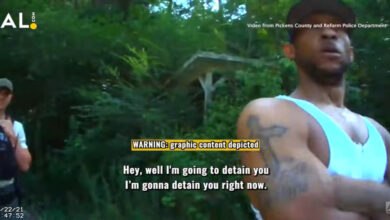
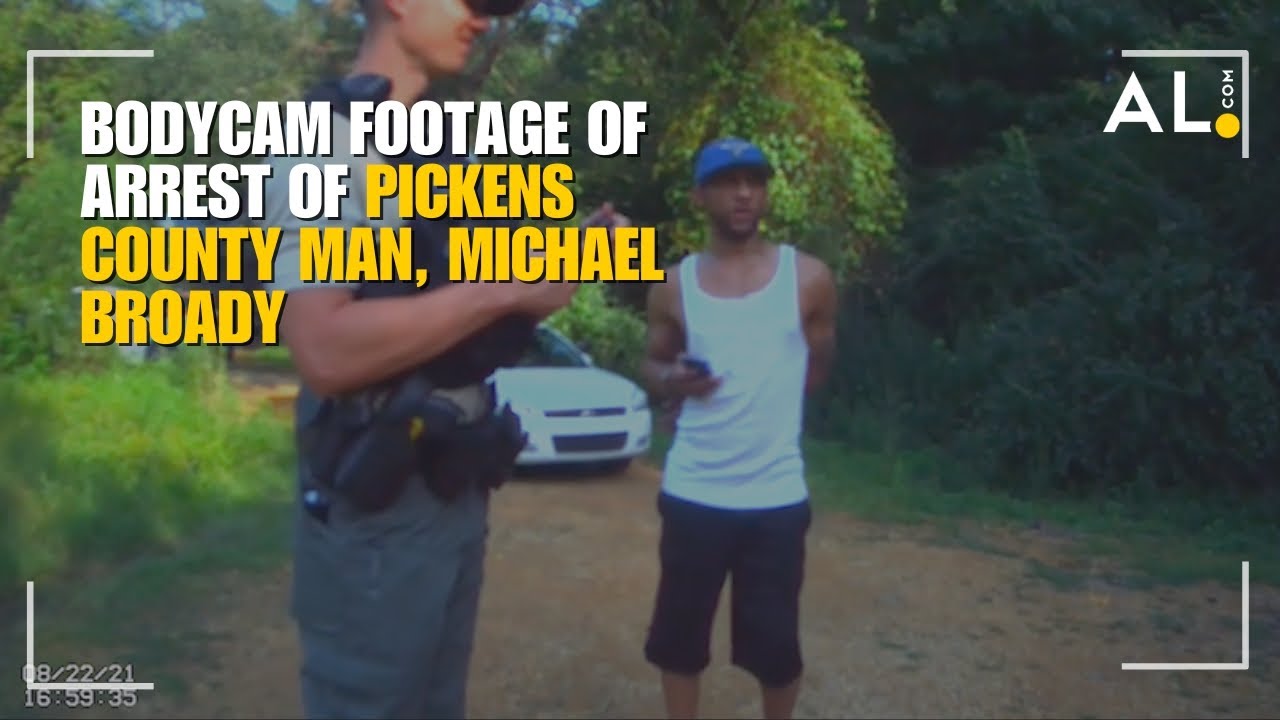
The recordings run about 40 minutes from a Pickens deputy and about 30 from a Reform officer. Broady talks with the officers. Then he is taken to the ground. Audio catches shouted commands, repeated Taser cycles, and an officer yelling, “Let go of my Taser.” The family’s lawyers say he was shocked while prone and handcuffed. The footage later shows him dragged and carried to a cruiser. As the door fights shut, another Taser cycle appears to fire inside the car. AL.com published a condensed clip in December 2025. The longer files came from the family’s lawyers.
After officers had Broady in the back seat, Homan is heard on the tape saying, “All you had to do was hand the cell phone over. Gosh, that was a wrestle.” Body-camera audio also captures Broady dialing 911 a second time from his own phone while cuffed, telling the dispatcher police had not arrived even as officers stood a few feet away. His sister, DeQuita Denise Broady, the estate’s personal representative, who has also been identified in interviews as Dequita Manuel, put the question the video forces: “He was handcuffed. It took five of you to do that — and none of you thought to stop?” AL.com and ABC 33/40 documented the tapes. His daughter, identified by AL.com as Makyleigh Hollinger, said, “He did nothing to deserve that. Not at all. It was unprovoked.”
An autopsy that refused to pick a winner
The Alabama Department of Forensic Sciences listed both cause and manner of death as undetermined. The examiner found two Taser barbs in the torso, blunt-force abrasions, and an acute fracture of the left hyoid bone with internal hemorrhage and no external neck wound. That pattern, the report said, suggested “a relatively broad compressive force” to the front of the neck. How much it contributed to death was left open. Toxicology showed methamphetamine at 2,800 ng/mL, described as a potentially fatal range, plus amphetamine and THC.
Defense lawyers treat the toxicology as the case. The family’s lawyers treat the hyoid fracture, the allegation that a flashlight was used against his neck, and the Taser cycles on a cuffed man as the case. The examiner left the door open to revisit the finding if more facts arrived. The death is still not classified as a homicide on paper. That undetermined box is why both sides can still talk as if the video belongs to them. A settlement with two officers does not rewrite the autopsy. It removes two names from a caption.
Who is still answering the complaint
DeQuita Denise Broady filed Broady v. Herd et al. in 2023 in the Northern District of Alabama, Western Division, Case No. 7:23-cv-01097. Early defendants included Deputy Herd, Reform Police Chief Kenny Young, the City of Reform, the Pickens County Sheriff’s Office, the Town of Carrollton, and the Town of Gordo. Two Carrollton officers were later dropped. Pickens County itself was voluntarily dismissed in February 2024. A corrected Fourth Amended Complaint filed in November 2025 added detail from the newly reviewed video: overlapping Taser cycles while Broady was prone and cuffed, a flashlight used against his neck, a Taser fired into the cruiser, a door slammed on his head, kicks on the ground, and failing oxygen gear at the jail sallyport. Those are allegations. They have not been proven at trial.
Attorney Johnathan Austin told AL.com in July 2026, “This is just one step closer to getting justice and answers for the family that we represent. Now we know what happened to him and now we’re seeking justice.” He also said, “We know there’s no amount of money that’s going to bring this loved one back but at least we can hold them accountable and hopefully in the future they will change the way they are responding to individuals like Mr. Broady so the next person won’t lose their life.” Montgomery attorney J. Randall McNeill, who represents Herd and Gregory, told AL.com his clients deny wrongdoing and that “mediation does not equate an admission.” WBRC and WVUA 23 reported the partial deal. Settlement amounts were not made public.
What the officers say the tape leaves out
McNeill has argued that Broady gained control of a Taser and used it on officers, and that the methamphetamine level was dangerously high. Counsel for the Reform officer denied the allegations and said the officer did not know of mental-health or substance issues during the call. Austin told ABC 33/40 the opposite frame: “This is not a case about someone threatening officers or the public — it is about a man who called the police for help and, despite officers knowing he was in crisis, was met with extreme force rather than restraint or de-escalation.” Co-counsel Richard Rice has tied the file to other deaths in the same county.
Judge L. Scott Coogler’s March 2024 order cut some supervisor and failure-to-train theories and let excessive-force and bystander claims against the officers who used force proceed. That is why Herd and Gregory still matter after Homan and Moss bought their way off the caption. The Axon dismissal did not touch the remaining counts.
Three Black men dead in one small county
Pickens County has fewer than 20,000 people. Between 2019 and 2021 three Black men died in police encounters there. Wallace Wilder was shot during an April 2019 wellness check. Glenn Foster Jr., a former New Orleans Saints lineman, died in December 2021 after a chase in Reform. An autopsy in Foster’s death found strangulation. Austin and Rice wrote Governor Kay Ivey that the pattern under Sheriff Todd Hall included a complete lack of transparency and that the race of all three men was not a coincidence.
In December 2023, Reform officer Dana Elmore was accused of repeatedly using a Taser on Micah Washington, who was changing a tire near his aunt’s house. That file produced a $20 million federal suit after video surfaced in late 2024. Broady sits in the same stack of Taser-and-restraint cases, not as proof that every officer in the county is the same person, but as proof that a county this small has buried more than one family in a five-year window. The AEGIS Alliance has tracked similar force files in its police accountability coverage, in the case of off-duty officers and a Black bouncer, and in the later verdict that ordered an Atlanta officer to pay $21 million after paralyzing a man.
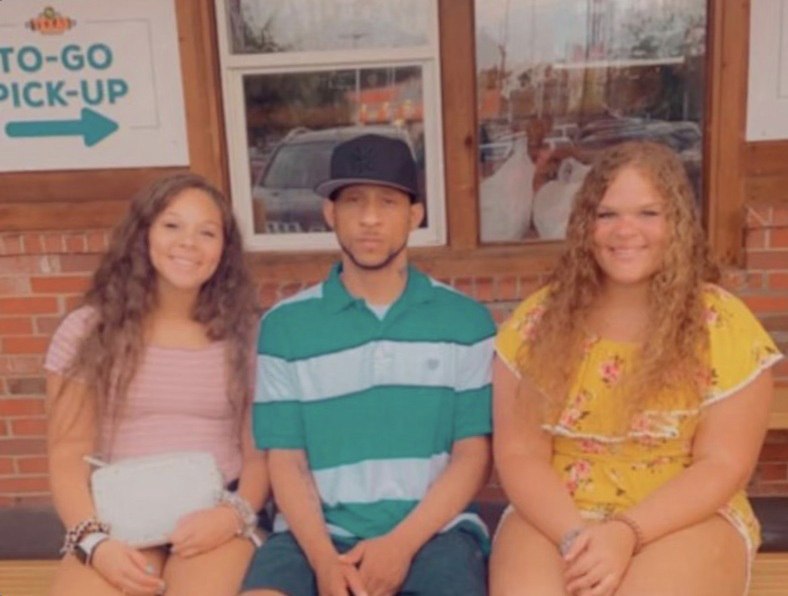
Broady’s mother, Carolyn, said the assignment was simple: cuff him, put him in the car, take him to jail. “He’d still be alive today.” Hollinger had spoken with him hours earlier. He had promised ice cream. Her young son never met his grandfather. The family line that has stuck is short: they know he is not coming back, and they want justice anyway.
A partial settlement is not a closed file
Two officers are out. Two deputies are not. Mediation on July 30 may have produced a confidential number that has not been filed, or it may have produced nothing a clerk will stamp. Comparable Alabama custody-death matters have settled in the mid-six figures. Plaintiffs think the video supports more. The defense thinks the undetermined autopsy and the toxicology cut the other way. Readers following force cases can start with The AEGIS Alliance U.S. news stack. The man on the tape called the same number twice. The second time he was already in cuffs. No settlement edits that audio.





This article is incorrect, the incident happened in August of 2021, and he was not 52, he was 41 when this happened. This is my brother Michael Broady
It’s been corrected now. There was a mix up with a different Michael Broady in December, 1988. The date came up wrong.