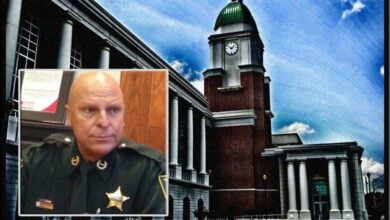
Parents Still Say Sheriff Carmine Marceno Buried Jeannie Ashley Ohlman’s Fort Myers Death as an Overdose While His Ethics File Stalls

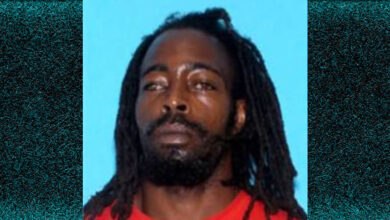
LEE COUNTY, FLORIDA — Jeannie Ashley Ohlman was pronounced dead at 8:58 a.m. on July 3, 2020, in a Fort Myers condominium. She was 31. The medical examiner’s office called the death an accident and named the drugs as methamphetamine and fentanyl. Her parents have never accepted that stamp. They say the man who had been living in her life, Eric Alexander Crawford, told a story that did not survive a walk through the courtyard, and that the Lee County Sheriff’s Office, then six months from an election, preferred an overdose file to a homicide file. Crawford has not been charged in her death. Carmine Marceno is still the sheriff.
Ohlman was born December 5, 1988. She had been on a dean’s list before the relationship her parents opposed. They say she met Crawford in the fall of 2018, relapsed after she met him, and grew afraid of him. On Thursday, June 25, 2020, she texted her father that she did not want to park in front of her own unit because she thought her boyfriend was going to kill her. The next evening he brought her food, hugged her, and left without pushing. That was the last time he saw her alive. The service was held July 15, 2020, at Jacksonville Memory Gardens in Orange Park.
A sink that was never fixed
Crawford told Detective Ryan McKinnon he came over the morning she died to repair a leaking sink trap. The retired neighbor across the courtyard, whom the parents had asked to watch the place and whom they called Carman, described a different clock. He said Crawford’s black Cadillac sat in the front handicap space for three days and did not move. On July 2, Ohlman’s older sister came by with $60 her sister had said she needed. The security chain was on. She called Jeannie’s name. Nobody opened the door. She saw a shadow move inside and left.
Her father reached the complex at about 11:30 a.m. on July 3 and was kept outside. Around 1:30 p.m., after the coroner’s office had removed the body, he was allowed in. There was no repair. A trash can sat under the trap. The coroner’s paperwork, the family says, recorded that the father identified his daughter at the condo. He says he did not. The unit had been marked off. He identified her later, at an open casket. He and her mother say they saw marks on the wrists as if she had been bound, and bruises on the face. They say she used heroin, not methamphetamine, and they believe Crawford injected her. Those are the parents’ observations and their conclusion. They are not a second autopsy. They are the reason a detective was supposed to sit Crawford down and test the sink story against the Cadillac, the chain, and the text.
The clerk’s record this newsroom pulled at the time showed Crawford with a 2010 manslaughter conviction and a 2011 Lee County case that bundled marijuana, drug equipment, and a felon-in-possession count. A man with a killing already on the sheet, standing in a condo where a woman has just died, is not a background character. He is the first interview. Ohlman’s parents said McKinnon had not interviewed him and had not returned their calls. No public charging document in the years since has named Crawford in her death. The accidental finding has not been reopened in any record The AEGIS Alliance has been able to locate.
Safer on a spreadsheet
The question this desk asked in October 2020 was about the ledger, not the eulogy. Governor Rick Scott appointed Marceno sheriff in 2018. The News-Press reported that Lee County’s crime numbers fell 18.9 percent in 2019. Collier County, next door, fell 1.3 percent. Statewide, murder was up. Lee’s count was down. Jeannie’s father had already filed a complaint accusing narcotics trafficking out of the Glades by people connected to the sheriff’s office. The family read the overdose stamp as the cheaper line in an election year: a dead woman on meth and fentanyl does not move a murder rate. A murdered woman with a felon boyfriend in the handicap spot does.
Marceno won that race. He won again in 2024. The next election is 2028. The overdose classification did not follow him off the ballot. It stayed in the file while a separate corruption inquiry did move, and then stopped.
On November 17, 2025, federal prosecutors wrote Marceno’s lawyer, Donald Day, that a kickback investigation was closed. The letter, as later described in public accounts of the case, said the decision rested on the information then known to the government and on the principles of federal prosecution, and that the office would pursue no further action. The witness at the center of that file was Ken Romano, a Fort Myers jeweler Marceno had once called his most loyal friend. Romano told investigators he had been given a public consulting contract and had supplied the sheriff with gifts and cash that did not show up on financial disclosures. Undercover recordings and a cash video were part of what the FBI had. Closing the federal file did not declare the allegations false. It declared them uncharged.
The ethics file that would not announce itself
Romano took the same allegations to the Florida Commission on Ethics. The complaint, filed in January 2026, described a consulting deal paying $5,700 a month, with $1,700 of it routed to the sheriff’s father, Carmine Marceno Sr., for a Mercedes. The elder Marceno died in December 2024 at 74, while the federal case was still alive. Romano also described a $9,035 grand piano in 2020, now outside the five-year gifts window, and $2,377.03 in furniture from El Dorado Furniture on January 20, 2022, which investigators treated as still inside it. Mike Hollow, the former internal-affairs chief who later lost a race against Marceno, was listed as a witness.
Florida gives the commission 150 days. On June 5, 2026, in a closed executive session, the commission gave investigator Ronald Moalli 60 more, past the statutory limit, to keep digging into the payments allegedly aimed at the father. Sources close to the inquiry told the Florida Trident that investigators wanted an undercover FBI recording of Romano and Marceno Sr. in which the father is said to admit taking the car money. On July 30, Romano sent a notarized letter asking to withdraw the complaint. He wrote that the stress of the process had damaged his health and worsened a diagnosed case of PTSD. The withdrawal request landed 55 days into the extension, which is to say when the work was nearly done. Withdrawal does not automatically erase an ethics investigation. The commission can keep a file that has already been built.
The probable-cause hearing was set behind closed doors for August 28, 2026, alongside a second complaint from former commander James Bogliole. When the commission published its case list the following week, the Romano matter was not on it. Kerrie Stillman’s office, and spokeswoman Lynn Blais, gave the standard answer: the agency does not confirm or deny an active confidential file, and nothing was available to the public. As of that early September accounting, no probable-cause finding against Marceno on the gifts and the kickback allegation had been released. WGCU published the Florida Trident’s account and called the status legal limbo. A limbo is not an exoneration, and it is not a charge. It is a sheriff who got through another month without a public finding.
The Bogliole matter did produce a public answer, and it was narrow. The commission found no probable cause that Commander Rob Casale, Chief James Rankine, Major Chris Reeves, Undersheriff John Holloway, Major Mark Shelly, or Chief Matthew Sands misused their positions in the traffic stop and arrest of an off-duty deputy pulled over for speeding and suspected of driving under the influence. Bogliole’s allegation was that command staff pressured a watch commander to drive that deputy home instead of booking him. Marceno was not the officer named in that no-probable-cause paragraph. A cleared command staff on a DUI stop does not review a 2020 overdose ruling. The two files share a building. They do not share a victim.
The AEGIS Alliance is not a medical examiner and will not pretend a family’s reading of bruises is a toxicology report. The office that writes the manner of death has called this an accident. The office that employs the detective has not charged anyone. The parents still have the text message, the neighbor, the chain, and the funeral-home viewing. Those pieces were enough, in October 2020, to ask whether a sheriff running on a falling crime rate could afford a murder. They are still enough to ask it. The FBI letter did not answer them. The ethics calendar has not answered them either.
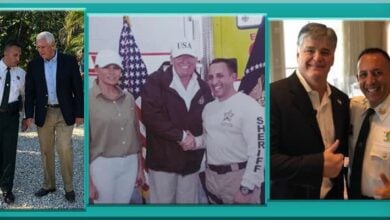
Related reporting from The AEGIS Alliance: the Trump, Hannity, Bush, and Rick Scott roster around this sheriff, the Marceno corruption file, the Amira Fox forgery cover-up, the Enzo Vincenzi false-arrest account, the older Mike Scott docket, and more in Crime News and Police Accountability.