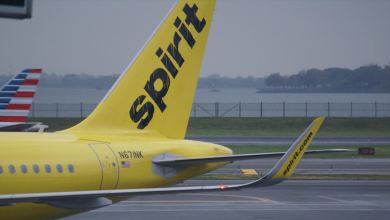

On September 23, 2026, U.S. Bankruptcy Judge Sean H. Lane signed off on the sale of what was left of Spirit Airlines’ flying metal: 27 Airbus A320-family jets for a combined $668.129 million. Twenty-three of them, a mix of A320s and A321s, went to Save 2026-B LLC, a vehicle controlled by holders of Spirit’s aircraft equipment notes, for $567.4 million that is mostly a credit bid against debt already secured by the planes. Four A321s, tail numbers N661NK, N665NK, N670NK, and N671NK, went to FTAI Aircraft Leasing Bermuda for $100.7 million in cash. The yellow fleet Ted Christie once defended as the public’s last cheap seat is now a creditor inventory.
That is the ending of a sentence Christie started on a 2024 earnings call. After a federal judge killed JetBlue Airways’ $3.8 billion bid for Spirit, the ultra-low-cost carrier’s chief executive told analysts that nearly all of the profits in U.S. air travel had pooled inside a handful of companies. Smaller airlines, he said, were left scrambling “in what seems ever more like a rigged game.” American travelers, in his phrasing, were “the long-term losers.” He was arguing for a merger. The market delivered a liquidation.
Christie had run Spirit since 2018 as president and since 2019 as chief executive. He sold the JetBlue combination as a way to build “a real challenger to the dominant ‘Big 4’ U.S. airlines” — American, Delta, United, and Southwest. In January 2024, U.S. District Judge William Young sided with the Justice Department and blocked the purchase. The court found that folding Spirit into JetBlue would take cheap seats off the board on city pairs where Spirit still disciplined fares. Christie called the ruling “a serious misreading of both the evidence and the law” and said Washington had treated two carriers with a combined share under 8 percent as the problem, instead of the four airlines that already controlled most domestic capacity.
Investors heard the “rigged game” line as an attack on the Biden-era antitrust staff. Travelers heard something plainer: if the discounter that made a Tampa weekend possible could not survive alone, the next sale would not be a $29 base fare. Both readings were incomplete. The Justice Department won the injunction. Spirit still collapsed. The cheap seats did not move intact to JetBlue, and they did not stay on Spirit either.
Two bankruptcies, then an empty departure board
The injunction did not, by itself, put Spirit into bankruptcy court. The company had already burned through years of losses, aircraft-lease obligations, and a fare war in which larger brands copied bag fees and “basic economy” pricing that used to be Spirit’s edge. On November 18, 2024, Spirit filed Chapter 11, the first major U.S. passenger airline to do so since American’s case in 2011. A prepackaged plan converted about $795 million of debt into equity, layered in a $350 million equity infusion, and canceled the old common stock. The carrier walked out of that case on March 12, 2025, talking about a stronger airline.
Christie was not there to operate it. He resigned on April 7, 2025, the same week Chief Commercial Officer Matt Klein left. Compensation filings later showed a $3.8 million retention bonus paid days before the November petition, inside a 2024 package reported above $8 million. Crews who had already taken schedule cuts noticed the timing. The board installed Dave Davis, a former Sun Country and Northwest Airlines executive, as chief executive effective April 21, 2025, and told him to push the brand away from pure no-frills flying.
Davis parked jets, dropped thin routes, canceled Airbus deliveries, and furloughed crews. It was not enough. After a credit-card processor locked up liquidity and lessors moved on the fleet, Spirit filed Chapter 11 a second time on August 29, 2025, five months after the first exit. Aviation Week later reported a net loss of $2.76 billion for 2025, against a $1.22 billion loss in 2024, even as operating expenses fell about 24 percent. Creditors sketched a slimmer plan in early 2026 that was supposed to produce another emergence. By February, court analyses put assets near $5.66 billion against about $8.01 billion in liabilities.
Fuel prices then jumped during the 2026 war involving Iran, the United States, and Israel. In a May 2, 2026 statement filed with the Securities and Exchange Commission, Davis said a March agreement with bondholders “would have allowed us to emerge as a go-forward business,” but “the sudden and sustained rise in fuel prices in recent weeks” left no alternative. “Sustaining the business required hundreds of millions of additional dollars of liquidity that Spirit simply does not have and could not procure.” A last push for roughly $500 million in federal support under the Trump administration died after rival carriers and members of Congress lined up against it. Flying stopped in the early hours of May 2. The last scheduled trip, Detroit to Dallas-Fort Worth, landed after midnight. About 50,000 people had flown Spirit that final day. Roughly 14,000 employees and thousands of contractors, on the order of 17,000 jobs tied to the operation, were done. Spirit Aviation Holdings called it an “orderly wind-down” and told guests not to go to the airport.
The merger JetBlue could not buy, purchased in pieces
The irony sits in the auction catalog. Judge Young had stopped JetBlue from buying the whole airline for $3.8 billion because the government said travelers would lose a fare disciplinarian. In the summer of 2026 JetBlue became the successful bidder for Spirit’s 22 operating slots at New York LaGuardia, a package reported at $58.5 million that edged a Frontier bid, and then petitioned the Department of Transportation and the Federal Aviation Administration for an exemption so the slot sale could close. The bankruptcy court had approved the transfer on July 22, 2026, subject to those regulators. JetBlue also picked up Spirit flight-simulator equipment in Orlando for $2.7 million as the only bidder. It did not buy the yellow airline. It bought the pieces that fit a network it already had.
The rest of the estate followed the same logic. On August 13, 2026, the South Florida Sun Sentinel reported that Spirit’s 8.3-acre Dania Beach headquarters campus, occupied only since the spring of 2024, sold for $93.25 million to DPC Holdco LLC, an affiliate of Boston hedge fund Hill City Capital, after an $88 million stalking-horse bid. In mid-August, a bankruptcy declaration named Google the successful bidder at $10 million for a package of deidentified corporate data, personal information to be stripped before any transfer, after an auction that opened August 14 and drew a competing bid from Mercor. Coverage in late September still treated that data sale as a new kind of bankruptcy asset: emails, chats, and code, scrubbed of names, offered to train machines. The passengers who bought the $49 fare were not in the room when the bids were read.
Within hours of the May shutdown, TikTok creator Hunter Peterson stood up a “Let’s Buy Spirit” campaign. Nonbinding pledges were reported near $214 million from more than 247,000 people by May 6, and later tallies floated from about $337 million to $377 million before the pledge site buckled. An accredited-investor round that opened June 13 reached about $2.2 million from 433 investors by June 19, short of the $5 million Peterson said was needed to bid before a June 26 deadline. He halted the raise, said the money would be returned, and described a shift toward building a new airline rather than resurrecting the old one. An August 23 email to supporters, reported by View from the Wing, renamed the effort “Let’s Build An Airline,” pitched a membership model the founder called a “Costco of airlines,” and promised a September 1 name and capital raise. No scheduled yellow-tail passenger flights have come back.
An air-carrier certificate, insurance, trained crews, and working capital measured in the billions sit between a pledge page and a departure board. The campaign proved that a lot of people missed cheap seats to Orlando. It did not prove they could staff a hangar. When an ultra-low-cost carrier disappears, the remaining network does not automatically refill every Fort Lauderdale itinerary at the old price. American, Delta, United, and Southwest already held most U.S. capacity. Removing Spirit concentrated that share further, which is the outcome the Justice Department said it was trying to prevent, and the outcome Christie said would arrive if Spirit could not combine with a partner.
The AEGIS Alliance has followed how consolidation in U.S. business leaves households with fewer options when a discounter fails. The same stranded-passenger problem shows up when a carrier cancels a long-haul trip with little warning, as in the Air Japan Dallas-to-Tokyo cancellation. Job loss on this scale also belongs next to reporting on how millions of U.S. jobs vanished in earlier shocks. Broader fallout sits in our U.S. news file.
Christie’s line was easy to mock in May 2024, when Spirit was still boarding passengers and selling Big Front Seat upgrades. It is harder to dismiss after two bankruptcies, a failed rescue, a fan campaign that could not buy a single Airbus, and a September 2026 order that handed the last 27 jets to lenders and a lessor. The passengers he called long-term losers are the ones opening airline apps and finding that the cheap extra frequency is simply gone. The game he called rigged did not need a conspiracy after that. It needed a docket, a fuel spike, and a buyer for whatever still had a tail number.
Featured image: CC/Flickr/David Ackerman.




Anonymous Forever it’s a good thing I don’t fly on any thing leaving the ground this for me is a very easily avoidable issue for me 🥴
All systems of capitalism is rigged against the consumers.
Larry King It’s the Corporations, not the ability to freely buy and sell.
A lemonade stand is a little kids capitalism building young. Just an example.
It’s the Big Corporations, Gov., etc. Long conversation.
Kimberly Owra lol really duhhh I figured people are smart enough to know what systems of capitalism is against the consumer. Really if a kids lemonade stand is rigging their prices against those who consume their lemonade they should actually be working for a large corporation.
And they just now figured that out?
I am not surprised anymore, corruption has set it’s roots into just about everything anymore,we have been losing our country and freedom for a long time, socialism is their next step.
James Hendrix el capitalismo es igual a corrupción
Heernandez Abrahaam Heernandez really so Who is your master, my Master is no Man nor money, and he has a Name above all Names, Jesus Christ, there’s hope in Christ not in Man. ❤️
Everything is rigged under capitalism.
Kenneth Anderson it sure would help if we had a leader that watched over these cooperations. Why we dont have active group protesting is so not right!