Vape Flavor Ban Panic Collapsed EVALI Into One Scare Word. Vitamin E Acetate Was the Actual Killer


Greetings World. We are The AEGIS Alliance. We do not condone underage nicotine, alcohol, or drug use.
When this site first wrote about a proposed nationwide vape-flavor ban, cable news had collapsed every lung injury into one word: vaping. What most of those segments skipped is what the labs later proved. The 2019 outbreak was not a nicotine-e-liquid crisis. It was vitamin E acetate, a thickener dumped into illicit THC carts sold on the street under names like Dank Vapes and Chronic Carts.
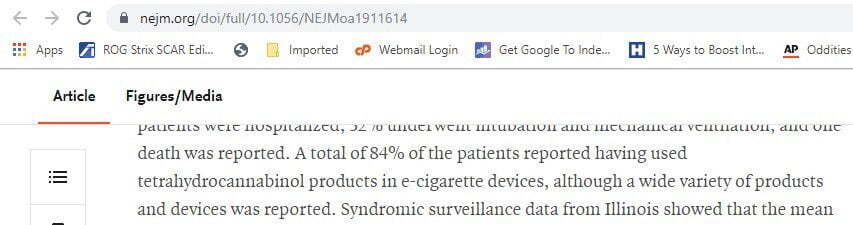
The New England Journal of Medicine found THC in 84 percent of the early cases. Kaiser Health News, USA Today, the Wall Street Journal, the Washington Post, Reuters, CNBC, and the rest eventually said the same thing, then went back to saying “vaping.” New York State named the illicit carts. I, Kyle James Lee, majority owner of The AEGIS Alliance, switched from cigarettes to nicotine vapor about seven years before that scare and have not bought a pack since. I have never had a vaping-related illness. I also do not condone kids using it.
The CDC later gave the outbreak a name — EVALI — and found vitamin E acetate in the lung fluid of 48 of 51 patients and in none of the healthy comparison group. By the time the agency stopped collecting outbreak data in February 2020, 2,807 people had been hospitalized and 68 had died across all 50 states, D.C., Puerto Rico, and the U.S. Virgin Islands. Cases peaked in September 2019, the month this article first ran, and collapsed once the adulterated THC supply was identified and pulled. The CDC could not rule out other chemicals in a handful of cases. The evidence still pointed at street THC carts, not the regulated nicotine liquid a flavor ban would have targeted.
Truth Initiative’s own graph showed 52 percent of teen vapers getting product from social sources — family, friends’ family, their own parents. Retail numbers were padded by those hand-offs. Enablers, not “Big Vape Instagram,” were the pipeline. Combustible cigarettes still kill about 480,000 people a year in the United States. EVALI killed 68, almost all of them tied to a black-market additive. Members of Congress who take cigarette money had a lot to say about mango pods and very little to say about that body count.
The United Kingdom treated nicotine vapor as a quit-smoking tool. English doctors were told to offer it. The United States treated it as a moral panic and a PMTA obstacle course that only the largest tobacco companies could afford.

A nationwide flavor ban of the kind floated in 2019 never became federal law. What happened instead was a patchwork of state bans, a flavor crackdown that pushed adult smokers back toward cigarettes and kids toward whatever the next unregulated pouch or disposable was, and then a reversal. On May 5, 2026 the FDA authorized four Glas ENDS pods — Classic Menthol, Fresh Menthol, Gold, and Sapphire — the first non-tobacco, non-menthol e-cigarettes cleared through the PMTA pathway. The agency has now authorized 45 ENDS products. Days later it issued enforcement-discretion guidance that lets certain unauthorized flavored e-cigarettes and nicotine pouches stay on shelves while reviews crawl. Prohibition did not work on alcohol. It does not work on cannabis. It did not work here either.
AEGIS, in The AEGIS Alliance, stands for The Activists – Alliance for the Exposure of Government Intelligence and Secrets.
We do not claim to be a leader of the Legion. The AEGIS Alliance has Anonymous allies.
“We traffic in the blackest of markets.” — The Black Market, Rise Against:
![[HD] [Lyrics] Rise Against - The Black Market (Song)](https://i.ytimg.com/vi/eMC1OIMaEE8/hqdefault.jpg)