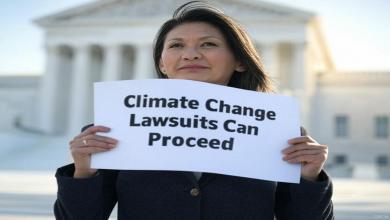
Boulder County’s Climate Suit Reaches the Supreme Court With a Jurisdiction Question the Oil Companies Did Not Write

On January 13, 2025, the U.S. Supreme Court declined to hear oil and gas companies that wanted Honolulu’s climate-damage lawsuit pulled out of state court. The order in Sunoco LP v. Honolulu and Shell PLC v. Honolulu left a Hawaii Supreme Court ruling in place and let the city keep suing at home. Justice Samuel Alito did not participate. No justice publicly dissented from the denial. A denial of certiorari is not a ruling on the merits. The Court did not find anyone liable, and it did not bless the theory that fossil-fuel marketing is a state-law fraud with a climate-sized bill attached. It only refused, that day, to move the file. The refusal did not last. On February 23, 2026, the same Court agreed to hear Suncor Energy Inc. v. County Commissioners of Boulder County, and it added a question the companies did not write: whether the justices even have jurisdiction to be there.
Oral argument is set for Monday, October 5, 2026, the first case of the new term. The docket is No. 25-170. SCOTUSblog’s case page shows a fully briefed fight. Petitioners filed their merits brief in May. Boulder answered on July 27. Suncor and ExxonMobil replied on August 26. On September 4 the Court granted the solicitor general’s request to argue for 10 minutes on the companies’ side, with the companies keeping 20 and Boulder keeping 30. The United States is not a bystander. It is asking for time. The AEGIS Alliance treats the January 2025 Honolulu order as a traffic signal and the October argument as the intersection.
What Honolulu opened, and what it did not decide
Honolulu’s suit belongs to a wave that trackers date to the years after the 2015 Paris Agreement. Plaintiffs say producers misled the public about the role of their products in warming, and that cities now pay for sea walls, wildfire response, storm damage, and public-health costs those companies should share. Defendants named across the broader docket include Sunoco, Shell, Chevron, ExxonMobil, BP, and ConocoPhillips. The companies answer that greenhouse-gas emissions are a national and international problem that federal law already occupies. They want the cases in federal court, where they have won dismissals, or out of court altogether. They describe municipal suits as an attempt to set energy policy through tort law, one county at a time.
The Biden administration urged the Court to leave the Honolulu cases in state court. That recommendation aged with the election. After President Trump returned, an April 2025 executive order framed state climate suits and climate “Superfund” laws as obstacles to energy policy. The Justice Department filed actions against states including Hawaii, Michigan, New York, and Vermont. The legal theory in Washington flipped. The complaints did not. Honolulu’s resilience officials called the 2025 denial a way to keep taxpayers from eating the whole bill. Industry allies called it a gift to people who would rather litigate than legislate. Both lines skip the only thing the order actually did, which was to decline a jurisdictional invitation.
Boulder appealed before a jury ever sat
Boulder County and the City of Boulder sued ExxonMobil and Suncor entities in April 2018. They argue the companies intentionally misled the public about climate risk and that Colorado communities now pay more for extreme weather, including fire, flood, and drought. The companies tried for years to move the case. On April 24, 2023, the U.S. Supreme Court denied an earlier petition. Back in state court, a Colorado district judge refused to dismiss on preemption grounds. On May 12, 2025, the Colorado Supreme Court affirmed, 5-2, in a decision reported at 586 P.3d 161. The companies petitioned again. This time the justices took the case, and they did not take it cleanly.
The question the companies presented is whether federal law precludes state-law claims that seek relief for injuries allegedly caused by the effects of interstate and international greenhouse-gas emissions on the global climate. The question the Court added is whether it has statutory and Article III jurisdiction to hear the appeal at all. Boulder says the Colorado ruling is not a final judgment. The state supreme court decided a pretrial preemption fight and sent the case back. No jury has seen a marketing memo. No damages number has been entered. Boulder argues that a defendant’s fear of future liability and legal cost, at the pleading stage, is too speculative an injury to support standing on appeal. The companies say being forced to litigate a preempted claim in state court is the injury, and that waiting for a final judgment would defeat the point of preemption.
That second question can swallow the first. If the justices decide they have no power to review an interlocutory state-court order of this kind, the preemption fight goes back to Colorado and the Honolulu denial remains what it was: a refusal to intervene early. If they reach the merits and side with Suncor and ExxonMobil, a decade of municipal complaints could be funneled into federal forums that have been hostile, or shut down as displaced by federal law. If they reach the merits and side with Boulder, the 2025 denial starts to look like a green light rather than a shrug. The Trump administration’s brief warned that if Boulder can sue, every locality in the country could sue essentially anyone in the world for contributing to global climate change. Twenty-six states with Republican attorneys general, led by Alabama’s Steve Marshall, told the Court that cities have no business hauling out-of-state producers into local court on a planetary theory. ExxonMobil’s line has been consistent for years: climate policy should not be set through fragmented state-court actions.
Federalism wearing a climate caption
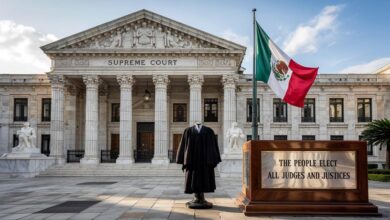
Strip the carbon out of the captions and this is still a Supremacy Clause case with an Article III problem taped to the front. Article VI says federal law is supreme. The companies say emissions regulation is federal. The cities say consumer protection, public nuisance, and fraud are state tools they have always used when a product injures people inside the county line. Boulder’s lawyers analogize to negligent automobile design and asbestos. Some observers note a further irony. The companies’ preemption argument leans on a robust federal scheme. The same administration urging reversal has also moved against the EPA’s endangerment finding, the scientific determination that underpinned federal greenhouse-gas rules. If the federal program is being dismantled, the claim that federal law occupies the field gets harder to sell. That is a doctrinal tension, not a science brief. The justices can resolve the case on jurisdiction and never reach a 1980s marketing document. They can also write a broad preemption rule that ends the genre.
The friend-of-the-court pile is a measure of how large the file has become. Since the grant, more than 70 amicus briefs have been filed, from states, tribes, industry, and local governments. On September 30, 2026, Colorado Law is hosting a public preview in Boulder with faculty, litigators, and rancher Deirdre Macnab, who filed her own brief about what a liability rule would mean for communities on the ground. Boulder County’s statement after the grant treated the moment as a test of whether local governments may seek damages at all. Congress.gov’s Constitution Annotated now carries the case as a pending essay on appellate standing. A decision is not expected on the day of argument. The Court’s calendar points toward an opinion sometime in 2027.
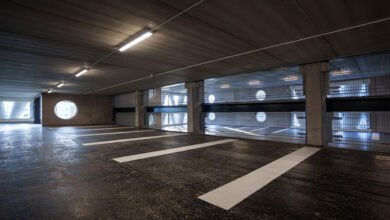
Wildfire seasons give the plaintiffs their pictures. Price shocks and energy-security speeches give the defendants theirs. Neither picture answers whether a pretrial order from Denver is the kind of judgment Article III lets this Court review. The AEGIS Alliance will not pretend the January 2025 order was a victory parade, and it will not pretend an October argument is a verdict. Readers who want the physical leftovers of the energy transition, rather than only the courthouse fight, can see how Sweden turned old turbine blades into a parking garage. The surrounding desk is environment news, science, and U.S. news. The courthouse that hears the evidence is the decision in front of the justices. Who owes what, if anyone does, is still a trial that has not started.


climate change is not real,stop waisting our tax dlooares
Will we get a tax return on the un fair price