#OpDomesticTerrorism: Anonymous Shut Down More Than A Dozen Neo-Nazi Websites


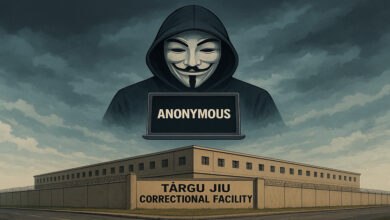
The hacktivist collective Anonymous initiated a huge operation called #OpDomesticTerrorism against neo-Nazi and white supremacist websites in response to the Charlottesville rally. The operation was initiated as a reaction to the violence at the “Unite the Right” rally in Charlottesville, Virginia, which culminated in the murder of counter-protester Heather Heyer.
Anonymous, decentralized and web-based in nature in its activism, declared war on neo-Nazi and alt-right organizations, intent on disrupting their lines of presence and communication on the internet. Anonymous’ activities were part of the general social response to the resurgence of far-right extremism and white supremacy in America.
In the wake of #OpDomesticTerrorism, Anonymous effectively targeted and took down well over a dozen neo-Nazi and Ku Klux Klan (KKK) sites. The cybercrime group worked and relocated very quickly, taking many of the hate sites off the map, reports the International Business Times UK.
The Daily Stormer was among the largest targets, a large neo-Nazi website best described by hateful invective and inciting speech. It was hit hard as Anonymous and other registrars and ISPs attempted to get it taken offline. A supposed hacked message on the Daily Stormer site popped up, declaring that the website was under hacker control.
Anonymous tweeted, “We have no tolerance for any form of racism. We’re acting to take down the websites of these domestic far-right extremists in the interest of #OpDomesticTerrorism.”
The collective didn’t stop with site takedown. They also carried out tracking and outing of hate group members. This was a multi-component operation meant to discombobulate the internet presence used by these extremist organizations as a way to recruit members and communicate with one another.
The effect of #OpDomesticTerrorism was profound. Engadget says that “Options for neo-Nazis on the internet are starting to shrink”. The operation pushed many such groups to other hosting options, with some going so far as to use the dark web in an attempt to stay online.
Still, the war on internet-based extremism and hate speech continues. While Anonymous’ activities were effective, they also drew criticisms regarding digital vigilantism and whether private individuals should police the internet. Some of the critics said that pushing such groups underground would make them more difficult to track and defeat.
To all those fears, however, Anonymous’ move was globally seen as long overdue to arrest the rising wave of home-grown terror and radicalization via the Internet. The Electronic Frontier Foundation’s Cindy Cohn explained the larger scenario of technology giants distancing themselves from white supremacist web pages as, “This is a slippery slope that once begun is hard to reverse.”.
As of 2023, the effects of #OpDomesticTerrorism are still present. While other neo-Nazi and white supremacist groups have managed to reinvent themselves online, the operation proved that mass mobilization is effective against web-based intolerance. It also set in motion continued debates on freedom of speech vs. the place of internet communities in imposing hurtful content.
Overall, Anonymous’ #OpDomesticTerrorism in 2017 was a watershed moment in the struggle against internet extremism. In taking down over a dozen neo-Nazi websites, the group showed the potential for hacktivist activity and forced key questions of internet governance and the boundaries of online activism.
What the Courts and the Networks Did After the Takedowns
The street violence that triggered #OpDomesticTerrorism produced a paper trail the websites never wanted. James Alex Fields Jr., who drove into counter-protesters in Charlottesville and killed Heather Heyer, was convicted of first-degree murder in Virginia state court in December 2018. The jury recommended life plus 419 years. In 2019 he pleaded guilty to 29 federal hate crimes to avoid the death penalty and is serving two concurrent life sentences.
In November 2021, a federal jury in Sines v. Kessler found 17 white-nationalist organizers and groups — including Jason Kessler, Richard Spencer, Christopher Cantwell, Matthew Heimbach, and Daily Stormer founder Andrew Anglin — liable for a conspiracy that produced the rally’s violence, and awarded more than $25 million in damages. Almost half of that award ran against Fields. Collection has been ugly and incomplete, which is its own kind of record: the movement could fill a street in 2017 and could not pay a civil judgment a few years later.
Daily Stormer, the highest-profile site Anonymous and registrars knocked offline, spent years bouncing from the open web to the dark web and fringe hosts. It never recovered the casual, Google-indexed reach it had before Charlottesville. That does not mean the ideology disappeared. It migrated — to encrypted chats, alternative video platforms, and smaller forums that are harder to DDoS and harder for journalists to watch. The original operation still stands as a documented moment when a decentralized collective, ISPs, and the public all moved at once.
Related from The AEGIS Alliance: Attempting to Clear up Misconceptions about Anonymous, the FBI Project Chanology files, and Anonymous News.
The Homepage They Knocked Offline Eventually Admitted It Was Finished
The clearest after-action report on #OpDomesticTerrorism did not come from a security conference. It came from the editor of the site the operation, the registrars, and the hosts had spent years shoving off ordinary internet infrastructure. In March 2026, Andrew Anglin published what he called the last Daily Stormer post. He wrote that the site was in its 13th year, that the fourth year was the one “the rug was pulled,” and that for nine years after that the audience had limped along while the hosting bill became, in his words, financially nonviable. He blamed the deplatforming. He also said he was not done. A shutdown notice is not a change of mind. Wikipedia records the site as dissolved on April 15, 2026. The casual, Google-indexed front door that existed before Charlottesville did not survive as a normal website. That was the piece a decentralized collective, working in the same weeks Cloudflare and GoDaddy cut the domain loose, could actually take.
What the collective could not take was the money or the march. A federal judge in June 2019 ordered Anglin to pay comedian Dean Obeidallah $4.1 million after Anglin falsely accused him of staging the Manchester Arena bombing. In August 2019 a judge ordered $14 million for Tanya Gersh, the Whitefish, Montana real estate agent whose life Anglin’s readers set out to wreck. Anglin did not appear. In Sines v. Kessler a default judgment ran against him as well. Collecting has been a second case. The Southern Poverty Law Center has described how bitcoin let him keep assets away from the courthouse, and it reported that in 2025 it got the exchange Binance to freeze one wallet holding about $100,000. A federal bench warrant for civil contempt has been outstanding since November 9, 2022, after he ignored orders to disclose where he was and what he held. The site can go dark. A judgment does not collect itself.
The street half of the original operation aged in public, not on a forum. James Alex Fields Jr. is still serving the life sentences described above. Heather Heyer’s name is on a street in Charlottesville, which is a municipal fact, not a healing. In late September 2026, photos circulated identifying Marshall Rawson, a Republican nominee, as a man who had marched with neo-Nazis at the same rally. The ideology did not need Daily Stormer’s old homepage to find another parade. Critics of #OpDomesticTerrorism warned in 2017 that pushing these pages off the clear web would make them harder to watch. Anglin’s own farewell and the crypto dockets show both sides of that warning at once. The megaphone shrank. The movement did not file dissolution papers with the domain registrar.
None of that rewrites what Anonymous did in August 2017. It measures it. More than a dozen neo-Nazi and Klan sites went down in the first wave, Daily Stormer loudest among them, and the largest of those sites never got its old audience back. Anglin said so himself, in the post where he turned the lights off. Readers who want the longer argument about what hacktivism is, and what it is not, still have Hacker News and the record of how fast a federal official’s personal data moved when Anonymous decided a policy fight was personal. The Charlottesville operation remains the one where the websites, the companies, and a murder trial all had to answer the same week.