How Sweden Recycled Old Wind Turbine Blades Into Parking Garage Architecture


What is the Niels Bohr car park in Lund?
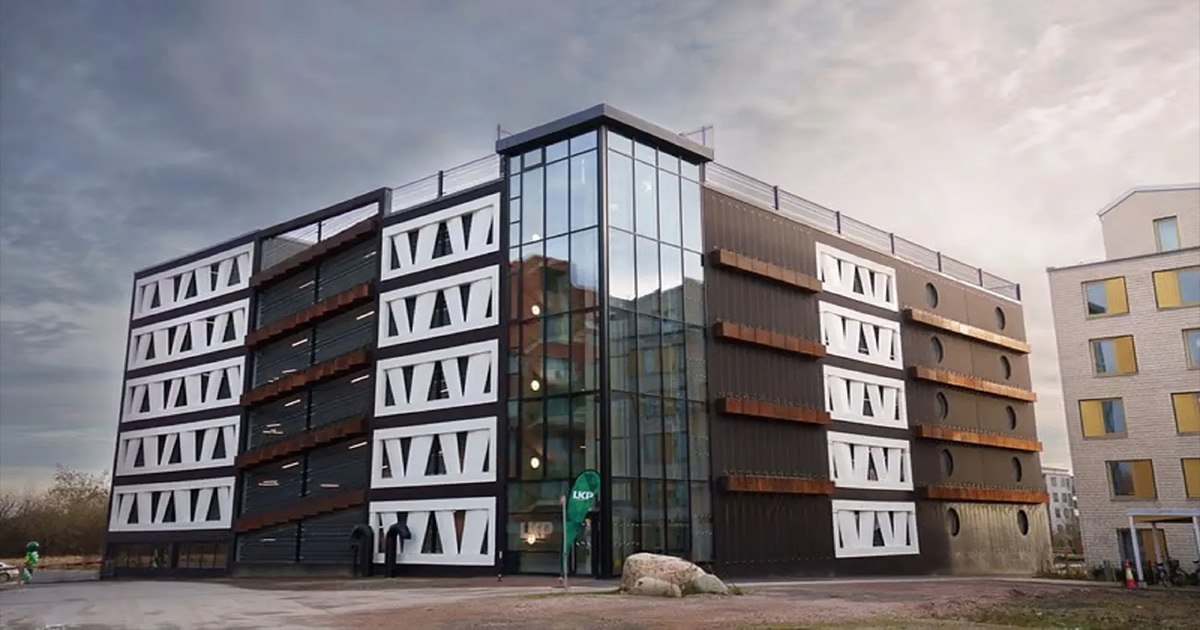
In southern Sweden, the city of Lund has opened the Niels Bohr car park, a multi‑storey facility whose façade is built from 57 retired wind turbine blades donated by the energy company Vattenfall. The car park stands in the fast‑growing Brunnshög district and is described as the first in Europe to integrate decommissioned rotor blades as prominent exterior elements. ( Interesting Engineering )
Named after the Danish Nobel Prize‑winning physicist Niels Bohr, the building provides both short‑ and long‑term parking for residents and visitors, linking scientific heritage with a visible symbol of circular design in a high‑tech neighborhood. LKP, the municipal parking company, owns and operates the facility as its ninth car park in Lund. ( LKPAB )
How are old wind turbine blades used in the structure?
The 57 blades, originally installed at Vattenfall’s now‑decommissioned Nørre Økse Sø wind farm in Denmark, have been cut and arranged as “curtain walls” – non‑load‑bearing façade panels that visually wrap large parts of the exterior. These elements give a new purpose to composite components that are normally difficult to recycle and often end up in landfills. ( Vattenfall )
Architect Jonas Lloyd developed the idea after reading about blade disposal problems in the U.S. wind sector and wondering whether the material could be given a more productive second life. “It’s not just an environmental issue, but also a waste,” he said, describing the project as “an eye‑opener” intended to show that discarded blades can become architectural features rather than buried debris. ( Interesting Engineering )
What does the building offer drivers and the neighborhood?
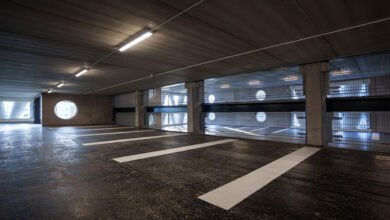
The car park rises five to six levels (13 half‑levels in local descriptions) and contains roughly 265 to 365 parking spaces, depending on how the spaces are counted in different project communications. It includes 40 charging points for electric vehicles, reflecting the district’s push toward low‑emission transport. ( Energy‑Pedia )
Solar panels on the roof feed power to the building and its charging stations, and a battery stores surplus energy so that no locally generated electricity is wasted. The façade combines the white blades with vegetation chosen to support pollinators, adding a biodiversity element to what might otherwise be a conventional concrete structure. ( LKPAB )
Why are wind turbine blades so hard to deal with?
Rotor blades are made from tough composite materials such as glass‑fiber and carbon‑fiber reinforced plastics, designed to endure decades of mechanical stress, UV radiation, and harsh weather. That durability makes them difficult to break down, which is why, in many regions, blades removed from service are cut up and landfilled. ( Interesting Engineering )
As wind farms built in the early 2000s reach the end of their service lives, the volume of retired blades has become a growing waste challenge worldwide. Projects like the Lund car park respond to that pressure by finding alternate uses for existing blades while recycling technologies and regulations continue to evolve. ( Vattenfall )
What do Vattenfall and LKP say about the project?
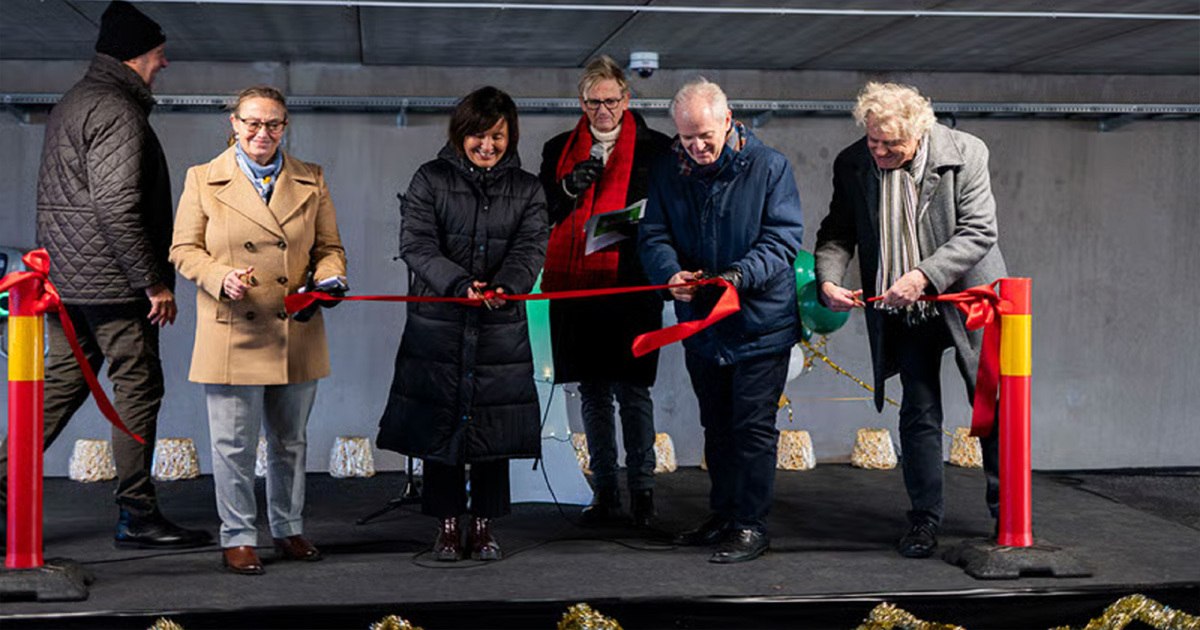
Vattenfall country manager Anette Traberg for Denmark said the Lund facility shows that “sustainability can meet the financial, time and safety demands of a project,” framing it as proof that circular solutions in wind power can move beyond pilot scale. The company has pledged to recycle all of its blades by 2030 and has banned sending them to landfill, experimenting with new products such as panels and construction elements made from blade material. ( Vattenfall )
LKP CEO Paul Myllenberg acknowledged that the idea of cladding a car park in old blades initially met skepticism, but praised the board for backing a concept that turns a difficult waste stream into a visible statement on resource efficiency. LKP has even launched a competition inviting the public to submit ideas for how remaining blades from the same wind farm could be put to use, offering a month of free parking to the winner. ( LKPAB )
Is this part of a wider trend in reusing turbine components?
Vattenfall describes the Niels Bohr car park as part of a broader shift “from blades to buildings,” in which components from decommissioned turbines are turned into infrastructure and design objects instead of waste. The company has highlighted other projects where blades and towers are repurposed into compact housing or structural elements, feeding into its wider circular‑economy goals for offshore and onshore wind assets. ( Vattenfall )
Industry publications note that the Lund project is attracting interest from architects and city planners looking at how large composite parts such as blades can serve as ready‑made beams, shells, or façade pieces in future developments. If similar schemes spread, wind farms could see their components designed with “second lives” in mind from the start, easing future decommissioning and reducing material waste. ( Windtech International )