Australian Man Lived 105 Days on a Titanium BiVACOR Heart That Was Still Only a Bridge to Someone Else’s Organ

The man has no public name. He is described as Australian, in his forties, and, for 105 days, as a person whose heart was a titanium disc spinning in a magnetic field. Surgeons at St Vincent’s Hospital Sydney implanted a BiVACOR total artificial heart on November 22, 2024. He left the ward. He shopped. He lived in ordinary rooms with a cable through his chest and a controller about the size of a large textbook, roughly five and a half pounds, tethered by four or five feet of driveline. In early March 2025 a donor heart arrived. The pump came out. He was the first person on Earth discharged from a hospital alive with this device, and he was still a bridge patient, not a permanent one.
The AEGIS Alliance has stayed on the case because the marketing language keeps trying to skip that distinction. Daniel Timms, the Queensland engineer who started the design as a doctoral project and is now chief technical officer, has told engineering press that commercial distribution could begin in 2028 if the trials finish. A fully implantable version, with no textbook hanging off the body, is the longer project he calls destination therapy. The 105 days proved a man could go home. They did not prove the waiting list is over.
One moving part, and why that mattered
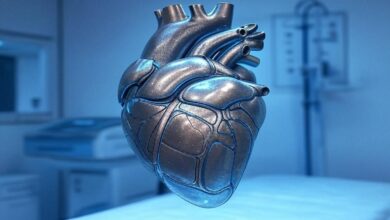
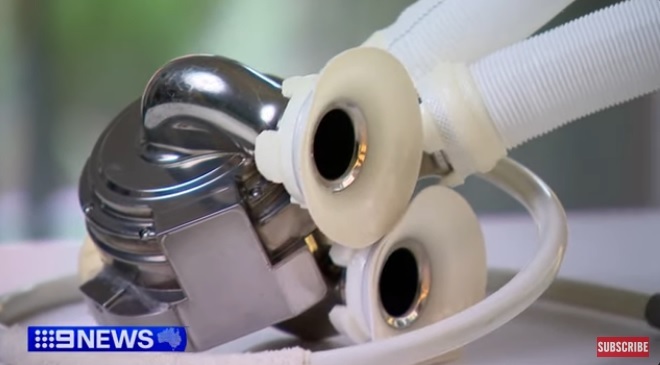
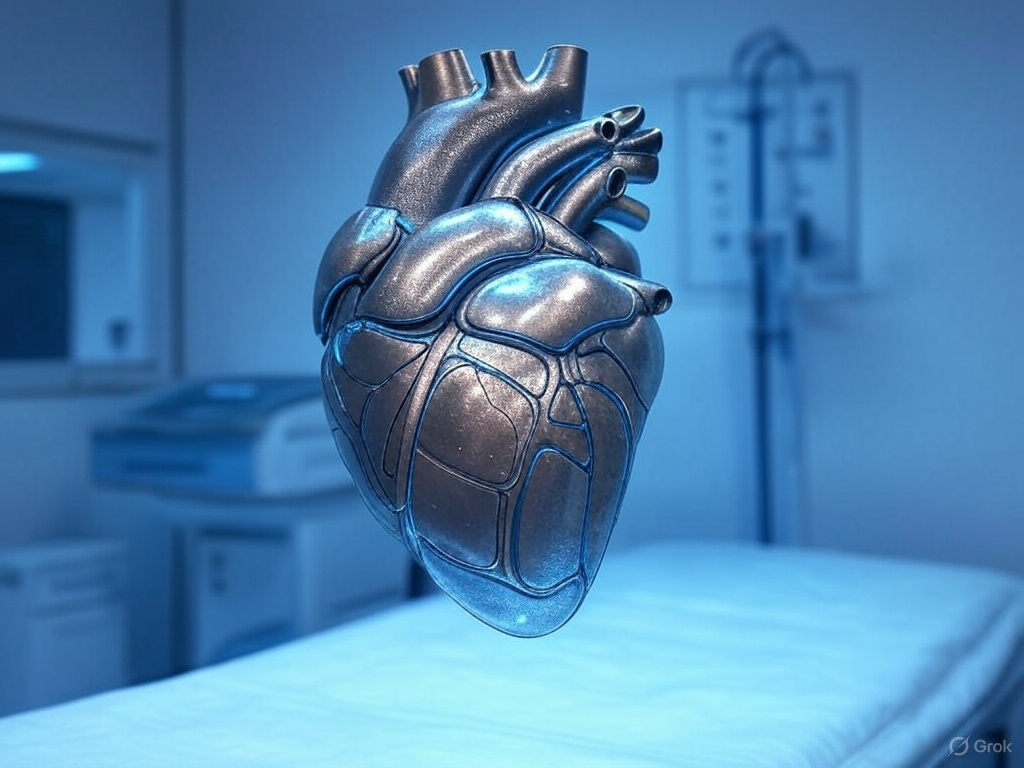
Earlier total artificial hearts failed in predictable ways. Plastic chambers flexed until they fatigued. Valves cracked. The machines were too large for many chests, especially women’s. BiVACOR is a rotary pump, about the size of a fist and about 650 grams, machined from titanium. A magnetically levitated impeller, a double-sided disc that never touches a bearing, pushes blood in a continuous stream. There is no cartoon heartbeat. There is also, in the company’s telling, no mechanical surface waiting to wear out at a scheduled hour. Large gaps in the blood path are meant to lower the chance of clot.
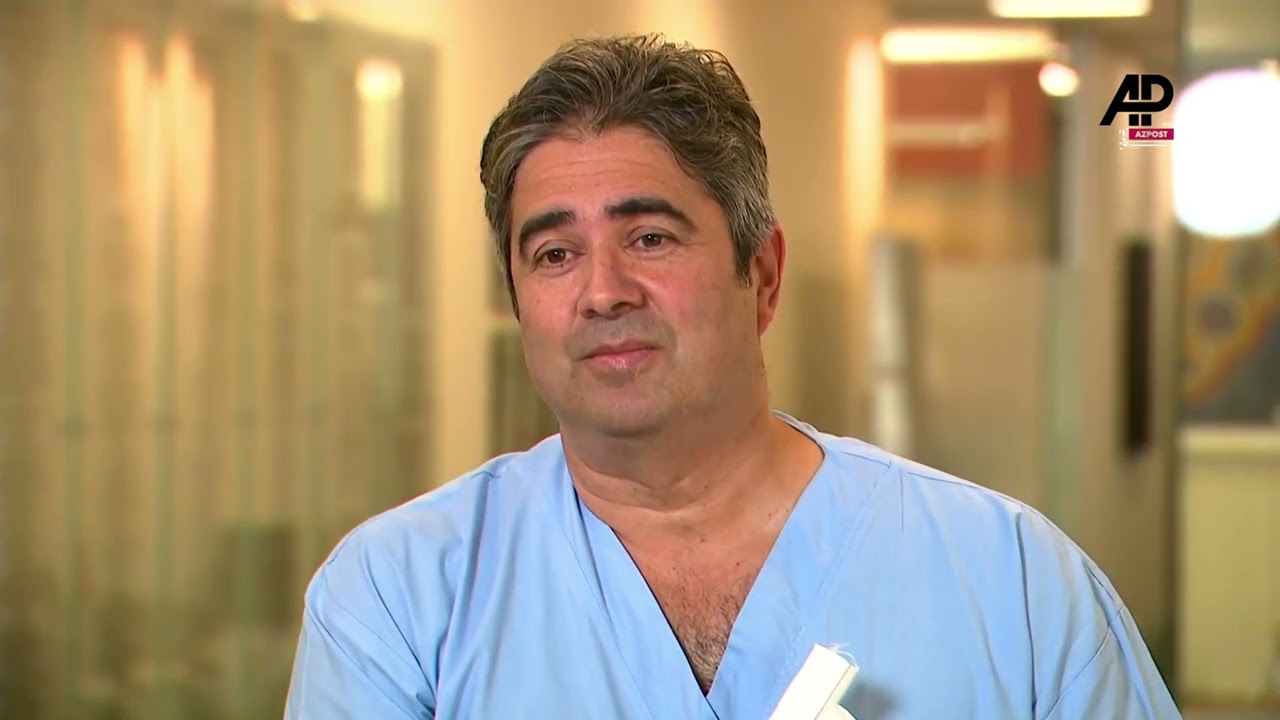
Dr. Paul Jansz performed the six-hour operation and called the team enormously proud to be first in Australia. The hospital sits on a particular piece of history. Australia’s first heart transplant was done at St Vincent’s in 1968, and the country’s first successful one, by Dr. Victor Chang, in 1984. Cardiologist Professor Chris Hayward has described the 2024 implant as an unmitigated clinical success. Professor Peter MacDonald called it a complete game changer for the queue. Timms stayed close after discharge. In an ABC interview he described an ordinary Uber ride and a patient well enough to joke about getting a pint after the human transplant. “He was a lovely fellow,” Timms said, “very, very grateful.”
Houston went first. Sydney went home.
The Australian man was the sixth human implanted, not the first. On July 9, 2024, surgeons at Baylor St. Luke’s Medical Center in Houston, inside the Texas Heart Institute program that has chased mechanical hearts for generations, put the device into a 58-year-old man under an FDA Early Feasibility Study. Five U.S. patients, all in severe biventricular failure and facing imminent death, were successfully bridged to donor hearts. Because of the way that first study was written, they stayed in intensive care and were relisted quickly. Support times were short. The agency then allowed 15 more patients. In May 2025 the FDA gave the pump Breakthrough Device designation as a bridge to transplant. That is a faster review track. It is not a supermarket approval.
An extended U.S. feasibility study meant to let patients go home began in October 2025. IEEE Pulse reported in June 2026 that one of those patients had carried the heart for three months and spent one of those months outside the hospital, with 14 more people being enrolled. In Australia, regulators had allowed a five-patient series. Four had been done by the middle of 2026, and the unnamed man in his forties still held the duration record at about 104 to 105 days. Timms has said some recipients recovered so fast that transplant teams were ready in days, not months. Speed is a gift to a waiting list. It is also a reminder that the current generation is designed to be explanted.
The bleeds the press conference did not lead with
Two later Australian patients died of bleeding in the brain several weeks after surgery. An independent review, described in the surgical literature in 2026, concluded the hemorrhages were not caused by a defect in the pump. Investigators pointed at blood-pressure control and anticoagulation, the same tightrope every mechanical-support team walks. The families still buried people who had been offered a way station to a second chance. The AEGIS Alliance will not sand that off a titanium success story. A magnetically levitated impeller can be elegant and still sit inside a body that clots or bleeds. Stroke and hemorrhage have haunted total artificial hearts for decades, including the ones with parts that wore out.
Readers of our health coverage have seen the same split elsewhere. A Long Island man freed from sickle cell pain by gene therapy still faces lifelong cancer surveillance and a chemotherapy step that can cost fertility. A single spectacular recovery is not a safety table. BiVACOR is headquartered in Huntington Beach, California, with clinical offices in Houston and an Australian base on the Gold Coast. Australian government money, including support routed through Monash University’s artificial-heart program and the Medical Research Future Fund, helped get the trial onto a Sydney operating table. Public capital does not erase a complication.

Why the donor list still decides
A left-ventricular assist device can hold up one failing side of the heart. Patients whose right and left sides are both finished, or who cannot take an assist device, have had almost nothing except the hope that a donor appears before they die. Before mechanical support became common, about a quarter of the people waiting for a heart died on the list. A durable, smaller total artificial heart is the tool that gap has been missing. If the expanded U.S. study repeats the first five bridges without a wave of device failures, regulators will be pushed to let more centers use it as a planned stepping stone.
The controller is the honest detail. A five-and-a-half-pound box and a driveline through the skin are not a heart you forget. Infection at that cable, power failure, and the daily logistics of batteries are the life the shopping trips did not show on camera. Timms has been clear that a permanent implant, one a person might live with for years without a donor, is a later generation. Company materials still describe this one as a bridge. The American College of Surgeons, writing in 2026, called the moment real momentum and also a defining chapter, which is a careful way of saying the engineering works and the protocol is not finished.
What 105 days were actually for
They showed a surgical team in Sydney could implant the pump, send a person into the city with it, explant it, and complete a human transplant. They showed U.S. regulators were willing to widen a feasibility study and stamp it as a breakthrough device. They did not show that anticoagulation can be standardized, that every later implant will avoid a brain bleed, or that a commercial titanium heart will be sitting on a shelf in 2028. Timms expects the trials to be done and distribution to start that year. Expectation is a schedule, not a warranty.
For one unnamed man, the proof was narrower and more human. He walked out of St Vincent’s. He waited. He received someone else’s heart. The disc that spun in his chest did not get a name on a building. It got him to the next operation. That is a smaller miracle than the headlines sold, and it is still the difference between a funeral in November 2024 and a transplant in March 2025. More of this reporting sits with our science desk and international news.