Northbridge Animal Control Shoots Husky Named Odin After a Coyote Call on Fowler Road; Chief Says No Punishment

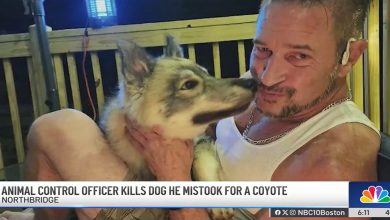
Odin was 11 months old, a husky of about 55 pounds, wearing a flea collar. On November 19, 2024, he was in the woods off Fowler Road in Northbridge, Massachusetts, when the town’s animal-control officer, answering a coyote complaint, shot him dead. His owner, Kirk Rumford, found out the way too many pet owners find out: a call, then a body. The official line from Police Chief Tim Labrie was mistaken identity, no malice, no discipline. The AEGIS Alliance is keeping this file under Police Accountability because “we thought it was a coyote” is not a policy. It is an admission that the person with the gun did not confirm the animal before firing.
Local reporting named the officer as Daniel Chauvin. NBC Boston, the Milford Daily News, Spectrum News, and Boston 25 all ran the same core facts within three days. Rumford said Odin was “just a puppy” and that non-lethal options should have come first. Labrie said the officer had euthanized coyotes before and would not be punished. Through early September 2026, no criminal charge, no firing, and no posted lawsuit judgment had followed. The Northbridge Police Department’s own animal-control page still listed Dan Chauvin as the ACO, with a town hall phone number and a hotmail address.
What the town said, and what it did not do
Northbridge is a Worcester County town. Animal control there sits inside the police department. The town charter language is ordinary New England copy: the officer handles dog complaints, enforces Chapter 140 of the General Laws, and answers calls about animals at large. None of that text says “shoot first when the call says coyote.” A husky in a collar is not a mystery species. Huskies are the breed people already mix up with wolves and coyotes on social media. That is precisely why an officer who works animals for a living is supposed to close the distance, look at the collar, look at the gait, and use a catch pole or a dart before a bullet.
Labrie’s defense was experience. The officer had killed coyotes on other calls, the chief said, and this time the animal looked like one. “We truly feel bad,” the department told reporters. Feeling bad is not a finding. A finding would be a written review that answers basic questions. How far away was the shot? Was the animal running, standing, or coming toward the officer? Did the officer call the owner search, scan for tags, or announce himself? Was a second officer on scene? Was the body photographed in place? Those answers never became a public report. The story stopped at “tragic error.”
Massachusetts has a long, ugly list of dogs shot by police and animal-control officers. Some of those dogs were charging. Some were behind fences. Some were on their own porches. The pattern that matters here is the one The AEGIS Alliance has watched in other accountability files: a department names the mistake, declines the consequence, and waits for the news cycle to move. Readers of the Police Accountability desk will recognize that rhythm from larger cases, including Lee County, Florida, reporting such as the Carmine Marceno file and the Michael Broady 911 call in rural Alabama. A husky in Northbridge is not those cases. The refusal to impose a cost on a bad shot is the same civic habit.
Why a collar should have ended the call
Coyotes in Massachusetts are real. They take cats. They worry parents of small dogs. A resident who calls about a coyote on Fowler Road is not inventing a problem. The failure is downstream of the call. An ACO is supposed to be the person who can tell a 55-pound house husky from a wild canid at working distance. Coat color is a lousy test. Collar, behavior, and location are better tests. Odin was a neighborhood dog, not a traveler off the Mass Pike. Rumford’s later interviews described a pet who had gotten out, not a stray pack animal.
Non-lethal tools exist because lethal force on a suspected coyote is optional in a residential street grid. Catch poles, live traps, noise, and, if the town insists on a gun, a clear visual identification at a range that lets the officer see hardware on the neck. A flea collar is not camouflage. It is a piece of plastic and fabric that says someone pays a vet bill for this animal. Missing it is the whole case.
The CBS Boston package at the top of this page, reported by Paul Burton, is still the cleanest local video record. Other stations repeated the family photos. National pickups flattened the story into a one-line oddity. That flattening is how a discipline decision disappears. If the item is filed as weird Massachusetts, nobody asks whether Chauvin’s next coyote call will be handled the same way.
What no punishment actually means
When a chief says there will be no punishment, three clocks start. The first is internal affairs, which can still write a letter and file it. The second is the town manager, who appoints the ACO under Northbridge’s rules and can decline to reappoint. The third is civil court. As of September 2026, public reporting had not shown a verdict, a settlement notice, or a firing. The department website still naming Chauvin is the closest thing to an official status update, and it is an update that says the town kept him.
That choice trains the next call. Officers learn what their chiefs will absorb. Residents learn whether a collar is enough to keep a dog alive. Animal-control work is already a grind of loose pets, bitten mail carriers, and rabies paperwork. Adding a free fatal mistake to that grind tells every husky owner in the Blackstone Valley to keep the lead short and the gate locked, which they should, and tells every ACO that a coyote ticket is a hunting license, which it is not.
The AEGIS Alliance is not claiming the officer woke up hoping to kill a pet. Intent is the wrong test when the job is identification. A surgeon who removes the wrong kidney does not need to have wanted the error. The hospital still has to change the checklist. Northbridge never published a checklist change. That is the news now, two years after the shot: the policy is still the chief’s quote.
Where this sits on the site
This article lives with other US animal and force stories under US News and Odd News, because a husky shot for looking wild is both. Related reading includes the Nantucket great white rescue, a case where the humans on scene slowed down and saved the animal, and the Louisiana beach dolphin file. For official misconduct that did draw paper, see the Arkansas back-seat beating video.
Primary local record: the NBC Boston interview with Rumford, the Milford Daily News write-up of Labrie’s comments, and the department’s own Animal Control page still headed by Chauvin’s name.
Odin is not coming back. The only remaining public question is whether Northbridge changed anything that would have kept him alive. On the available record, the answer is no. The AEGIS Alliance will update this page if a court filing, a reappointment notice, or a new policy memo appears. Until then, the official story of Fowler Road is a collar the officer did not see and a chief who decided that was close enough.