NewsOther VideosThe Unexplained Or UnconfirmedUS NewsVideos

Days Before His ‘Suicide’ Death, Jeffrey Epstein Had A Specific Reason Why He’d Never End His Own Life

Jeffrey Epstein 'Suicide' Notes and Final Days

Questions swirl as video logs show person may have entered Epstein jail tier the night he died

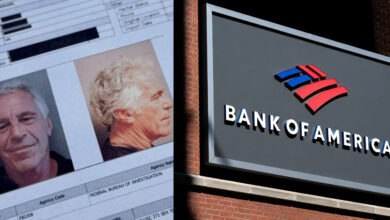
Weeks before his death in a Manhattan jail cell, Jeffrey Epstein wrote notes and gave interviews that argued against the possibility of him taking his own life. These documents, along with internal records from the Bureau of Prisons, provide a look into his mindset during his final period of incarceration at the Metropolitan Correctional Center (MCC). They have taken on renewed weight as millions of additional case records have entered the public record, sharpening longstanding doubts about how the financier really died.

What did Jeffrey Epstein write in his final notes?

Records show that Epstein penned several notes while awaiting trial on sex trafficking charges. In one specific writing, he listed reasons why he would not end his own life. He described himself as a “coward” and stated that he “did not like pain.” A psychological observation from July 26, 2019, noted that Epstein “does not like pain and never attempt (sic) to harm himself.”

Internal memos indicate that Epstein told a prison psychologist that he was a “live man” and had much to live for, specifically citing his legal defense and future goals. (People)

Why did Epstein claim his religion prevented suicide?

According to a suicide risk assessment form dated August 1, 2019, Epstein used his faith as a reason for staying alive. The report stated, “He said he is Jewish and he said in his religion suicide is against the religion.”

At that time, the report listed Epstein’s “overall acute suicide risk” as “low.” The evaluator noted that “his current protective factors override his risk factors for suicidality. He is currently psychologically stable. He denied feeling hopeless. He is reporting positive future plans and reasons to live for.” (People)

How did he explain the July 23 incident?

The notes mentioned a possible suicide attempt on July 23, 2019, when Epstein was found with neck bruises. When questioned about this event, Epstein told interviewers that “he could not remember what happened” on the day in question. He blamed this lack of memory on his “sleep apnea,” rather than an intentional act of self-harm.

Despite these claims, he was briefly placed on suicide watch before being moved to psychological observation. (Associated Press)

How did the prison staff handle his mental health status?

Epstein was removed from suicide watch roughly a week after the July incident. Documents reveal that he told staff the marks were the result of an assault by a cellmate, though prison officials remained skeptical.

After his removal from suicide watch, he was placed on “psychological observation.” Despite this, the night he died, he was left alone in his cell, and the guards on duty failed to perform the required check-ins every 30 minutes. (CBS News)

What did his cellmate tell investigators?

One of the most striking revelations to surface in the sprawling document releases concerns the man who shared Epstein’s cell shortly before his death. In a lengthy interview with federal investigators on August 16, 2019, cellmate Efrain Reyes told officials that he had pleaded with Epstein not to take his own life inside their shared cell. Reyes’ account, memorialized in handwritten notes taken by a Justice Department official who was present, offers a rare firsthand window into Epstein’s demeanor in custody and stands in tension with the picture of a man who repeatedly insisted he had every reason to keep living.

That detail emerged after the Department of Justice released a massive tranche of Epstein material on January 30, 2026 — more than 3 million pages of documents, roughly 180,000 images, and about 2,000 videos drawn from the Florida and New York prosecutions, multiple FBI investigations, and the Office of Inspector General review of his death. (The AEGIS Alliance)

What did the Department of Justice investigation find?

A report from the Department of Justice Office of the Inspector General identified “significant misconduct” and a lack of oversight at the facility. The investigation confirmed that the two guards assigned to watch Epstein’s unit were sleeping and browsing the internet instead of doing their rounds.

Inspector General Michael Horowitz stated, “The combination of negligence, misconduct, and outright job performance failures documented in this report is deeply concerning.” The report concluded that while there was no evidence of foul play, the environment at the MCC made it possible for Epstein to take his own life. (OIG.Justice.gov)

Four months after Epstein’s death in August 2019, 60 Minutes uncovered a multitude of evidence and reasons for why Jeffrey Epstein didn’t kill himself, and that rather, he was killed. (The AEGIS Alliance)

What do the newly released video logs show?

In early February 2026, journalists combing through the latest disclosures flagged surveillance observation logs that appear to contradict official accounts of the night Epstein died. A log entry describing footage from the MCC’s Special Housing Unit noted “a flash of orange” moving up the staircase toward the isolated L Tier where Epstein’s cell sat, captured at roughly 10:39 p.m. on August 9, 2019. One notation suggested it could “possibly be an inmate escorted up to that Tier.” (CBS News)

Independent video analysts who reviewed the footage for CBS News said the movement looked more consistent with an inmate, or someone in an orange prison uniform, than with a corrections officer. Reviews by the FBI and the DOJ Inspector General reached differing conclusions about the figure. The findings cut directly against earlier public statements — including from then-Attorney General Bill Barr and then-deputy FBI director Dan Bongino — that no one entered Epstein’s housing tier that night. The records also documented further lapses: missed inmate counts, skipped wellness checks, an officer who reportedly slept on duty, and an unexplained drop in the recorded SHU headcount from 73 to 72.

What were Epstein’s last words to his legal team?

His lawyers, including Reid Weingarten and Martin Weinberg, maintained that Epstein was “not suicidal” during their meetings. Weingarten told a judge shortly after the death, “We did not see a despairing, despondent, suicidal person.” Epstein spent his final days meeting with his attorneys for up to 12 hours a day, which some officials believed was a tactic to stay out of his small, cramped cell. Taken together with his written reasons to live, his cellmate’s plea, and the unresolved questions about who may have approached his tier, the surviving record continues to fuel skepticism that the official suicide ruling tells the whole story.

Jeffrey Childers
Journalist, editor, cybersecurity and computer science expert, social media management, roofing contractor.

Related Articles

Leave a Reply

Your email address will not be published. Required fields are marked *

Back to top button
Signup for our news and memes newsletters! 

Newsletter Form

Lists
close-link