New Orleans Trustee Calls It Morally Repugnant: Eleven Clergy Stay Off the List After a $305 Million Deal

The check was supposed to be the ending. It is not. On September 14, 2026, Don Massey, the court-appointed trustee of the Archdiocese of New Orleans clergy-abuse settlement, filed 45 pages with U.S. Bankruptcy Judge Meredith Grabill and said the church had “flatly refused” to investigate 11 clergy members — priests and nuns, living and dead — whose names surfaced in bankruptcy claims and never made the public list of the credibly accused. Massey wrote that the archdiocese’s own internal review board had already found allegations against them credible, that two of the 11 are named in 11 claims each, and that survivors are still alive to describe what happened. “It is morally repugnant and unconscionable to allow ANO to continue to suppress identities of credibly accused abusers, as has been the case for decades,” he wrote. He added that the institution “is not demonstrating transparency nor a culture of change.”
Three days later, on September 17, Grabill held a status conference. Archdiocese attorney Ian Gunn told her the church had gone beyond what the law requires, that “significant resources” had been spent on compliance, and that leaders were “proud of how we have been successful in implementing these nonmonetary provisions.” He said the 11 names had been sent to the review board, that some but not all were under active investigation, and that none of the accused remained in active ministry. He did not say when, or whether, the names would be published. The archdiocese called the charge that it is not investigating “a misrepresentation of the facts.” Archbishop James Checchio has ordered a review of deceased clergy named in the claims.
The Warrant Was About the Bosses
In May 2024, Louisiana State Police walked into the archdiocese with a warrant aimed at the people who ran the place, not only the priests already printed on a credibly accused list. Investigator Scott Rodrigue’s affidavit said the point was to learn what living and dead archbishops knew about accusations that were “overlooked and often concealed.” The paper demand covered staff files, “files contained in any and all safes,” Vatican correspondence, and the record of support the archdiocese kept paying clergy after they were named. The state search sat beside an FBI inquiry, first reported by the Associated Press around 2022, into whether clergy moved children across state lines. Investigators wrote that some priests used a system of “gifts” passed between victims and other clergy as a signal that a child was being targeted. As of late 2025, state police still described the joint cover-up investigation as active.
The archdiocese filed Chapter 11 on May 1, 2020, as the civil cases piled up. Survivors’ attorneys John Denenea, Richard Trahant, and Soren Gisleson have said for years that the filing was a way to keep records sealed and questions out of open court. A confidentiality order sat on decades of misconduct files and on the transfers of priests between assignments. “We have been forced, against our own professional obligations, to keep them secret,” the three wrote. Massey’s September filing returned to a clause in the confirmed plan that lets the archdiocese redact, from a promised public archive, the names of clergy who were never on the official list. That clause is how a transparency promise becomes a locked drawer. Nearly 740 survivors are eligible for a share of the trust. The nonmonetary terms — a survivor seat on the review board, an outside child-protection monitor, a survivors’ bill of rights, tougher reporting, a public database — were sold as the part of the deal money could not buy. Massey is now telling the judge those terms are where the church is failing.
One Priest Got Life. The Institution Got a Calculator.
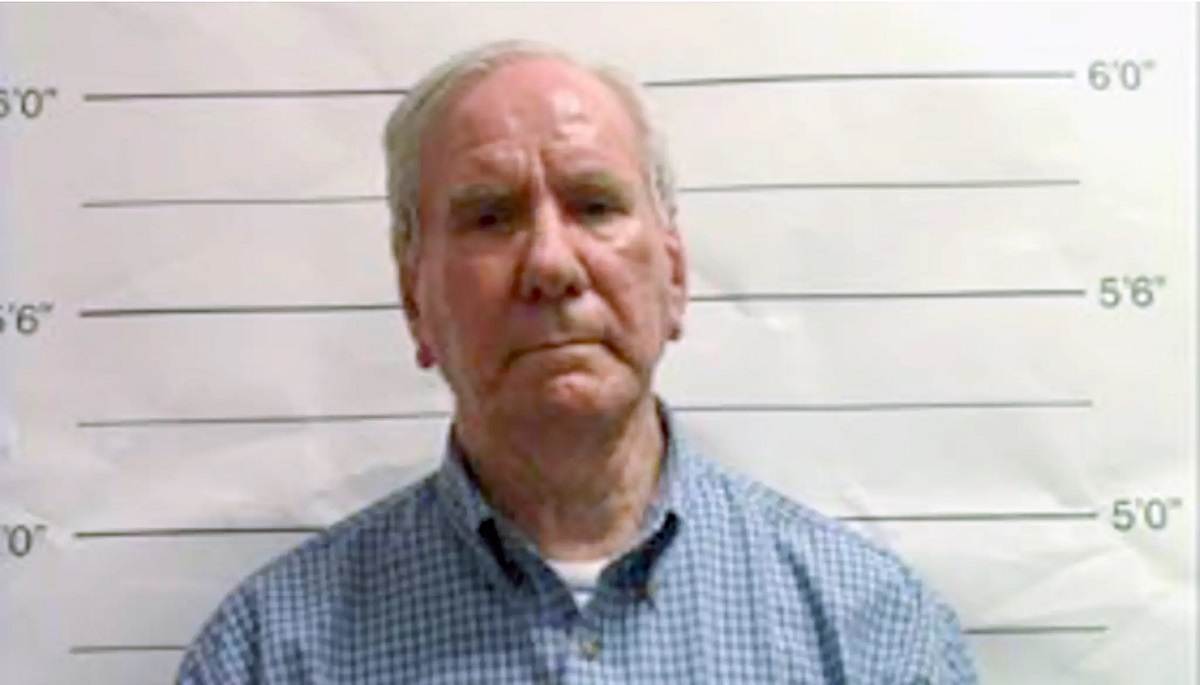
The criminal case that reached a verdict belonged to Lawrence Hecker, a retired priest indicted in 2023 for the rape of a teenage boy in the mid-1970s. After delays over health and competency, the 93-year-old pleaded guilty on December 3, 2024, as jury selection was about to start, to first-degree rape, aggravated kidnapping, aggravated crime against nature, and theft. Judge Nandi Campbell sentenced him on December 18 to mandatory life without parole. Three survivors testified. Hecker did not apologize. The survivor at the center of the case said the archdiocese “should be sitting there with him.” On December 26, 2024, Hecker died in prison of natural causes. Church records showed the institution had failed for years to report his own admissions and had moved him after he was already flagged as a danger to children. George F. Brignac, a deacon charged in 2019 with abusing an altar boy in the 1970s, died in 2020 at 85 while waiting for trial.

$641,425.64 at the Ceiling, and a $1,000 Fee to Argue
Survivors rejected an early offer around $179 million. In September 2025 the archdiocese came up and claimants voted a larger package through. On December 8, 2025, Grabill confirmed a plan that, with insurers, totals about $305 million — one of the largest clergy-abuse settlements in the country. The archdiocese’s own piece was often described as at least $230 million before insurance is stacked on: money from the diocese, from parishes and charities, from the sale of Christopher Homes senior housing, and from carriers including a large Travelers contribution. Legal fees in the bankruptcy approached $60 million. Archbishop Gregory Aymond had once told the Vatican the whole problem might cost about $7 million.
The money did not move on the calendar the church described in open court. Payments were supposed to begin by the end of spring 2026. They did not. Massey had to tell the judge that “any promises made by the debtor were not made by the settlement trust,” and that the trust had not been consulted before what he called an “uninformed promise.” On August 7, 2026, he won an order compelling enrollment records from the old Hope Haven and Madonna Manor orphanages after accusing the church of “obstructionist tactics.” By late May, roughly $230 million sat in the trust and Massey’s best public guess for the first distributions was the fall. In late August the scoring letters went out. The scale runs from zero to 100 points. A hundred points pays $641,425.64. Each point is worth $6,414.26. More than 800 claims received a number. More than 100 received zero. About $56 million is held back for appeals. Asking the evaluator to look again costs the survivor $1,000 out of pocket. Trahant called that fee “obnoxious.”
Aaron Hebert, abused by Hecker, received 56 points, about $359,198 on the estimate. He told the Guardian on August 28, 2026, “This whole thing’s a farce.” Richard Coon, who has described abuse by more than one man tied to the archdiocese, received 98 points and said a lot of survivors were hurting. Neil Duhon’s line, earlier in the case, was that the public now knew “how much it cost a priest to rape” a boy, and that the legal ending would not end the trauma. Points can be cut if a claimant was over 18 and the scorer treats the contact as consensual. That rule, applied to people who were groomed inside a church, is its own argument.
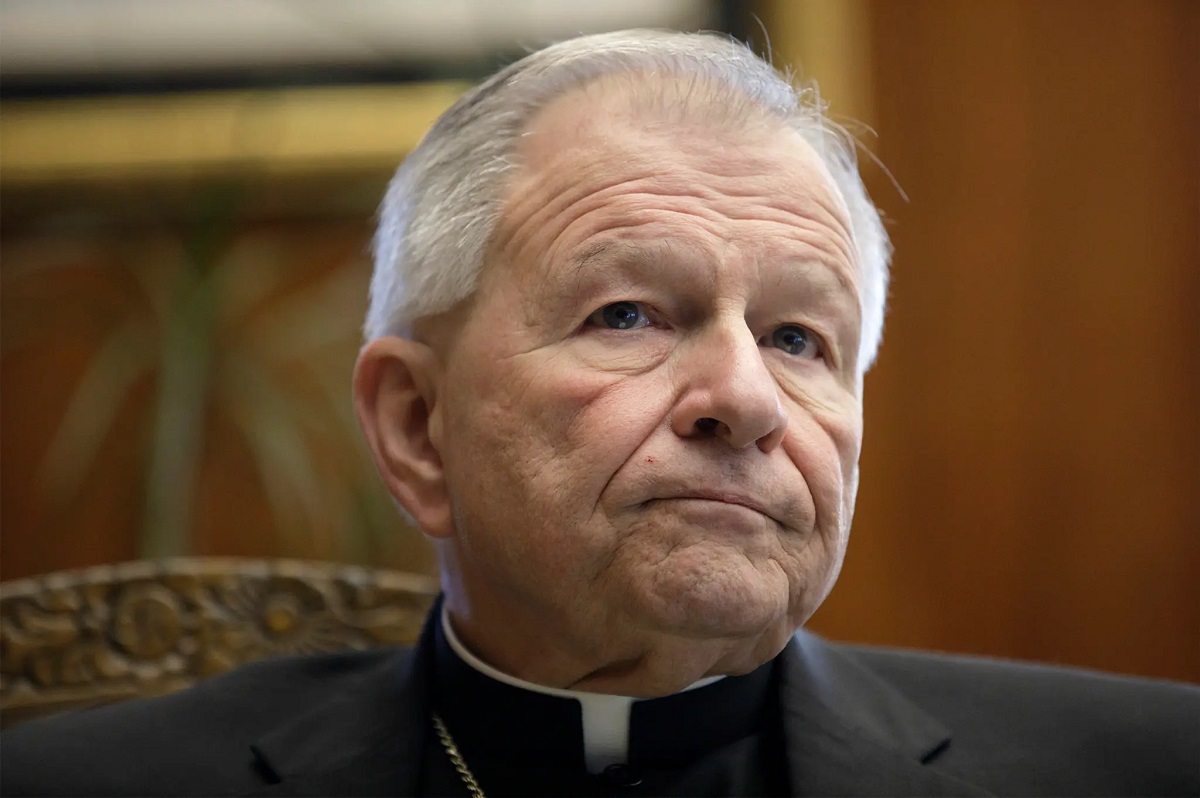
Aymond submitted the canon-law resignation at 75 in November 2024. Rome sat on it through the bankruptcy. In September 2025 Pope Leo XIV named Bishop James F. Checchio of Metuchen, New Jersey — the bishop who had managed the Theodore McCarrick fallout in his previous post — as coadjutor. On February 11, 2026, the pope accepted Aymond’s resignation and Checchio became the 15th archbishop of New Orleans. The September hearing is his settlement now. Gunn’s pride and Massey’s demand that the names be published were offered to the same judge, about the same 11 people. Kathryn Robb of CHILD USAdvocacy put the 2024 warrant in the only language that still fits the September filing: “No one and no institution is above the law, especially when we are talking about protecting children from the horrors of child sexual abuse.” A scorecard that prices a childhood at $641,000, a $1,000 toll to dispute the math, and a trustee still fighting to get names onto a list is not that language yet.
The AEGIS Alliance has tracked this pattern for years, from a global abuse network hiding in plain sight to a takedown of 87,000 accounts the U.S. press barely covered, the Hollywood open-secret documentary, and the long argument over who controls the church’s own archive. More of this beat is in Crime News and US News.
This article addresses child sexual abuse. If you or someone you know has been affected, support is available through the National Sexual Assault Hotline at 1-800-656-4673.




It’s happening all round the world,it’s been going on since 1935