ST. PETERSBURG, FLORIDA — Richard Ellis Spurrier, 67, stood downtown on a Saturday night in December 2019 and handed marijuana to strangers. He told officers he was doing it because it was Christmas. They booked him anyway. Seven years later a majority of Florida voters have said adults should be allowed to possess cannabis, the federal government has moved state-licensed medical marijuana toward Schedule III, and Spurrier’s sidewalk giveaway is still a crime. The gap between those facts is the whole story of cannabis law in this state.
St. Petersburg police said a witness watched Spurrier passing marijuana to people near the downtown core. Officers found marijuana shake on his sleeve. In his backpack they found 45 grams, a prescription bottle with his name on it, a purple glass pipe, and a digital scale, both the pipe and the scale carrying residue. A sword was hidden in his walking cane. He was charged with possession with intent to sell or distribute and with possession of drug paraphernalia. The Christmas line made the arrest a national oddity. The weight made it a felony file.
Florida’s possession line is not a vibe. Twenty grams or less, without a medical card and without intent to sell, is a first-degree misdemeanor: up to a year in jail and a $1,000 fine. More than 20 grams is a third-degree felony. Forty-five grams is more than twice the misdemeanor ceiling, before anyone even argues about the scale. Intent to distribute is its own offense, and handing cannabis to passersby is the fact pattern prosecutors use when they do not want a case to look like personal use. A holiday motive is not an element of the crime. “Because it was Christmas” explains the mood. It does not rewrite section 893.13.
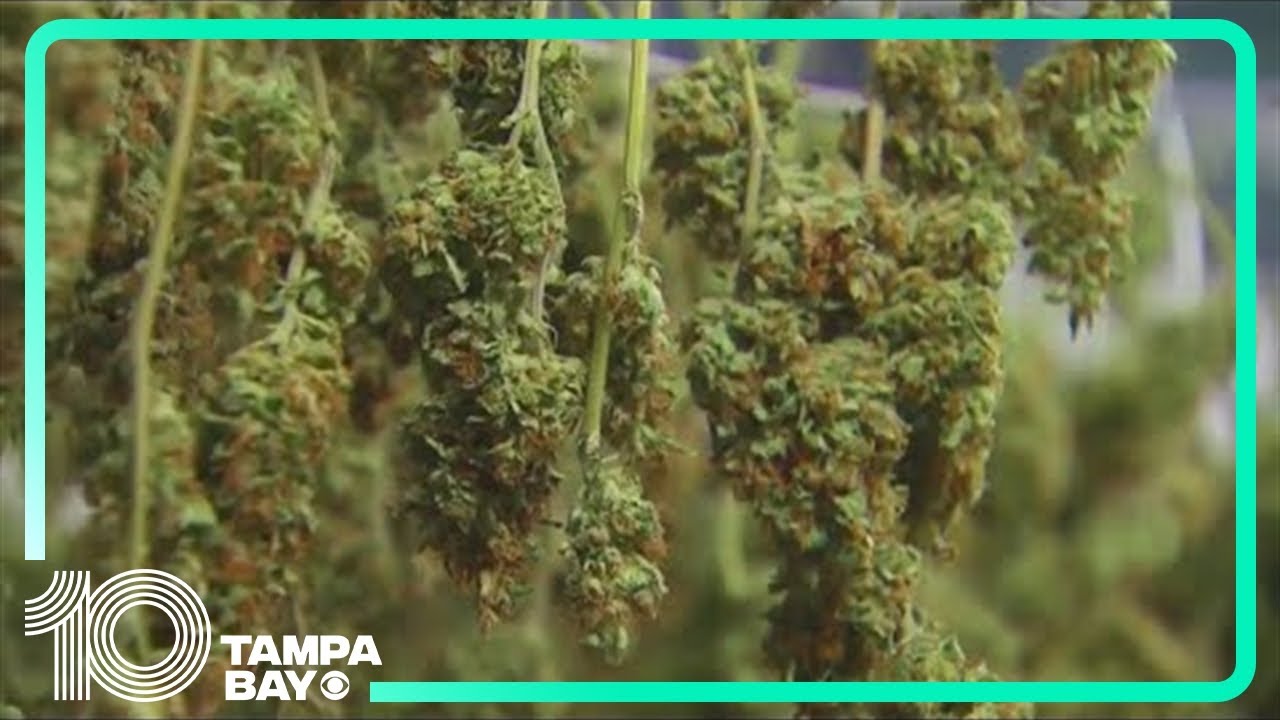
Medical marijuana had already been legal for patients when Spurrier was arrested. Voters passed Amendment 2 in 2016. What they had not passed, and still have not passed, is adult use for people without a doctor’s recommendation. That fight consumed the next decade and then lost on a technicality that is not technical at all. Constitutional amendments in Florida need 60 percent. A simple majority is a moral victory and a legal zero.
On November 5, 2024, Amendment 3, titled Adult Personal Use of Marijuana, drew 5,950,589 yes votes and 4,693,524 no votes. That is 55.90 percent. The measure would have let adults 21 and older possess, purchase, and use marijuana, with possession limits that supporters described as up to three ounces of flower, while leaving driving under the influence illegal and leaving federal law untouched. It failed by about four points. Broward County cleared 60 percent. A long list of rural counties did not. The statewide number is what counted, and the statewide number was a majority that lost.
The money on the yes side was not a grass-roots jar. Trulieve, the dominant medical operator in the state, put more than $140 million behind Smart & Safe Florida. Governor Ron DeSantis campaigned against the amendment. Donald Trump, then the Republican nominee and soon to be president again, said he would vote for it. Florida managed the rare spectacle of a Republican governor and a Republican presidential candidate on opposite sides of a weed amendment, with the 60 percent rule breaking the tie for the governor. Opponents had been in the field for years. Floridians Against Recreational Marijuana, whose campaign in the 2019 cycle was managed by Brian Swensen, warned of higher health-care costs, lost jobs, and a taxpayer bill. Senator Marco Rubio, on the 2016 trail, had already called marijuana as insidious as alcohol and said he saw no positive impact unless the Food and Drug Administration turned it into medicine. The talking points aged. The constitutional threshold did not.
Smart & Safe tried again for the November 3, 2026 ballot, with a new initiative, number 25-01, that would have legalized adult use, banned public smoking and vaping, banned packaging aimed at children, and opened licensing beyond the medical shops. The committee said it had gathered about 1.4 million signatures. The state’s count said otherwise. Election officials tossed signatures from voters marked inactive and signatures collected by people who were not Florida residents or not citizens. On January 23, 2026, the First District Court of Appeal, in an opinion by Judge Lori S. Rowe, sided with the state. What remained was about 783,592 valid signatures, short of the roughly 880,062 required. Smart & Safe called the cull premature and went to the Florida Supreme Court. On March 9, 2026, the justices declined to hear the case. Ballotpedia lists the initiative as not on the 2026 ballot. Recreational marijuana will not be decided by Florida voters this year. The next realistic statewide shot is 2028.
Anyone typing “Amendment 3” into a search box in the fall of 2026 will mostly find a different fight. A 2026 measure carrying that same number is a property-tax proposal. The Florida Trib reported on September 29, 2026, that children’s services, funded largely by property taxes, are not listed among the core services in that ballot language, and that councils around the state could lose close to $100 million. That controversy is real. It is not the marijuana amendment. The cannabis Amendment 3 died in November 2024. Reusing the number is how Florida ballots work. It is also how a Christmas arrest from 2019 gets tangled, in readers’ heads, with a tax fight that has nothing to do with a backpack on Central Avenue.
Federal law moved, and it did not move in Spurrier’s direction. On April 23, 2026, the Justice Department and the Drug Enforcement Administration, pointing to a December 18, 2025 executive order on medical-marijuana research, announced that FDA-approved products containing marijuana, and marijuana covered by a state medical license, would be placed in Schedule III. The final rule was published effective April 28, 2026. Unlicensed recreational cannabis stayed in Schedule I. A separate hearing on whether to move marijuana as a whole off Schedule I was set to begin June 29, 2026. Schedule III for a licensed medical product is a research and prescribing story. It is not a permission slip to give 45 grams to strangers outside a St. Petersburg bar. A patient inside Florida’s medical program and a man with a scale and a sword-cane are not in the same legal category, even after the rescheduling order.
That is the angle the original arrest never had, because the original arrest happened in a state that had only just built a medical market. Spurrier’s Christmas giveaway was a misdemeanor-or-felony question about grams. The decade that followed was a supermajority question about the constitution. A majority of the people who voted in 2024 wanted adult use. The constitution required a supermajority, the governor spent political capital to deny it, the largest medical company spent a fortune to win it, and the courts then kept the sequel off the 2026 ballot by enforcing signature rules the campaign called a purge and the First District called the law. Meanwhile the federal schedule softened for the licensed trade and stayed hard for everyone else.
Pinellas County has not published a tidy moral at the end of Spurrier’s case file in the way a feature story would like. He was charged. The oddity of the quote did the rest of the work in the national press. What the years add is context he did not have on that Saturday night: he was early, he was over the gram limit, he had a scale, and Florida’s voters have since come closer to his side than its constitution has. Closer is not legal. A yes vote of 55.90 percent does not retroactively bless a 2019 distribution charge, and a Schedule III order for medical licensees does not bless a giveaway on Second Street.
The AEGIS Alliance has tracked the strange edge of this fight for years, from cannabis plants in the Vermont Statehouse flower beds to the federal government’s own cannabis patent and the week Ohio spent more than $11.5 million on legal marijuana. More sits in Odd News and U.S. News. Spurrier’s line is still the cleanest summary of the contradiction. He thought Christmas was a reason. Florida voters later thought adulthood was a reason. The statute, the 60 percent rule, and a backpack scale still say no.