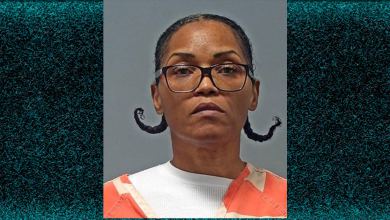
Warren County Judge Sends Mason Grandmother Lashawnda Walters to Prison for Scalding a Toddler in 126-Degree Bathwater

Warren County Common Pleas Judge Robert Peeler closed a file on May 2, 2024, that started with a dirty diaper and ended with a toddler in a burn unit. Lashawnda Walters, 51, of Mason, Ohio, pleaded guilty to endangering children, a second-degree felony, and tampering with evidence, a third-degree felony. Peeler handed her an indefinite prison term of seven to ten and a half years under Ohio’s Reagan Tokes Law. Prosecutor David P. Fornshell’s office published the facts the same morning, and local stations repeated the numbers because the numbers do not soften with time.
The assault happened on March 30, 2023. The two-year-old granddaughter lived with Walters. Fornshell said the child soiled a diaper, Walters attacked her, and then put her in bathwater that measured 126 degrees Fahrenheit. Second- and third-degree burns covered more than 17 percent of the girl’s body. At that temperature, human skin does not “sting.” It cooks. Medical literature on thermal injury is blunt on the point: full-thickness damage can begin in seconds, not minutes. Walters waited more than five hours before anyone reached a hospital.
Cincinnati Children’s Hospital Medical Center at the Liberty Campus took the first look and sent the child to Shriners Children’s Ohio. Surgeons there performed a skin graft. A graft is not a bandage. It is harvested tissue placed over destroyed skin so the body can close a wound that will not close on its own. The girl, now of school age, still carries that work on her body. Fornshell said his heart went out to the child and to everyone who had to look at the photographs. He called the injuries horrific. The word is not marketing. It is the word a prosecutor used after he saw the file.
The Cameras and the Delete Key
Mason police executed a search warrant and found Walters at the house cameras. Officers said she was deleting that day’s footage as they came through the door. That deletion is the tampering count. Detective Casey Behymer of the Mason Police Department built the case. The cameras are the other half of the story, and they are the half that makes the sentence more than a burn report.
Adults who hurt children often reach for the delete key. They treat a memory card like a confession they can unsay. Ohio law treats the act as a separate felony because destroying evidence is an attempt to rewrite the record after the injury is already on the child. Walters did not succeed. The hospital charts, the graft, and the remaining files were enough. Behymer’s warrant still caught her in the act, which is why the third-degree count sits next to the second-degree count on the judgment entry.
The AEGIS Alliance has filed the inverse story: a 14-year-old who installed cameras because no one would believe her. The same desk has covered a California nanny sentenced to 30 years and the Open Secret documentary on how institutions look away until a tape forces the issue. Ongoing reporting sits in our Crime News file and on the U.S. News desk.
Why Seven Years Is Not a Flat Number
Ohio’s Reagan Tokes Law is why a second-degree felony in this courtroom did not resolve as a neat seven-year box. The statute, named for a student murdered in 2017, sets a minimum term and lets the Department of Rehabilitation and Correction hold a prisoner up to the top of the range if the person is still judged a risk near the end of the minimum. Walters left Peeler’s courtroom in custody with a floor of seven years and a ceiling of ten and a half. Public docket entries through 2025 and into 2026 have not cut that range. No appellate opinion has been posted that disturbs the sentence.
That matters because child-endangerment files in Ohio often collapse into plea bargains that look smaller than the photographs. Fornshell’s office has kept publishing Warren County sentences in similar cases. This one remains the one he described in writing as horrific. The five-hour delay is the detail that separates a terrible accident from a charge that can carry a decade. A caregiver who scalds a toddler and then drives to an emergency room in minutes still faces questions. A caregiver who waits five hours faces a different set of questions, and a jury does not have to hear them when the defendant pleads guilty.
Mason sits in Warren County, north of Cincinnati, a suburb that markets itself as safe and planned. The case is a reminder that most child-abuse files do not begin with a stranger in a van. They begin in a house where the child already lives. The soiled diaper is the most ordinary trigger in the child-protection literature. Frustration, heat, and a locked bathroom door do more damage in American homes than the plots that fill prime-time crime shows. Fornshell’s release did not invent a monster. It described a grandmother who had charge of a two-year-old and used a bathtub as a weapon.
What the Medical Record Still Says
Second-degree burns destroy the epidermis and part of the dermis. Third-degree burns destroy both layers and the tissue beneath. When those burns cover more than 17 percent of a toddler, the risk is not only scarring. It is infection, fluid loss, and a lifetime of tight grafted skin that does not grow the way undamaged skin grows. Shriners Children’s Ohio exists because burn units for children are not a routine wing of a community hospital. The transfer from Cincinnati Children’s Liberty Campus was the system working after the household had already failed.
The delay is medical evidence as much as it is moral evidence. Pain from a 126-degree bath does not fade while an adult decides whether to call. A two-year-old cannot drive herself to Liberty Township. She cannot explain to a triage nurse what happened. She cannot stop an adult from wiping a camera. That is why children’s services agencies tell the public to report suspicion rather than wait for certainty. Certainty, in this file, arrived with a graft and a search warrant.
Anyone who suspects a child is being hurt can call the Childhelp National Child Abuse Hotline at 1-800-4-A-CHILD (1-800-422-4453). In Ohio, county children’s services agencies and local police take reports. Warren County’s prosecutor has made a practice of putting child-endangerment sentences on paper so the public record is not limited to a booking photo. The AEGIS Alliance keeps those records in the same Crime News stream as other cases in which a child’s body became the exhibit, including coverage of hidden-camera proof of abuse and the broader News file.
Walters is in the custody of the state. The girl is not. She will grow around a graft that a grandmother created in a bathtub and then tried to erase from a hard drive. Waiting five hours after a scalding bath is not a medical delay. It is evidence. Peeler’s range of seven to ten and a half years is the legal translation of that evidence. The cameras, the hospital, and the warrant are why the translation exists at all.
Child-protection workers in Ohio still close most referrals without a felony. That is not a scandal by itself. Most calls are poverty, housing, or a single ugly afternoon that does not meet the statute. This one met the statute twice: once for the water, once for the delete key. The public should not need a prosecutor’s PDF to know the difference. The AEGIS Alliance is publishing it anyway, because the difference is how a two-year-old ends up at Shriners instead of in a towel at home.







True evil🤬