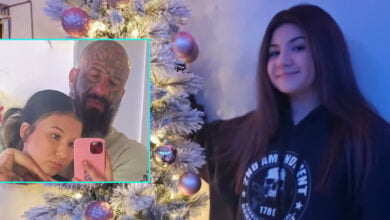
Long Island Teen Emmarae Gervasi Found Alive After 25 Days as Trafficking Case Grows to 23 Arrests



The first version of the story that left Patchogue was a missing-person flyer. A fourteen-year-old girl from Long Island, later identified in court coverage as Emmarae Gervasi, had not come home. Neighbors shared photos. Relatives worked phones. Suffolk County officers checked last-known addresses and motel parking lots. Twenty-five days later she was found alive on a boat in a canal in Islip. Police credited public tips. Her father, Frank Gervasi, credited a refusal to sit still. The photograph of a reunion traveled nationally. What followed was slower, uglier, and much larger than a single rescue clip.
By August 2025, Newsday reported that twenty-three people in two states had been charged in connection with alleged trafficking, kidnapping, and sexual assaults tied to the disappearance. The AEGIS Alliance is not treating the dockside reunion as the close of the file. A found child is not a finished investigation. The charging wave that followed is the part of the story that institutions would prefer the public forget once the “alive” headline has done its work.
How a Neighborhood Search Became a Multi-County Docket
Court coverage and local reporting place the start of the second disappearance on December 9, 2024. Emmarae was last seen in Suffolk County. Flyers went up. Family members posted videos asking anyone with a location to call police rather than play detective on a comment thread. Tips arrived in uneven bursts. Some were noise. A few were not. Officers worked hotels, vacant houses, and waterfront slips because that is where missing teenagers on Long Island have been found before, and because this family already knew the geography of a prior disappearance that had ended at a Medford motel.
On January 3, 2025, the search closed on a 56-foot vessel tied at White Cap Marina in Islip. Contemporary accounts identified the boat as the Phoenix. Suffolk County police and the father arrived together after a tip that had been circulating through people who knew where the girl was being kept. Francis Buckheit, later identified in charging papers as the East Islip man associated with the vessel, was arrested. He has pleaded not guilty to charges that include kidnapping and rape and has been held without bail. His lawyer has publicly insisted there is “a lot more of a story,” which is what defense lawyers say when the public version is already damning.
The image of a father boarding a boat to retrieve his child is the frame that national outlets used because it is easy to hold. It is also incomplete. Prosecutors later described a chain of locations that ran through motels, a mobile home, an abandoned house, a detached container, and the vessel itself. The AEGIS Alliance is not reprinting the graphic inventory of alleged acts. Readers do not need a catalog of harm to understand the legal theory. Suffolk County District Attorney Ray Tierney’s office framed the aftermath as child sex trafficking and kidnapping, not as a runaway weekend that got out of hand.
From One Arrest to Twenty-Three Defendants
The first charging documents named a handful of adults. Then the pile grew. In January 2025, Jacquelyn Comiskey, 52, of Bellport, and Elizabeth Hunter, 34, of Islip, were charged with sex trafficking and child endangerment. By early February a twelfth defendant had been added. Later in the month local outlets reported a thirteenth arrest. A Suffolk grand jury returned a multi-count indictment that put nine defendants in a courtroom on the same calendar call, among them Alton Harrell, Daniel Burke, Robert Eccleston, and Buckheit. Harrell, 35, was described by an assistant district attorney as the person who set the chain of events in motion. He pleaded not guilty and faces charges that carry a possible life sentence if a jury accepts the kidnapping and rape counts as written.
Not every name on the list is a Long Island neighbor. Four men in St. Cloud, Minnesota, later pleaded guilty to criminal sexual conduct connected to a period when the family had sought treatment out of state. Other defendants were charged after the rescue, including staff at facilities where the teenager was placed. Those later cases are the part of the file that should alarm anyone who assumes that “found” means “safe.” In April 2026, Frank Gervasi filed a $10 million lawsuit against Suffolk County and New York State alleging that employees at two state psychiatric settings sexually assaulted his daughter during the period that was supposed to be recovery. One of those workers, Deshaun McClean, had already been charged. Another employee, Darryl Joyner, was accused of offering drugs in exchange for seeing the girl unclothed. Both men have pleaded not guilty. The lawsuit is a civil claim, not a verdict. It is also a public record of how thin the wall can be between a rescue and the next alleged predator wearing a badge or a lanyard.
Six defendants had pleaded guilty by the time Newsday published its August 2025 reconstruction. Most of the remainder were still sitting in Suffolk County jails awaiting trial. That is the ordinary pace of a trafficking docket. Cameras leave. Motions linger. The teenager, by then fifteen, was described as being held in a juvenile setting on Long Island. The AEGIS Alliance will not pretend that a detention placement is the same thing as care. It is what the system does when it has nowhere else to put a child it failed to protect the first time.
What Public Tips Actually Did
Missing-person cases often die between the first flyer and the third news cycle. This one did not, and the reason is not mysterious. Relatives kept the photograph in circulation. Neighbors treated the alert as a task instead of a sad post. A person who knew the boat talked. Police acted on the talk. That sequence is the civic lesson, and it is the only part of this file that should be taught as a model. The rest is an indictment of how easily a child can be moved through motels and slips in one of the wealthiest suburban counties in the United States without a single clerk asking a useful question.
Social media did two jobs at once. It kept the search alive. It also turned a living teenager into a national spectacle. Comment threads argued about whether she was a victim or a runaway as if those categories were a moral quiz rather than a charging decision for a grand jury. The AEGIS Alliance’s standing view is simpler. A fourteen-year-old cannot consent to the marketplace that prosecutors say was built around her. Adults who treated her as inventory belong in a courtroom. Adults who treated the rescue as entertainment belong nowhere near the next missing-child post.
The same desk has covered other charging waves that began with a single child and ended with a stack of defendants. Readers who want the pattern, not the voyeurism, can start with the California sweep that produced more than 140 arrests and Operation Bad Santa in New Jersey. Those files are not the same case. They are the same industry.
What a Rescue Does Not Close
Frank Gervasi has given interviews describing the night on the dock and the months that followed. He has also become a plaintiff. Those are different roles. A father’s search can save a life. It cannot prosecute twenty-three defendants, audit a psychiatric ward, or rebuild a teenager’s sense that adults are safe. Prosecutors will have to prove each count. Defense lawyers will attack the timeline, the witnesses, and the family’s prior contact with police. Juries will hear a sanitized version of events that still will not be easy to sit through. None of that work is served by recycling the rescue photograph as if it were a verdict.
The useful questions now are docket questions. How many of the twenty-three cases reach a plea and how many reach a trial. Whether the civil suit against the county and the state survives a motion to dismiss. Whether the facilities that housed the teenager after the boat change their staffing rules or simply wait for the cameras to leave. Whether Suffolk County treats the marina, the motels, and the vacant houses as a map of a market or as a one-off embarrassment.
The AEGIS Alliance will follow the charging documents rather than the reunion clip. Readers who share the flyer for the next missing child should treat that work as a duty. Readers who want the graphic details should look somewhere else. This newsroom’s job is to keep the names of the adults on the record and to refuse the story that a dockside hug closed the case.











Good morning po daddy frankie,napapanood kopo na marami kayong natutulungan,sana ako din po daddy frankie ,kinakapos po ng puhunan sa tindahan sana po matulungan nyo po ako
Sana po lagi po kayong patnubayan ng panginoon dios..
God Bless