The Senators Who Voted Against Auditing the Federal Reserve, and the Watchdog Who Found No Crime in the Renovation


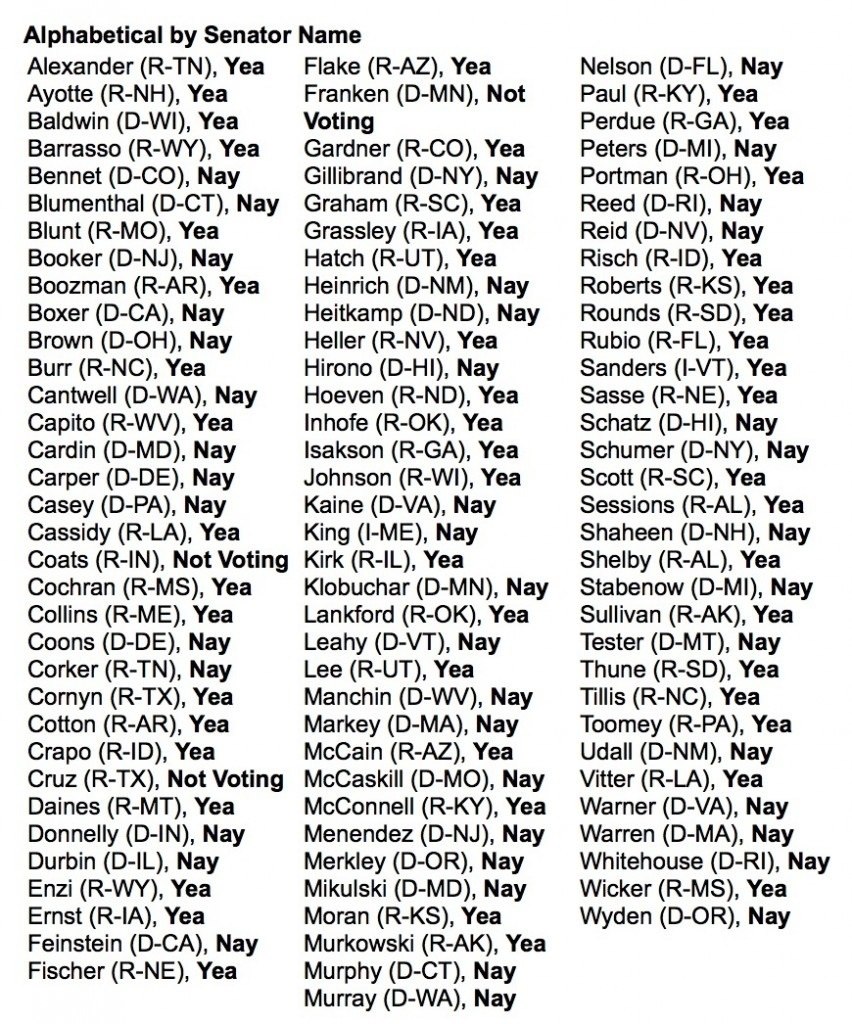
On January 12, 2016, the United States Senate held a roll call that still describes the central bank more honestly than a press conference does. Rand Paul’s Federal Reserve Transparency Act needed 60 votes to break a filibuster. It received 44. Fifty-three senators decided the Government Accountability Office would not be allowed to walk the books of the Board of Governors, the regional Reserve Banks, or the Federal Open Market Committee. The official tally is still on the Senate’s own site as 114th Congress, Vote 2.
That was not a scheduling accident. It was a choice to leave the only institution that can create the unit of account with a privilege no commercial bank is granted: a set of rooms the auditor who answers to Congress is forbidden to enter. Paul forced a recorded answer from Democrats who campaign against Wall Street’s revolving door. Bernie Sanders voted yes. Elizabeth Warren voted no. The Obama White House had already called a full audit “dangerous,” not because the arithmetic was disputed, but because elected people might “supplant” the Fed’s judgment on monetary policy. Translated, looking too closely would be treated as interference.
The Fed is a legally protected monopoly over the dollar. It creates reserves, buys interest-bearing assets with them, and books the spread. After the financial crisis, remittances to the Treasury ran near $90 billion a year for a stretch. That is how the arrangement is sold as a public service. What the public does not get is a GAO walkthrough of emergency facilities, foreign currency swap lines, or the closed-door trades of the FOMC. The one limited look Congress forced, a one-time review under the Dodd-Frank Act, found more than $16 trillion directed toward domestic and foreign banks during the crisis. The 2016 vote was a decision to keep the next emergency of that size off a congressional auditor’s page.
The bill did not die on that afternoon. It came back in nearly every session, and the arithmetic never flipped. On November 1, 2023, Paul attached the audit language to a spending measure. Forty-six senators voted with him. Fifty-one voted to keep the GAO out. He told the floor that the pandemic-era balance sheet had swollen by roughly $5 trillion, much of it steered toward favored borrowers, and that a central bank which can do that in the dark is not independent. It is unaccountable. In December 2025 he used the Senate Homeland Security and Governmental Affairs Committee for a hearing titled “The Fed’s Big Bank Welfare Program,” walking through interest paid on reserves and emergency facilities as a standing subsidy for the largest banks. That hearing is still the closest thing the public has had to the examination the 2016 roll call refused.
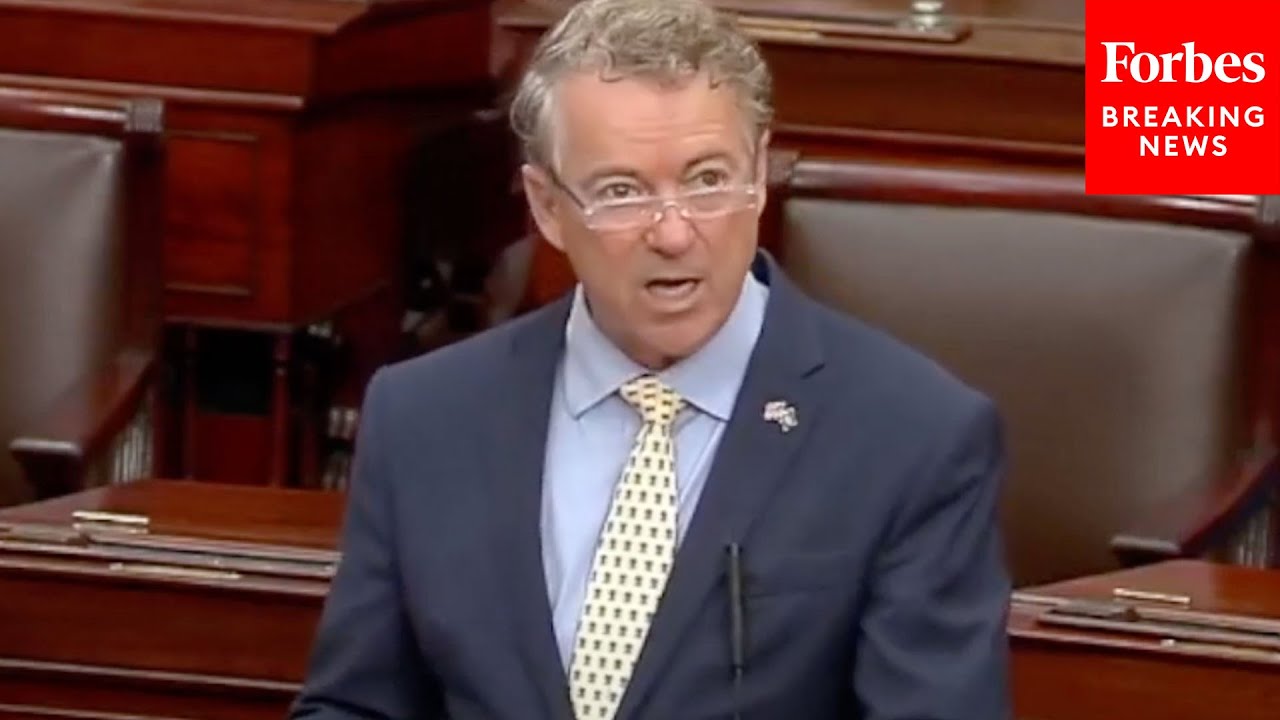
On July 17, 2025, Paul reintroduced the Federal Reserve Transparency Act with Senator Todd Young of Indiana. Cosponsors included Marsha Blackburn, Jim Risch, Ted Cruz, Rick Scott, and John Barrasso. The machinery is unchanged: a GAO audit finished within twelve months of enactment, and findings delivered to Congress within 90 days. In the House, Thomas Massie carries the companion, H.R. 24, the Federal Reserve Transparency Act of 2025. It was introduced on January 3, 2025, referred that same day to the House Committee on Oversight and Government Reform, and it has not moved. Congress.gov still lists the bill as introduced. The House left Washington for the fall and is not due back until the week of November 9, 2026. A bill that never leaves committee does not audit anything.
Paul paired the 2025 reintroduction with a waste report on the Fed’s Washington headquarters renovation. A project once described near $1.9 billion had been Board-approved at $2.46 billion, a jump of about 35 percent, on the order of $600 million, at an institution that still insists a full congressional audit would endanger the republic. Campaign for Liberty, the National Taxpayers Union, and Americans for Limited Government backed the transparency bill. The vault door on monetary policy did not move. The marble on the headquarters did.
On January 11, 2026, then-Chair Jerome Powell issued a rare public statement. The Justice Department, he said, had served the Federal Reserve with grand jury subpoenas and was threatening a criminal indictment over his June 2025 testimony to the Senate Banking Committee about that renovation. Powell called the cost increase a function of factors outside the Board’s control and described the probe as a pretext aimed at forcing him from office. U.S. Attorney Jeanine Pirro, running the District of Columbia office, had approved the inquiry. Senator Thom Tillis warned that anyone still doubting whether advisers around the president wanted the Fed’s independence broken should now have none. He said he would block a confirmation vote on Kevin Warsh, President Trump’s choice to succeed Powell, until the department dropped the case.
A court then looked at the file. In March 2026, Judge James Boasberg quashed the subpoenas. The government, he wrote, had “offered no evidence whatsoever that Powell committed any crime other than displeasing the president.” On April 24, 2026, Pirro announced that the Justice Department was closing the investigation. Powell was never charged. The obstacle Tillis had planted was gone. The Senate confirmed Warsh as a Board member on May 12, 2026, and as chairman on May 13, 54 to 45, the most divisive confirmation vote for the job on record. He took the oath on May 22 and was unanimously selected as chair of the FOMC the same day. His term as chairman runs through May 21, 2030. Powell remains a governor, with a Board term that runs into January 2028.

On September 30, 2026, the Fed’s inspector general, Michael Horowitz, published the review the renovation fight had been waiting on. The report runs about 121 pages. It found that the Board had not effectively managed and executed its construction-manager-at-risk contract and had repeatedly stepped off its own cost-management rules. It recommended seven corrective actions, including an audit of the project and a search through existing contracts for costs that might be clawed back. It also said the thing the criminal file never produced. Investigators “did not identify administrative misconduct.” At no point, the office wrote, did they find reasonable grounds to believe a federal crime had occurred that would require a referral to the attorney general.
Warsh answered Horowitz in a letter released with the report. He called the overruns a problem that had to be finished “in the most efficient and transparent way possible,” agreed to implement the recommendations, and said he would hire an independent auditor to check awarded costs. He also said he had asked the General Services Administration to examine the project and to serve as project executive, effective immediately. That is a notable step. The GSA runs the government’s ordinary buildings. Putting it over a Fed construction site pulls a second federal agency into the work of a central bank that spends its public life insisting on independence. It is still not an audit of monetary policy. It is an audit of a building.
The Guardian’s headline, passed around that afternoon, matched the document: a watchdog had found no criminal violation in the cost overruns. President Trump did not treat the finding as the end of the argument. He called for Powell’s resignation after the report landed, which is the same pressure campaign with the indictment stripped out of it. None of that is the vote those 53 senators cast in 2016.
A headquarters review can be finished, photographed, and handed to the GSA. The privilege the Senate protected is different. It is the authority to create reserves, to open emergency windows, to run swap lines with foreign central banks, and to do it without the GAO in the room. H.R. 24 is still the live House vehicle, and it is still sitting where it was referred on the third day of 2025. Paul’s Senate companion has the same shape it had when 53 names stopped it. Until one of those bills becomes law, the public is left with the picture locked in on January 12, 2016: a central bank that can create the money, hide the transactions, renovate its headquarters for billions, see its chair criminally investigated when a president wants him gone, survive that investigation when a judge and then an inspector general find no crime, and hand the gavel to the president’s replacement without ever opening the vault.
The same habit of saying one thing in public while filing the opposite on paper is documented in The AEGIS Alliance report on the United States government’s own cannabis patent. For what that money machine looks like when someone heckles it in public, see the Bitcoin supporter who confronted a Federal Reserve official on live television. More of this beat lives in US News and the rest of the news file from The AEGIS Alliance.