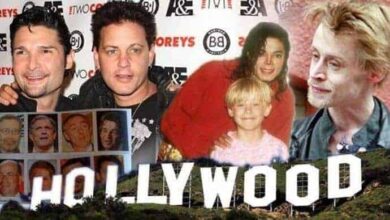
Hollywood Buried Amy Berg’s An Open Secret, Then the Next Documentary Had to Survive the Same Fight

The documentary Hollywood would not book became the rough draft for the one a court just refused to kill.
Amy J. Berg’s “An Open Secret” played DOC NYC on November 14, 2014, and opened in a handful of theaters on June 5, 2015. It did not get a studio rollout. It got lawyers. SAG-AFTRA’s outside counsel, Douglas Mirell, wrote Berg and her producers on December 3, 2014, and demanded that references to the union come out of the film. The fight was over Michael Harrah, a manager of child actors who had chaired the guild’s Young Performers Committee and who sits for an interview in the movie. The union’s position was that a viewer might decide the guild itself was mixed up in whatever Harrah was accused of. Berg told Deadline, “I felt that SAG-AFTRA used legal threats to try to sanitize the film.” The union’s public line was that it had not threatened to sue. The letter, which demanded that references to SAG-AFTRA be removed, is why that line did not hold. A title card later noted that Harrah left the committee after the interview. The theatrical run stayed small.
Producers Matthew Valentinas and Gabe Hoffman wanted a director who would not make a tabloid. Valentinas, an entertainment lawyer, has said the idea started when he heard Corey Feldman talk about being abused as a child actor. The movie follows five former child performers. The system it describes is ordinary: agents, managers, producers, parties, and the quiet agreement that a complaint will cost the child a career before it costs the adult a job.

The name the film can say without a hedge is Marc Collins-Rector. He co-founded Digital Entertainment Network in the 1990s, with Brock Pierce holding a minority stake, and he was later convicted of child sexual abuse. Former actors describe his Encino mansion as a place where underage boys were given alcohol and drugs. That part of the documentary is a conviction, and it is the spine that lets the film ask who else was in the houses, and who kept hiring the men after the whispers started.
Other names did not end in a guilty verdict, and the film’s own edits show the difference. Michael Egan III sued several Hollywood figures. Those cases were withdrawn. A lawsuit accusing director Bryan Singer of abusing Egan as a minor was dropped during production, and the finished film was cut back to allegations from people willing to appear. Singer has denied the allegations made about him. He has not been convicted in those cases. A 2019 Atlantic investigation kept his name in the press, and Twentieth Century Fox cut ties with him. None of that is a criminal conviction. A documentary that forgets the difference becomes the machine it accuses the industry of being.
Evan Henzi, one of the former child actors in the film, put the grooming problem in a line reviewers kept quoting: “I didn’t know how bad it was when I was a kid. Looking back at it now, I see how creepy and inappropriate it was.” Todd Bridges appears as well, describing abuse inside the business that once shot a very special episode about a predator. The episode and the life were allowed to exist at the same time. That is what “open secret” means. Enough adults knew enough to stay usefully confused.
Festivals hesitated. Berg told The Guardian, “Hollywood doesn’t want to discuss this and nobody else wants to. I mean the government doesn’t want to discuss it, neither does law enforcement.” The film went quiet until 2017, when the Harvey Weinstein revelations made a buried documentary feel like a preview. Links moved on social media because the official pipes would not. The AEGIS Alliance wrote about that spike when it happened. The children in the film were already adults.
What came next was a documentary willing to name a workplace. “Quiet on Set: The Dark Side of Kids TV,” the 2024 series from Mary Robertson and Emma Schwartz, walked through Nickelodeon shows associated with producer Dan Schneider. Drake Bell identified himself as the former child actor sexually abused by dialogue coach Brian Peck. Peck pleaded no contest in 2004 and was sentenced to 16 months. Another former production assistant, Jason Michael Handy, had been convicted of crimes against a child. Schneider has said he did not hire Peck and later said he knew abuse had occurred. He has not been charged with sexually abusing a child.
Schneider sued anyway. He argued the series implied he was a child sexual abuser by placing his workplace next to Peck and Handy. A trial judge let the case proceed. On September 10, 2026, California’s Second District Court of Appeal threw it out under the anti-SLAPP statute. Justice Melanie Ochoa wrote that the series distinguishes harassment, a toxic workplace, and sexual innuendo attributed to Schneider from “the child sexual abuse explicitly attributed to” named individuals. The series had also told viewers an internal Nickelodeon inquiry did not find sexual abuse by Schneider. A statement for the filmmakers said the ruling protected the right to report difficult facts, and that “Quiet on Set” had just been cited in legislation to protect child actors.
That bill is H.R. 10249, the Kids Safety on Set Act of 2026, introduced on September 3 by Representative Don Beyer of Virginia, with cosponsors including Representatives Lauren Boebert, Young Kim, and Ro Khanna. It would require a criminal-background check, limited to offenses involving violence, sex, stalking, or minors, for adults on a production who will have frequent private contact with child performers or authority over them. It was referred to the House Judiciary Committee. Introduction is not passage. It is the first time Berg’s 2014 argument has been written as a federal screening rule. A background check would not have filmed “An Open Secret.” It might have kept a convicted coach off a dialogue job. Those are different tools, and both are late.
The AEGIS Alliance has kept the adjacent files open on purpose. Jon Heely’s Disney case ended in two hung juries and a dismissal, which is a reminder that a famous employer does not turn an allegation into a verdict. Conspiracy of Silence is the older cousin of Berg’s distribution problem. Hiding in Plain Sight and the Epstein court records sit at a different altitude, protection by money rather than by a talent manager’s couch. Berg pointed a camera at a labor market for children and asked why the adults who already knew were still employed.
Critics were right that some lawsuits folded. They were wrong if they thought the folded lawsuits emptied the film. Collins-Rector’s conviction remained. Peck’s conviction remained. The 2026 appeal court did not call “Quiet on Set” reckless for showing those convictions next to a powerful producer. It said the film told viewers which conduct was a crime and which was something else. That is the standard “An Open Secret” was already trying to meet when a union asked to be edited out.
This is a sensitive subject. If you or someone you know has been affected by child sexual abuse, confidential help is available through RAINN.
Further reading is in Crime News and Activism. The bill is H.R. 10249. The appeals ruling was reported by The Hollywood Reporter.