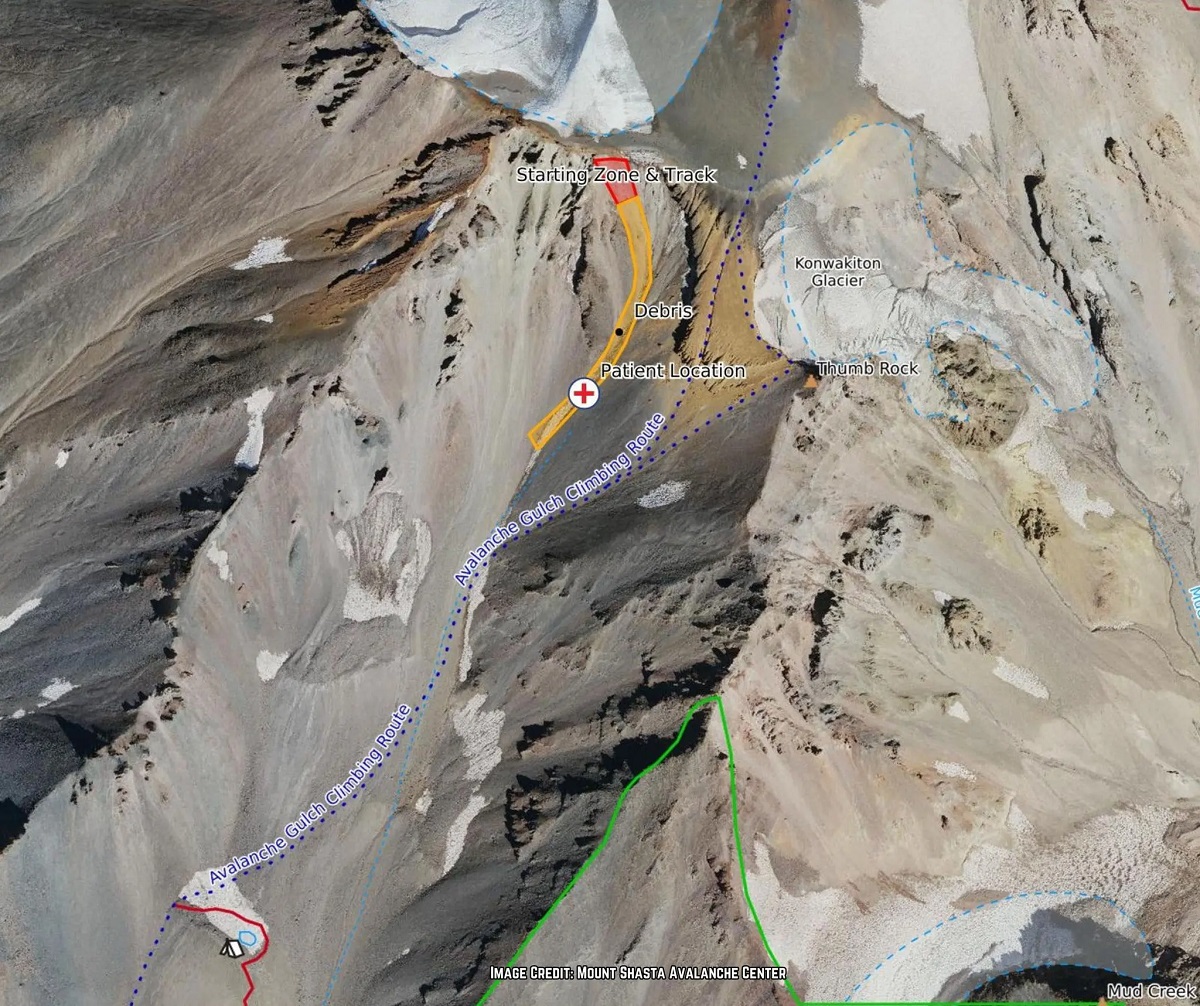
The early dispatches from Mount Shasta on April 27, 2024, withheld the names, and for a news cycle that was reasonable. Two men were injured, one of them badly, and the Siskiyou County Sheriff’s Office was still counting rescuers off the hill. The U.S. Forest Service climbing rangers later wrote the day down with the names attached. Tanner Schaefer and Parker Smith, both experienced and both already familiar with this mountain, were ascending left of a feature called The Heart in upper Avalanche Gulch, trying to tag the 14,179-foot summit and snowboard off it. Around 12:30 p.m., in a whiteout, with a northwesterly wind working on old snow and no meaningful new storm to blame, they triggered a wind slab at about 13,000 feet. Neither man was buried. That is the sentence that keeps getting lost when the headline says “buried.”
They were about 20 feet apart. Schaefer, the higher climber, arrested near the top of the slab and came out of it with a wrecked knee. Smith, the lower climber, was carried about 1,000 vertical feet. He broke a femur. A crampon punched and tore the same leg. He had a laceration along the ribs. Schaefer sideslipped down to him on a snowboard. They tried to keep descending. The pain stopped that plan. At 12:21 p.m. one of them called Siskiyou County dispatch from roughly 12,200 feet and reported a broken femur after an avalanche. The sheriff’s office, the Forest Service, and the California Highway Patrol started moving at once. A helicopter was the obvious tool. The cloud deck above treeline made it the wrong one.
Whiteout is a logistics problem, not a mood
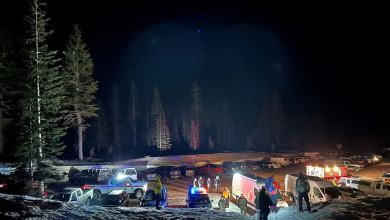
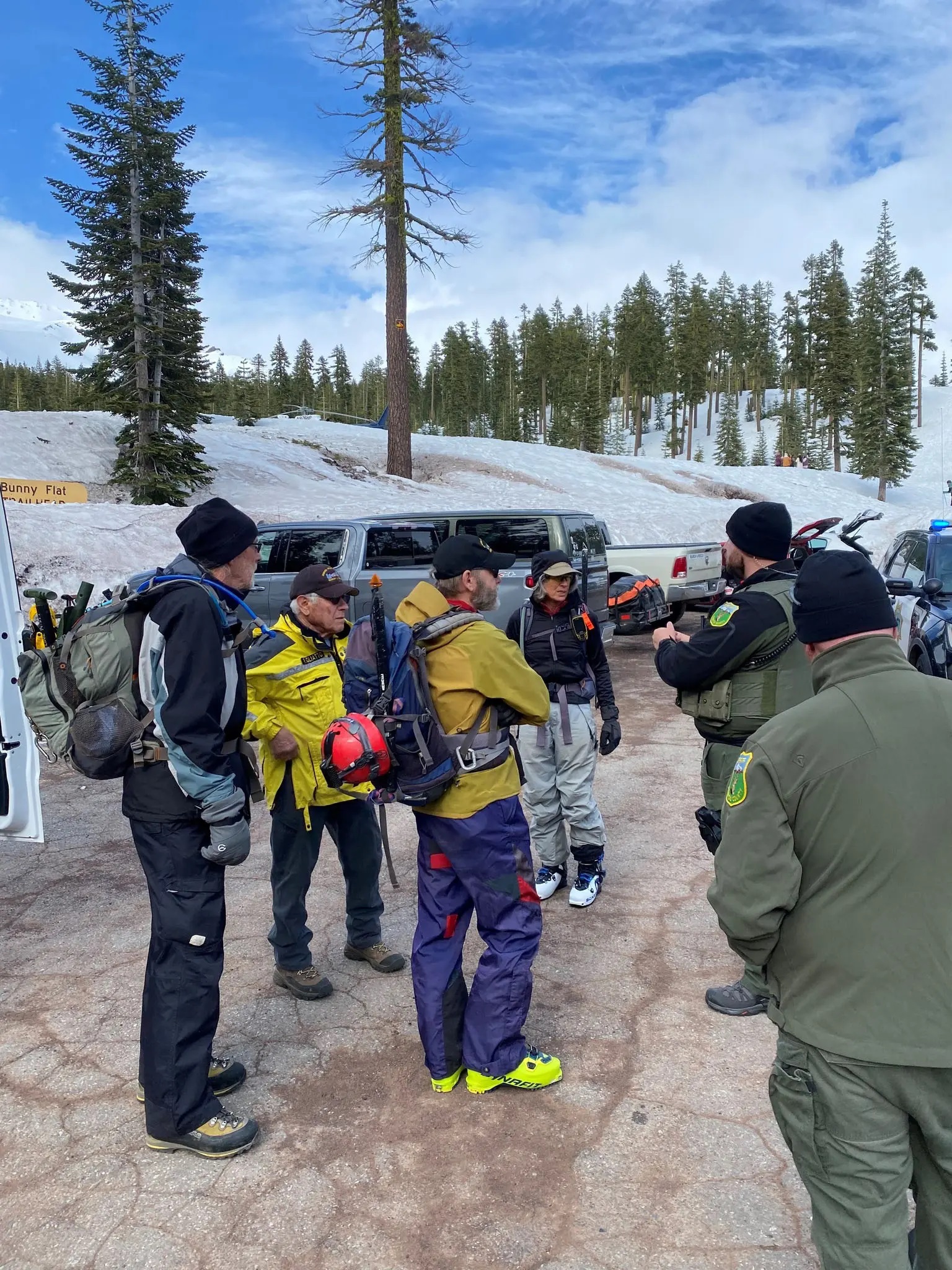
CHP air crews could not safely land near the two men and could not hoist them. While a ground team started up from below, a brief break let a helicopter insert Forest Service rangers and sheriff’s search-and-rescue members near treeline, on the order of 3,500 vertical feet under the patients, around 8,000 feet. From there the approach was on foot, in the same whiteout that had grounded the hoist. Professional guides who happened to be training on the mountain joined the sheriff’s team and the climbing rangers. Nick Meyers, who runs the Mount Shasta Avalanche Center and spoke to the San Francisco Chronicle afterward, said most of the responders knew the two climbers personally. That is a specific kind of rescue. It is faster in some ways, because people do not wait to be asked, and heavier in others, because the patient is not a stranger on a radio.
They reached Schaefer and Smith around 6:20 p.m. Smith was showing frostbite and hypothermia by then. He was packaged for a technical descent. Schaefer, once the team was on them, was able to self-rescue and snowboard to the Bunny Flat trailhead. Smith could not. The litter carry ran from about 12,200 feet down Avalanche Gulch to Bunny Flat at 6,950 feet, roughly four miles and about 6,000 vertical feet, most of it in the dark. It took about four hours. CHP tried the air option again later and still could not work in the weather. Both men were off the mountain around midnight. No rescuer was hurt. The sheriff’s office said both climbers were expected to recover, and then it said the part that experienced parties hate hearing: no amount of experience makes a person immune to Mount Shasta, and a wind-loaded aspect can turn a plan for a quick extraction into an all-night carry.
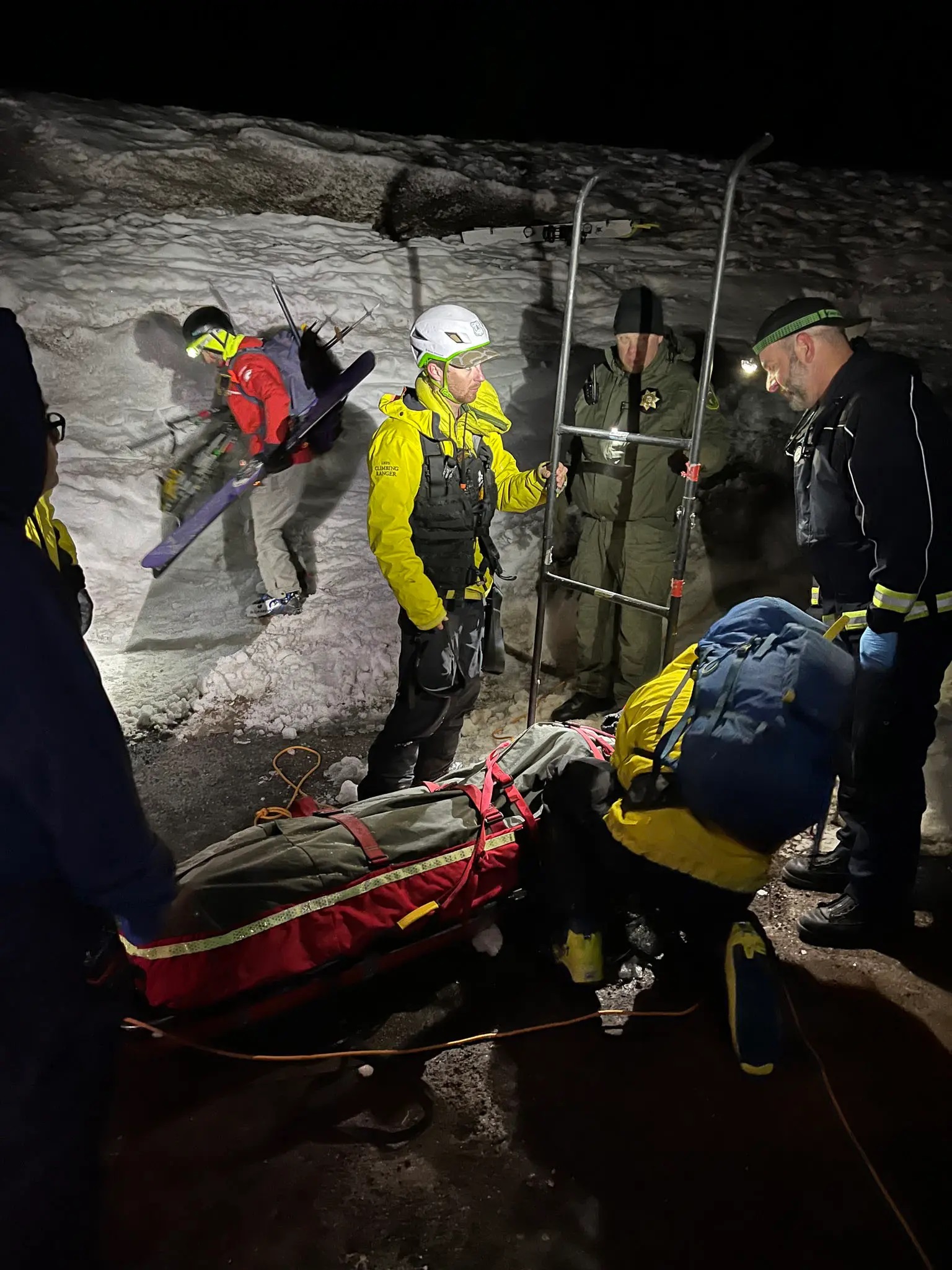
The Forest Service narrative of the 2024 season added a line that belongs in the trip report, not only in the press release. “Climbing in limited visibility conditions always makes for more risk should something go wrong.” There had not been a big dump of new snow. The hazard was wind, moving old snow onto a slope the two of them had reason to think they understood. Avalanche Gulch is the trade route. It is the way thousands of people go when the season opens in mid-April and peaks in May and June. Familiarity is how you learn where The Heart is. Familiarity is also how a party talks itself into booting upward when the Red Banks, the band of cliffs above the gulch, are sitting in cloud. Meyers told the Chronicle the mountain produces on the order of a dozen rescues and about one fatality a year. The April 27 file was not a freak on an abandoned face. It was the standard route, on a Saturday, with almost nobody else high on the hill.
The same gulch, a different mistake, two years on
The 2024 season did not let the gulch go quiet. On May 3 a solo climber on a similar aspect, between roughly 11,000 and 13,000 feet near Casaval Ridge, took a crampon puncture and a possible lower-leg fracture and was pulled by helicopter in clear weather, the outcome April 27 did not get. On May 17 a medical emergency at about 9,800 feet ended in a death after rangers attempted CPR and then carried the body. Rockfall, glissading errors, hypothermia, and simple exhaustion filled the rest of the ranger log. The American Alpine Club’s write-up of April 27, published for the 2025 accident season, repeated the mechanics without romance: wind slab at the Heart, 1,000 feet, broken femur, ground evacuation because the helicopter could not work.
Schaefer and Smith later told the story themselves on The Sharp End podcast, episode 105, a long interview about the physical injuries and the part that does not show on an X-ray. That recording is the right scale for the day. A press release can say “self-rescue” and make a knee injury sound like a choice. The man with the knee still had to ride a snowboard down a route he had just watched fail, after watching his partner go a thousand feet without him.
Avalanche Gulch was still collecting people in September 2026, and the mechanism was not a slab. Zubayir Kazi, 24, of San Jose, reached the summit on September 10 on his first icy climb. On the way down he lost control while trying to glissade, a deliberate slide on snow, and traveled roughly 500 feet. He lost food, water, his phone, and his light. Swelling forced his boots off. He crawled through the night toward Horse Camp cabin because, he told NBC Bay Area, staying put and falling asleep felt like dying. A hiker found him the next day. Friends had already reported him missing. Rescuers told him he had no skin on the back of a leg. He described significant skin and nerve damage and internal complications, and he said doctors told him he could have died within hours. The Forest Service credited him for knowing the route and for telling friends the plan, and it used the rescue to repeat the boring list that keeps people alive: a backup way to call, enough daylight, and a real plan to get yourself down.

Put the two days next to each other and the mountain’s lesson stops being a slogan about respect. Schaefer and Smith were the skilled party. They triggered a wind slab in a whiteout on a slope they knew, and twenty people spent eleven hours getting Smith to 6,950 feet because a helicopter could not see. Kazi was the first-timer. He slid on purpose, in a technique that is normal on this route when the snow is right and catastrophic when it is not, and he lived because he kept moving downhill in the dark. Experience did not buy the first pair a pass. Inexperience did not make the second rescue a morality play. The shared fact is the gulch: a popular line that stores wind, hides cliffs in cloud, and turns small errors into carries measured in thousands of feet.
The AEGIS Alliance file on this rescue sits with US News and the environment desk. The ranger narrative is the 2024 Mount Shasta wilderness incident log. The Chronicle’s account of the eleven-hour operation is here. For a different California emergency that also turned on whether help could arrive in time, see The AEGIS Alliance report on a small plane that hit a Southern California warehouse.