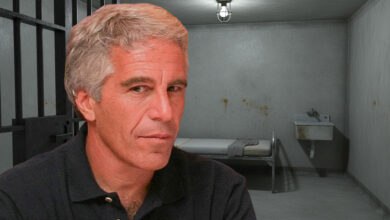
Jeffrey Epstein Told Clinicians He Would Not Kill Himself While Pathologists Still Split Over the Neck Photos His Brother Will Not Release
Jeffrey Epstein 'Suicide' Notes and Final Days


Jeffrey Epstein spent the weeks after his July 6, 2019, arrest building a case for staying alive. Clinicians at the Metropolitan Correctional Center wrote down a defendant who talked about unfinished business, about money still in motion, and about people he expected to see again. He told them he was not going to kill himself. That sentence is not a medical examiner’s finding. It is the prisoner’s own argument, made while he still had lawyers, a brother taking his calls, and a court date on federal sex-trafficking charges. The New York City chief medical examiner later ruled the August 10 death a suicide. Mark Epstein has spent seven years saying the ruling is wrong. The paper that surfaced in 2026 did not settle the fight. It split it into three different documents that newsrooms keep mashing into one.
The first document is the living man’s own insistence. The second is a yellow sheet his cellmate says he found after a July 23 injury, unsealed on May 6, 2026, and still unsigned. The third is the body itself: neck fractures, a ligature furrow, and autopsy photographs that Mark Epstein has shown to outside pathologists while withholding the full set from the public. The AEGIS Alliance has already walked through the autopsy dispute Mark Epstein keeps pressing and the animation the Justice Department posted and then pulled. What changed after those pieces is a magazine reconstruction, a German forensic review, and a Justice Department admission that it had never seen the cellmate page before a judge put it on a docket.
What he said when he still had a pulse
Epstein arrived at the MCC on July 6. His first cellmate was Nicholas Tartaglione, a former suburban police officer later convicted in a quadruple murder. On July 23, staff found Epstein injured, with a strip of bedsheet around his neck. He was placed on suicide watch, taken off it, and returned to a tier the Justice Department inspector general later said should never have been run that way. Cameras failed. The officers assigned to the unit did not make the required rounds. On the morning of August 10, guard Michael Thomas found him hanging and pulled him down. Tova Noel, the officer who had the tier, hit an alarm. A city medical examiner, Kristin Roman, performed the autopsy the next day and checked “pending studies” on the death certificate rather than suicide or homicide.
Five days later, chief medical examiner Barbara Sampson ruled suicide after what she called a careful review of the investigative file. A transcript of Roman’s interview for the federal probe, released under the Epstein Files Transparency Act and reported by Business Insider in March 2026, has Roman saying the delay was thoroughness and that the case was “pretty clear cut.” Michael Baden, the pathologist Mark Epstein hired to watch the autopsy, read that transcript and did not move. He still points to fractures of the thyroid cartilage and the hyoid and says that pattern is what he expects from a garrote or a hand, not from body weight on a sheet. Mark Epstein’s line to Business Insider was blunt: the officials are lying, incompetent, or wrong.
The cellmate sheet the government said it had never seen
Tartaglione’s story is that he found a handwritten note inside a book after the July 23 incident, told his lawyer Bruce Barket, and kept the page inside his own case. On April 30, 2026, The New York Times described the sealed filing and asked U.S. District Judge Kenneth Karas to release it. Prosecutors did not oppose. On May 6 the judge unsealed an undated, unsigned scrawl. It complains that investigators “Found NOTHING,” treats old charges as the reason a goodbye is available, and ends with a Little Rascals punchline: “Watcha want me to do — Burst out cryin!! NO FUN — NOT WORTH IT!!” Epstein had used versions of that line in emails to his brother. Those emails were already in the public file dump.
Mark Epstein told Business Insider the line was lifted to make a fake sound like his brother, and that hiring a forger would be “the easiest fucking thing in the world.” He also rejected the premise. There was no suicide attempt in July, he said, because Jeffrey Epstein reported that Tartaglione attacked him, then backed off the accusation out of fear. CBS News quoted the Justice Department the next day: the note “has not yet been authenticated, and this is the first time DOJ is seeing it as well.” Handwriting readers hired by news organizations split. One told the Associated Press the July page and a note found after the August death were likely the same hand, and that Tartaglione’s known writing did not match. Another would not rule the cellmate out. The court never certified the page as last words. It certified that a murder defendant’s appeal had been hiding a sheet.
A reconstruction that refuses a single cause
On June 16, 2026, the Times Magazine published Charles Homans’s reconstruction of the last 35 days, built from the file dump and from interviews. The piece does not crown a killer and it does not bless the Bureau of Prisons. It records what the scene no longer contains. The sheet, the noose, and other objects from the cell were thrown away before anyone treated them as evidence that might need a second look. What remains, Homans wrote, is one guard’s memory years later and autopsy photographs Mark Epstein has kept. Mark shared those photographs with researchers, including Michael Freeman, editor in chief of the Journal of Forensic and Legal Medicine. Freeman has submitted a paper arguing that bruising and cuts on the neck, face, and shoulder, and the angle of the furrow, point to homicide. The paper was still in the peer-review pipeline when the magazine went to press. A submission is not a verdict. It is a reason the official ruling no longer has the room to itself.
The Times podcast with Homans is more cautious than the headlines that bounced off the magazine. Pathologists shown the photographs did not agree, and nearly all of them said a manner of death cannot be locked from the body alone. You need the knot, the suspension point, the ligature that touched skin, and a scene that was processed instead of swept. The MCC kept none of that suite.
The furrow and the office that threw the sheet away
Süddeutsche Zeitung, on July 24, 2026, walked ten unanswered points from the files and from photographs that are not in the public dump. Baden told the paper that three neck fractures fit a ligature used as a garrote better than hanging, and that the furrow runs too straight across the neck for a suspension point above and behind the head. A forensic pathologist the paper identifies as Ritz said nothing in the documents proves strangulation, and nothing in them justifies the clarity of “suicide, period.” The inspector general’s medical examiner, interviewed for the federal review, said the fracture pattern matched hanging and that petechial hemorrhages from the neck up were not the pattern expected in a manual strangulation. Those two readings are not a tie the public can referee from a screenshot. They are a tie that required the ligature, and the ligature was discarded.
The custody failure around that discard is no longer a rumor. Guards falsified logs. A figure in the “raw” hallway video has been flagged by CBS as possibly moving toward the tier. Wired found metadata problems in the file the Justice Department called raw. Bags of records were shredded after the death. None of that requires a novelist. It requires a warden who keeps cameras on and paper in a box. The AEGIS Alliance has tracked the same habit in the autopsy photographs, in the admission that less than one percent of the promised files were out, and in journalist Katie Phang’s lawsuit over the pace of disclosure.
Three documents, not one confession
The pre-death interviews cut one way. A man who expected to buy time in court told staff that suicide was off the table. That can be performance. It can also be the reason a cellmate’s sheet should not finish the sentence. The body cuts a third way, and the people who have seen the best photographs do not agree. Mark Epstein has said independent teams are preparing peer-reviewed reports he believes will reject suicide. Until those reports are published, that is a brother’s forecast. Freeman’s submission is further along and still unpublished. Baden has not moved in seven years. Roman’s view is on a transcript. Sampson’s view is the one on the certificate.
Readers can start with The AEGIS Alliance crime news desk and the U.S. news file. Epstein told clinicians he would not kill himself. A judge unsealed a note the Justice Department said it had never authenticated. A magazine reconstruction found a death scene that was thrown away. Pathologists looking at what remains still do not share a cause. That is a federal custody death with a ruling, a brother, a discarded sheet, and a yellow page that still needs a name on the chain of custody before anyone calls it a goodbye.