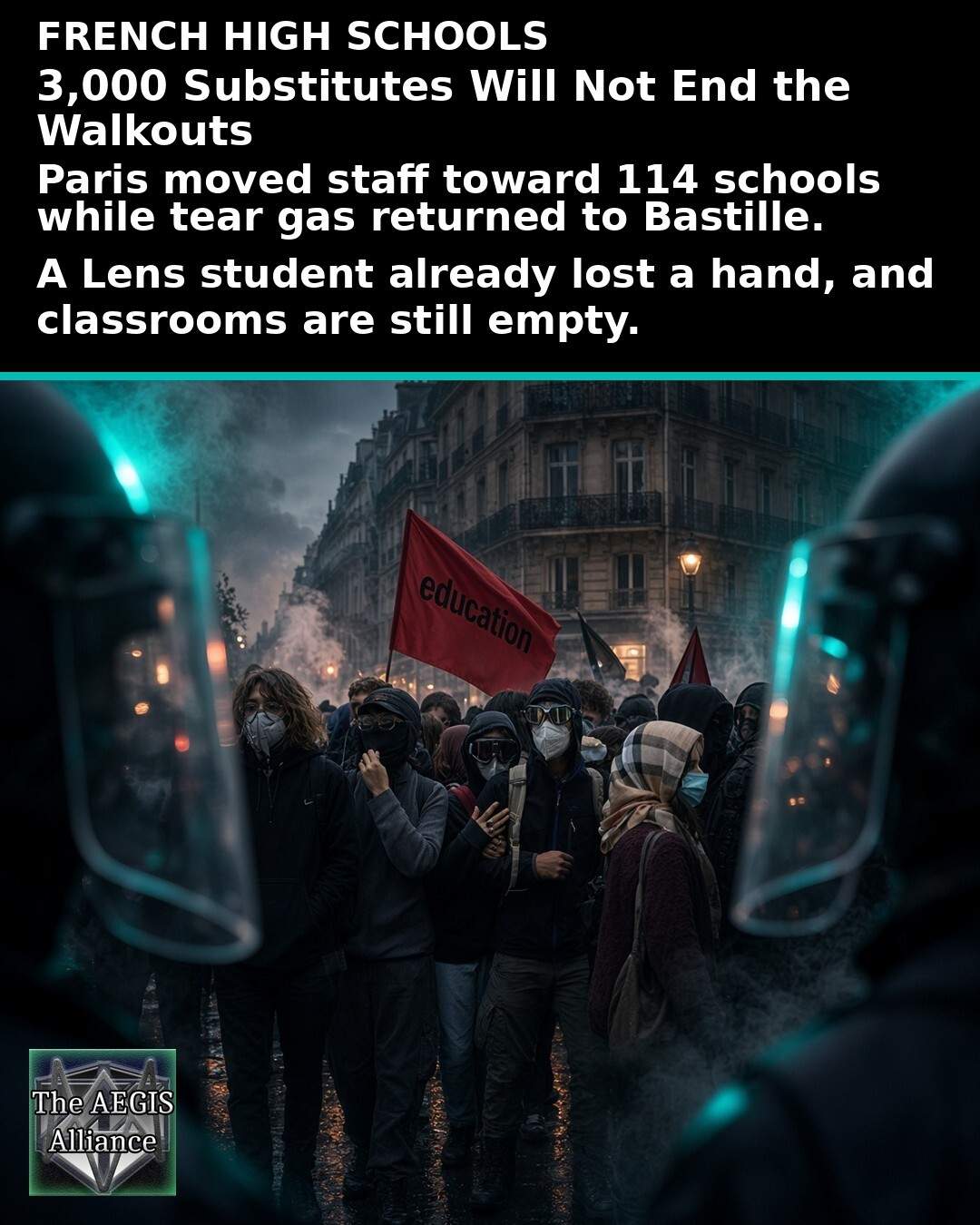
French High School Protests Keep Moving After Paris Offers 3,000 Substitute Teachers and Students Demand More Than a Staffing Shuffle

French high school protests did not pause when Education Minister Édouard Geffray offered a number. On the evening of October 8, 2026, he told TF1 that 3,000 substitute teachers who are currently not in front of pupils would reach the most troubled lycées within hours. He had marked 114 of France’s roughly 3,700 high schools red and about 400 more orange. The Interior Ministry counted 71,500 people in that day’s marches, 24,500 of them in Paris, and police detained more than 500. Students had already spent more than a week blocking gates. The pledge answered a staffing complaint with people the state says it already employs.
The complaints were specific. Pupils described absent teachers, overloaded timetables, crumbling rooms, and buildings that cannot cope with heat. In Bastille Square, students climbed the July Column, waved the French flag, and sang the national anthem. One sat on a bus shelter with a sign that read, “Reason for absence: Too busy fighting for our future.” Jeanne, 15, from a selective Paris lycée, said she had come for students outside the capital. “There shouldn’t be people who are more educated than others when we’re all in the public education system,” she said.
Why 3,000 Substitute Teachers Were Not Already in Class
The interesting part of the announcement is the admission inside it. These were not 3,000 new hires. Geffray said the substitute teachers were already on the books and not standing in front of students. Prime Minister Sébastien Lecornu, who had promised an action plan by the end of October, described the same move as the first concrete answer to the blockades. Geffray said the teachers should arrive in the red-listed schools between Friday and the following Tuesday. Rectors would be allowed to recruit beyond existing authorizations, academy by academy.
He also reached for the pacte enseignant, which lets a principal pay teachers already in the building to cover a short absence. The ministry talked about several hundred thousand extra hours and a cost from several million euros to several tens of millions. After the autumn holidays, Lecornu said, schools could lean harder on staff they already have. Economy Minister Roland Lescure had said there was room inside a tight 2027 budget, especially on substitutes. Education is penciled for the second-largest increase after defence, up 1.4 percent to €90.9 billion. A budget line is not a teacher in a room on Thursday morning.
Assane Seck, whose 15-year-old son attends school in a Paris suburb, said a teacher in one subject or another is missing almost every day. “There are genuine, fundamental issues that deserve reflection,” he said. Parents who report a missing teacher almost daily are describing a timetable that collapses one period at a time. A red list of 114 lycées makes that neglect visible. It does not explain why substitutes sat unused while those schools went red.
What French High School Protests Wanted Instead of a Staffing Shuffle
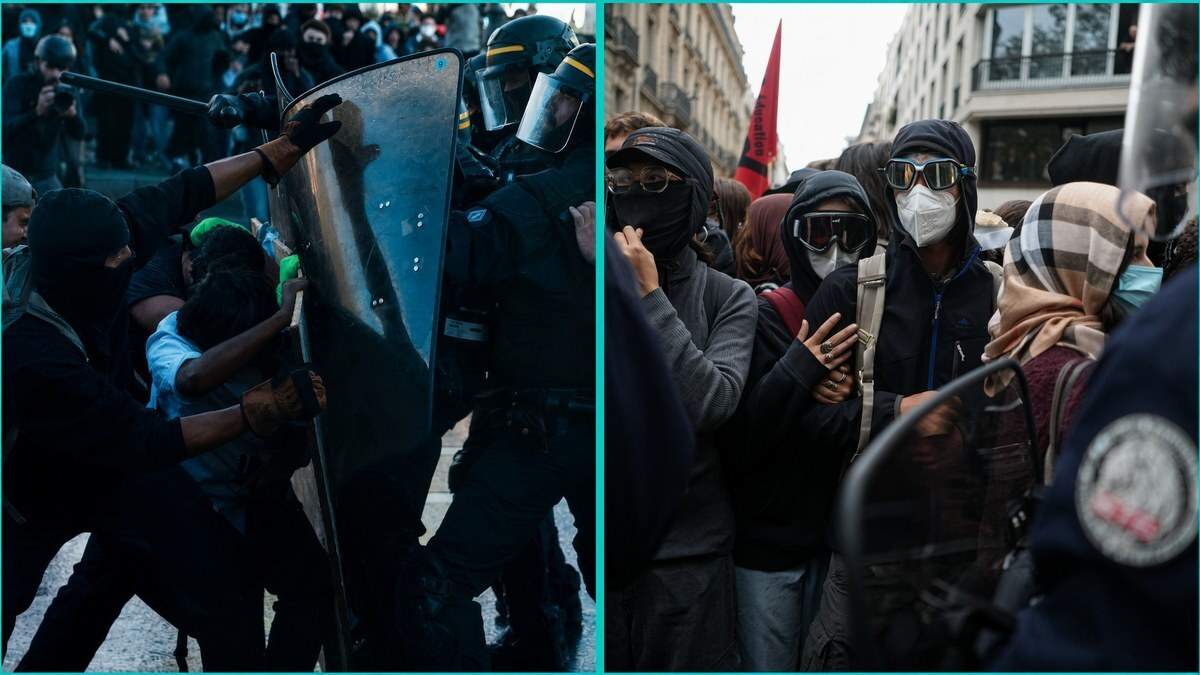
The marches on October 8 were smaller than the national day earlier in the week, and they were not quieter where students live. The education ministry said about 375 schools were fully or partly closed. In Nantes, 17-year-old Camille said, “We don’t want words, we want action.” Outside a lycée in Rennes, 18-year-old Hanaa said she was disappointed and unconvinced by Lecornu’s address the night before. He had said France could not be indifferent, and that the anger of young people does not come from nowhere. He also denied that security forces had “orders to confront” the protesters. Students heard a calendar, not a repair.
That calendar runs to the end of October for buildings, timetables, and the rest of the staffing fix. Heat in classrooms does not wait. Geffray told parliament that 24 lycées had been burned or vandalized badly enough to stay shut for weeks, leaving about 30,000 students without in-person teaching. He said headteachers had been hurt, alleged the movement was “very quickly infiltrated by ultra-violent groups,” and added, “We have never seen anything like this.” Fires and smashed shelters are real. They do not erase the absent staff students say started the blockades.

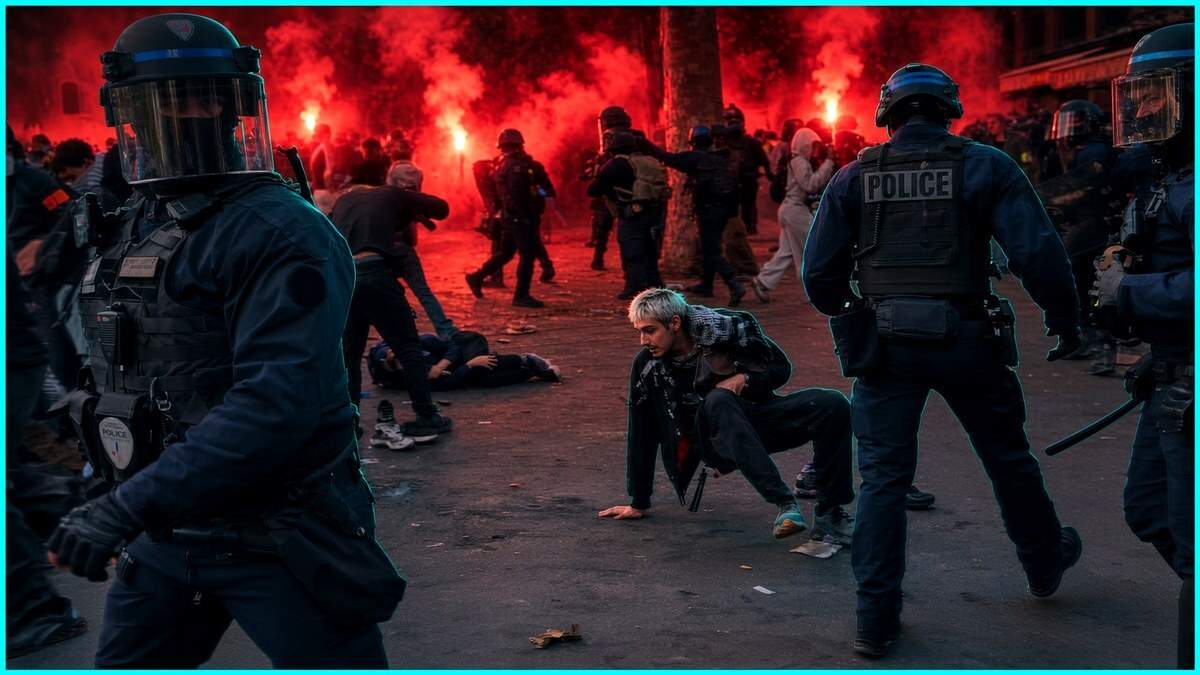
Marianne, a 20-year-old student who would not give her surname, aimed at the policing. “For me, that’s just unacceptable,” she said. Some demonstrators had lit fires. Police answered with tear gas, batons, and blast balls. Rights groups called that disproportionate. The government called it protection. Only one of those sentences explains a child leaving hospital without a hand.
How Tear Gas Returned to Bastille After a Grenade Took a Hand in Lens
On October 5, a 15-year-old lost a hand outside Auguste Béhal high school in Lens after police fired a stun grenade. His mother told BFMTV, “His life has been stolen. He’s a 15-year-old kid, how can children be treated like that?” She said he had not tried to pick the device up. Officials have said he may have grabbed it. The AEGIS Alliance’s account of the Lens grenade, and of Eden, the 14-year-old whose jaw was wired shut, is the record of those injuries. The October 8 pledge added nothing to either file.
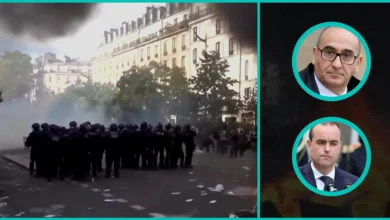
Interior Minister Laurent Nuñez suspended stun grenades for this movement until Lens is clarified. He told lawmakers that talk of “police repression” was “excessive” because officers “are not intervening if the protests are peaceful.” BBC News and The Guardian reported both the pause and that refusal. Amnesty International France president Anne Savinel-Barras asked for a permanent ban. “Protests should not be battlefields,” she said. Stun grenades, she added, are built to shock dense crowds and can mutilate.
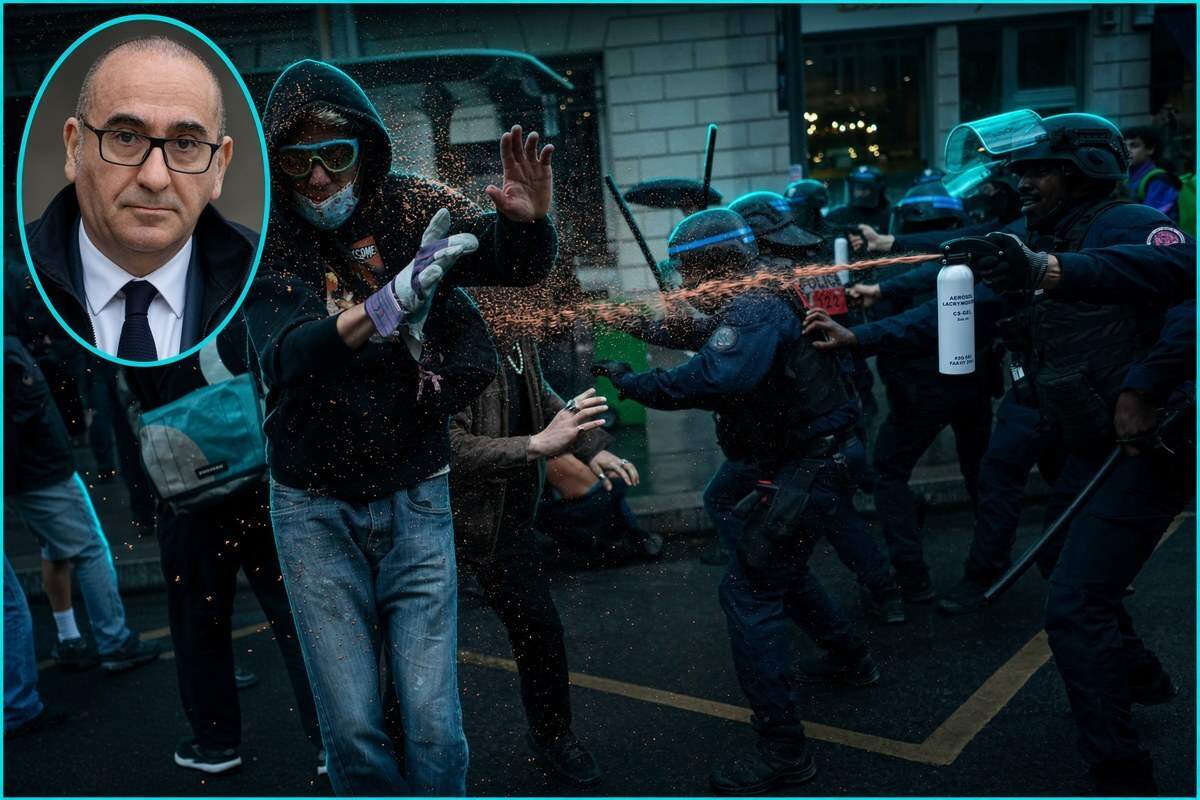
The pause did not retire the rest of the kit. On the evening of October 8, police said they used tear gas in Bastille against what they called high-risk profiles. Lecornu has called this the heaviest toll on the school system in decades, citing at least 215 injured teenagers and 89 injured staff, with wounded officers in the hundreds and one tally near 761. Le Monde reported more than 6,500 arrests since the protests began, most of them minors. The BBC’s figure was above 6,600. Earlier in the week the justice ministry said more than 1,800 people were being prosecuted, nearly 1,500 of them under 18. Nuñez said 18 police misconduct inquiries remain open, including Lens and a Paris case in which an officer was charged after a tear-gas round hit a teenager in the face.
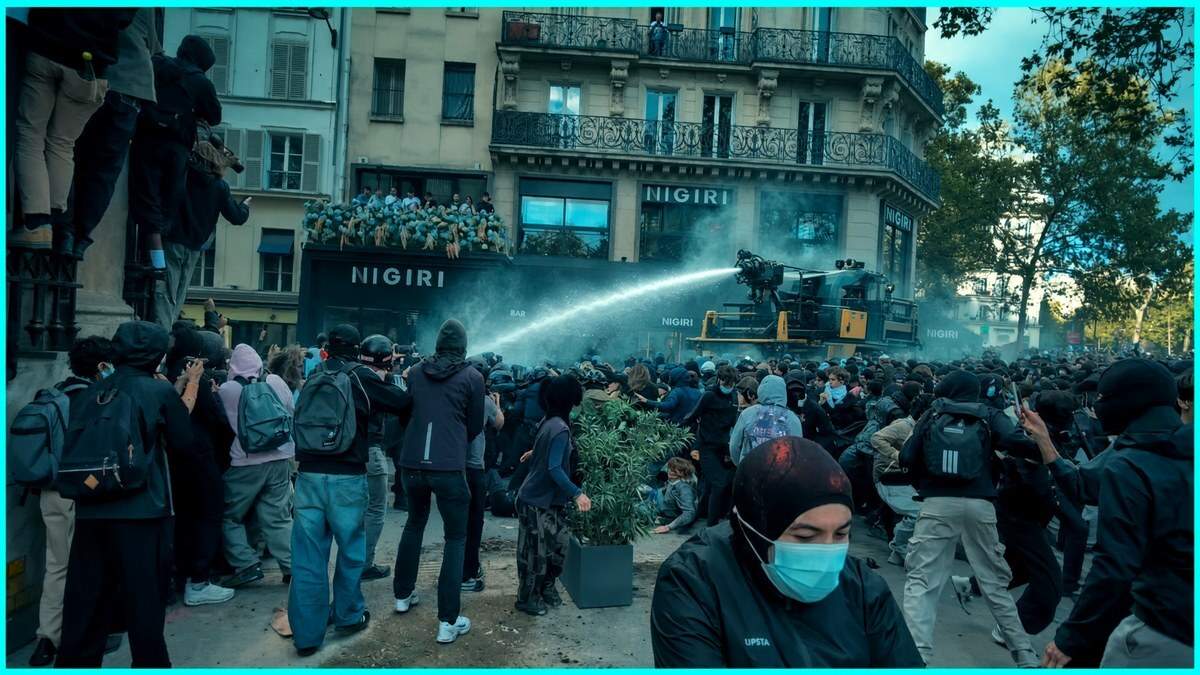
Minors in custody are now a routine line in the brief. Reuters noted that protesters blame neglected buildings and missing staff for a sharp drop in reading and maths. Al Jazeera set the grenade pause against marches that had already pulled President Emmanuel Macron into an emergency meeting with Lecornu. The meeting produced a promise. Thursday’s street produced another cloud of gas.
Where France Spends on Lycées and Still Shortchanges the Early Years
France does not look poor if the spreadsheet stops at upper secondary school. An OECD comparison found that France spends 24 percent more per student on upper secondary education than the OECD average, and markedly less earlier, particularly in primary schools. A 15-year-old at a lycée gate is often the product of a primary school that was already crowded, hot, and short of adults. PISA scores, the test of 15-year-olds, have landed at France’s worst result since the rankings began in 2000. Students have tied that slide to class size, broken rooms, and hours with nobody teaching.

Sending substitutes into 114 lycées does not rebuild the primary classroom where the gap opened, and it does not reopen a burned wing. The OECD pattern says the emergency was built into the spending. Public school inequality is then enforced twice, by the budget and by whose blockade draws riot police.
Why a Redeployment Cannot Settle French High School Protests Before 2027
The election that will replace Macron is close enough to bend every briefing. Jean-Luc Mélenchon said the Bastille had been retaken and that he wanted the protests nonviolent. Ministers blamed the radical left for inflaming teenagers. Student signs name missing teachers, long days, and police weapons instead.
School renovation demands, a grip on teacher shortages, and an end to treating minors as a public-order problem are three different jobs. Paris has started one by moving people it already paid. It has postponed the buildings. It has paused one grenade and kept the gas. A hand lost outside Auguste Béhal high school will not be restored by a substitute on Tuesday, and neither will the primary schools that receive markedly less money.
Lecornu can still table amendments. None of that changes October 8. The state found 3,000 adults who were not teaching and pointed them at schools it had already labeled a crisis. French high school protests will measure this government in occupied classrooms and hospital wards, not in the hour a minister discovers a payroll he already controlled.
More on the policing of these marches is in Police Accountability coverage, and the wider file sits in International News.