Jeffrey Epstein Autopsy Doctors Still Split on Neck Fractures as Mark Epstein Demands to Know Who Ordered the MCC Death


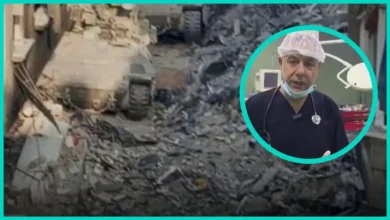
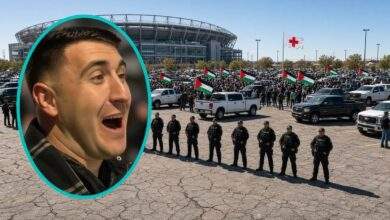
Two physicians stood over the same body on August 11, 2019, and they still do not share a sentence about what the neck means. Dr. Kristin Roman, then a New York City medical examiner, performed the autopsy of Jeffrey Epstein. Dr. Michael Baden, hired by Mark Epstein, watched. Roman left the suicide box and the homicide box blank and marked the manner of death pending. Five days later her boss, Chief Medical Examiner Barbara Sampson, ruled the death a suicide. Baden has spent the years since saying the three fractures in the neck are the kind of crushing injury he associates with homicidal strangulation, not with the jail’s account of a man found in a lower bunk at the Metropolitan Correctional Center. Mark Epstein, who identified the body, told NewsNation on January 9, 2026, that more autopsy facts would prove murder and that he wanted the name of whoever gave the order.
That is the file The AEGIS Alliance is keeping open. The city’s certificate has not moved. The Justice Department inspector general’s 2023 account of sleeping guards and failed cameras has not been withdrawn. What changed across 2026 is that the doctors’ disagreement is no longer only a television argument. It is a transcript, a newspaper interview, and a brother’s demand sitting on a document dump that still does not reclassify the death.
The examiner who would not check a box on day one
Roman’s interview with Justice Department investigators was released under the Epstein Files Transparency Act and reported in March 2026 by Business Insider. She told them she was being thorough. If the dead man had been less famous, she said, she probably would have called it a hanging the day of the autopsy. She wanted to see the cell and to speak with the employee who found the body. Those steps, she said, were for completeness. They were not, in her telling, the fact that decided the case.
Her reading of the bones is specific, and it is the part Baden has never accepted. The hyoid, she said, was broken at the tip, the part that would press against the spine if the body were suspended, not near the joints where she would expect a break if someone squeezed the neck with pressure that was not sustained. The thyroid cartilage, she said, was fractured where the hyoid pressed into it, a pattern she called consistent with hanging. Manual strangulation, she told investigators, would have broken that cartilage unevenly. She described the medical picture to them as pretty clear cut. Once Sampson signed the certificate, Roman’s conclusion was that the cause was hanging and the manner was suicide.
Mark Epstein read that transcript and rejected it. He told Business Insider the officials were either lying, incompetent, or wrong. He is not a pathologist. He is the brother who says the injuries he saw did not match the way the Bureau of Prisons described the scene. On NewsNation he added claims that have not become a named defendant: 73 people on the floor before the death and 72 after, and a question about who the missing prisoner was. He also said the fire alarm, which he described as tied to doors and video, was not working, and that the surviving tape showed a sliver of a door rather than the cell. Those are family allegations. They belong in the story because the certificate never answered them.
Baden’s line did not soften when the files landed
Baden spoke to The Telegraph in an interview published February 13, 2026. “My opinion is that his death was most likely caused by strangulation pressure rather than hanging,” he said. “Given all the information now available, further investigation into the cause and manner of death is warranted.” He said that at the autopsy he and the city examiner agreed more information was needed, and that Sampson then superseded the pending finding. “The autopsy findings are much more consistent with a crushing injury caused by homicidal strangulation than caused by hanging by suicide.” The official report, as he described it, lists three fractures: one on the left hyoid and one on each side of the thyroid cartilage. “Even one fracture, we have to investigate the possibility of a homicide. Two definitely warrant a full investigation,” he said. He added that in fifty years of reviewing inmate deaths he had not seen that pattern in a hanging ruled a suicide.
In a July 2026 interview with Süddeutsche Zeitung, Baden repeated the homicide reading and said he had never seen three fractures of the laryngeal skeleton in a jail hanging. Florian Fischer, who leads forensic radiology at the University of Munich, told the same project there is no scientific evidence for treating that pattern as proof of homicide. Baden’s memory of cases is not a controlled study, and a radiologist who was not in the room is not a new certificate. A pathologist who watched the examination still wants the case reopened. An outside specialist will not let three broken bones stand in for a named killer.
The AEGIS Alliance laid out the older photographic fight in its coverage of the 60 Minutes autopsy photographs. The public still does not have an unredacted image set with a scale and a lighting key. What it has is a pending box that a supervisor filled, a brother who will not drop the question, and a second doctor who has not changed his mind since the morning after the death.
Negligence is documented. A murderer is not.
The inspector general’s report remains the cleanest official document in the jail file. Two guards falsified counts. The unit was short-staffed. Cameras did not produce usable video across the relevant stretch of the night of August 9 into August 10, 2019. A man who had been placed on suicide watch after a July 23 incident, and then taken off it, was left alone. Those facts are federal findings. They prove a jail that could not watch a defendant it had already flagged. They do not, by themselves, prove that another person entered the cell. Mark Epstein has tried to close that gap in interviews. The department has tried to close it with memos that say there is no credible evidence of murder. Neither side has produced an indictment.
The credibility problem got worse when the department posted a hallway clip that researchers and the brother’s camp described as generated, then pulled it. The AEGIS Alliance documented that episode in the deleted animation story. A government that lost the cameras and then lost control of a video file in a transparency release does not get the benefit of a smooth closeout. A bad embed is also not a murder conviction.
Handwritten notes in which Epstein argued he would not end his life, because a bail hearing was coming, sit in the same public pile as a note former cellmate Nicholas Tartaglione said he found tucked in a graphic novel. In May 2026, U.S. District Judge Kenneth Karas in White Plains unsealed that note, including a line about choosing one’s time to say goodbye. Mark called the exhibit a forgery. The New York Times, which petitioned for the unsealing, said it had not authenticated the handwriting. The department said it had not seen the paper before the court fight. That sequence is the notes-and-forgery file. A document that arrives through a cellmate’s case years later is evidence of a mess. It is not yet evidence of a second person’s hands.
The certificate and the pipeline are different questions
The Epstein Files Transparency Act forced a dump the department had delayed. The AEGIS Alliance recorded the government’s own fraction in the admission that less than one percent of the collection had been released. Journalist Katie Phang later won a preliminary injunction over the pace and the redactions, covered in the Phang lawsuit. BBC reporters working a February tranche described an 89-page examiner’s report, scans of the cartilage fractures, and an FBI New York timeline from the July 6, 2019 arrest to the morning he was found. The timeline confirmed the suicide-watch placement and the later removal. The fractures were the same bones, now under a government header. The examiner’s office did not reopen the ruling. Mark treated the packet as the proof he had promised NewsNation. A PDF is not a new manner of death.
The death and the trafficking pipeline are related and not the same case. If the manner stays suicide, the banks, the islands, and the names in the unredacted black book still happened. If a homicide case is ever charged, those institutions do not become innocent of what they touched while he was alive. Bank of America’s survivors settlement is the money chapter. The autopsy is the body. Mark Epstein’s question on NewsNation still has no official answer: who killed his brother, and on whose behalf. The city’s answer is that no one did. Roman’s transcript is the most detailed defense of that answer the public has been given. Baden’s interviews are the most detailed attack. Until an independent review of the original slides and a real chain of custody on every camera file exist, both documents stay on the desk at The AEGIS Alliance.
The running record is on the site’s crime news and U.S. news files. The ruling is suicide. The disagreement that filled the pending box is not over.