The Assessments Written to Spare the Licences: How Britain’s Foreign Office Buried Israeli War Crimes in Gaza
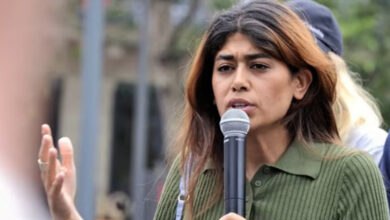
On September 24, 2026, Channel 4 broadcast a 49-minute Dispatches investigation that opens Whitehall’s filing cabinets rather than another reel from the ruins. Britain’s Gaza Secrets Exposed, presented by Ramita Navai and produced by Ben De Pear, reads the Foreign Office assessments ministers used to keep licensing weapons to Israel while Israeli forces flattened Gaza.De Pear, a former editor of Channel 4 News, told Democracy Now! what the pages showed. “We were looking at how our country, which prides itself on having an ethical foreign policy and as being one of the supporting members of the United Nations on human rights, was able to keep selling arms,” he said. “And basically, what we found was a doctored process. It’s quite extraordinary the level of duplicity that was going on in order for us to keep selling Israel arms.”
That process ran under a genocide conducted in the open. Gaza’s Health Ministry, whose counts U.N. agencies treat as broadly reliable, reported 74,016 Palestinians killed and about 175,068 wounded by September 27, 2026, roughly half of them women and children. A ceasefire on October 10, 2025, did not stop the killing. The ministry says more than a thousand Palestinians have died since, while Israeli forces still hold over half of Gaza. The AEGIS Alliance has reported regional condemnations of those violations.
A method built to return “not enough”
Much of the material surfaced in a case brought by Al-Haq and the Global Legal Action Network to stop the exports. Officials reviewed hundreds of videos of attacks on civilians, schools, hospitals, and aid workers. In most incidents they found too little information to identify a breach of humanitarian law, because Israel had not handed over “sufficient evidence” about the target.
William Schabas, who read the assessments for the program, named the design. “My impression from looking at all this material is that the British government has adopted what looks like a methodology, but one designed to produce a result that no violations are taking place.” If the army under review can withhold the only facts the reviewer will accept, the finding is decided before the video is watched.
Navai told The New Arab the failure ran through both the Conservative and Labour governments. “The apparent bias towards Israel means our government may have breached international law,” she said. “Our institutions should never be bent for any ally, and there needs to be accountability, especially when it is about genocide.”
The killings the file would not decide
The famous cases were not skipped. They were filed and left open. Five-year-old Hind Rajab was trapped in a car in Gaza City among dead relatives, pleading by phone for rescue, and was later found killed. The assessment recorded no breach, citing a lack of Israeli information. The army first denied it had been there. In August 2026, the film reports, it admitted its soldiers fired on the car. A strike on Al-Fakhoura school in Jabalia reportedly killed at least 24 people and produced no finding, because Israel never described a military objective. In Al-Mawasi, inside a zone Israel had labeled humanitarian, a strike hit four British doctors whose compound had been coordinated with the military. Conflicting Israeli accounts still yielded no decision that the attack was even a possible breach.
The April 1, 2024, strike on a World Central Kitchen convoy is harder to call a mystery, because Israel admitted it. Seven aid workers were killed, three of them British veterans. Israel called the attack a “grave mistake” and dismissed two officers. Two days later, while David Cameron was still demanding answers in public, his office agreed not to suspend the licences already issued. The same contempt shows up in Israeli gunfire around a U.S.-backed food site and in the destruction of ordinary Palestinian lives.
What Cameron had already read
In January 2024, with more than 23,000 Palestinians dead and water cut across a three-month blockade, Cameron faced the Foreign Affairs Committee. Asked if lawyers had warned him of breaches, he said he was not a lawyer and could not recall every paper. The film counts ten evasions. About a month earlier he had received two assessments finding that Israel’s restrictions on relief were a possible breach of humanitarian law. An email says he “carefully considered all the information” in one of them. He still ruled that Israel was committed to the law overall, and the exports went on.
A later note is more damaging. Cameron concluded that from December 2023 to January 2024 Israel had not been committed to humanitarian law on relief, then decided that did not justify suspending licences. He wrote that a suspension would have a “significant impact on UK interests,” letting convenience outrank the real test: a clear risk the goods might be used to commit or facilitate a serious violation.
A diplomat calls the system broken
Mark Smith had led British arms assessments during the Saudi-led war in Yemen, and he resigned from the Foreign Office in August 2024 because ministers would not stop sales to Israel. An actor speaks his words in the film. “The nature of the assessment is such that you can kind of make it say whatever you want, and that is why the system is broken.” Then the line the criteria were built to avoid: “If there is even a question, whether domestically or internationally, that a state that you are selling arms to might be conducting a genocide, then the time to be discussing whether they might be in breach of IHL is way gone.”
Officials told the program the clash between civil servants and ministers over Gaza was sharper than in any war they had staffed. Hundreds warned of British complicity and were ordered not to write “ethnic cleansing” or “genocide.” A June 2024 assessment still called it “uncontentious” that acts meeting the physical element of genocide were underway, while saying intent was unproved. London’s line, under both parties, is that only a court may use the word. The Genocide Convention does not wait for a final judgment.
The suspension that spared the warplane
After Labour took office, David Lammy on September 2, 2024, suspended about 29 licences where there was a clear risk British equipment could facilitate serious violations in Gaza. Six more were later suspended or changed. The break with the Conservatives was narrower than the headline. F-35 components were carved out.
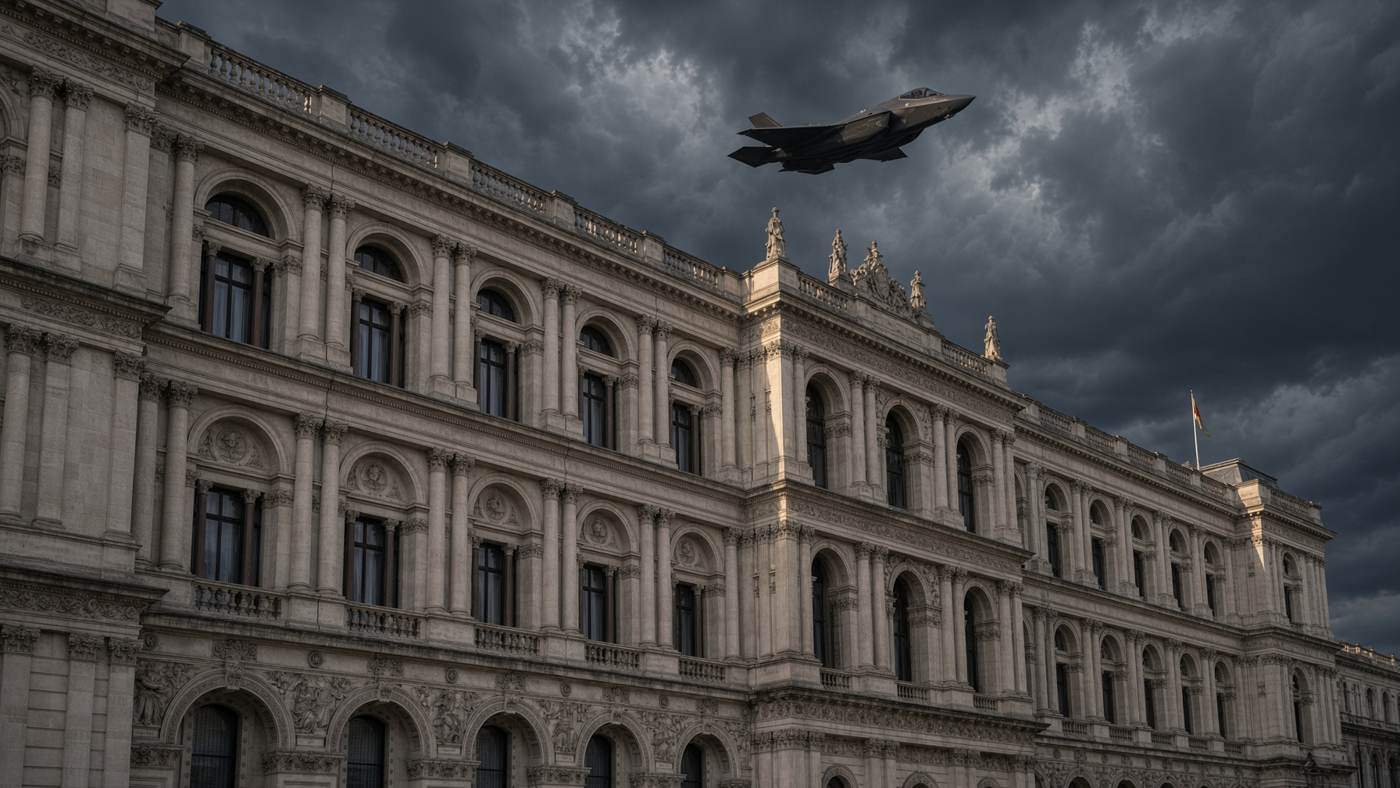
Britain makes about 15 percent of each F-35. Israel flies roughly 45 and has used them over Gaza, including a strike on a supposed safe zone in Al-Mawasi that killed about 90 people on the day Lammy spoke. Direct shipments of those parts to Israel stopped. Parts feeding the global spares pool, which can still reach the jets, did not. Ministers set the normal licensing rules aside, including duties linked to humanitarian law and the Genocide Convention, and said a wider cutoff would hurt “international peace and security” and annoy Washington.
Al-Haq did not get a full hearing. On June 30, 2025, the High Court refused permission for judicial review and set core treaty questions aside. Figures through February 28, 2026, still record 112 licences involving Israel issued from August 1, 2025. Campaign Against Arms Trade calls the F-35 exemption Britain’s largest material part in the assault. The pattern runs past Gaza. Operations in Lebanon have been set beside the genocide in Gaza, and Israeli units were already tied to gross violations that partners were slow to treat as a reason to stop the arms.
The Foreign Office calls those assessments “among the most robust and rigorous in the world.” Israel says it fights from necessity, inside the law, and tries to spare civilians. A department that bans the word genocide, then treats Israeli silence as a reason nothing can be decided, is not running a test. It is building a paper wall around a crime.
A speech cannot edit the file
On September 28, 2026, at Labour’s conference in Liverpool, Foreign Secretary Ed Miliband called Netanyahu’s conduct in Gaza “a stain on the conscience of the world” and said evidence of war crimes was mounting. He condemned the Hamas-led attacks of October 7, 2023, which killed about 1,200 people in Israel and saw 251 taken hostage, and said those crimes do not excuse what has been done to Palestinians. He named ethnic cleansing by “settler terrorists” in the occupied West Bank and promised sanctions on settlement goods, telling campaigners they had been right that Labour’s earlier line was too weak.
De Pear called the shift real and late. A conference line does not pull a part from a fighter jet, or give Hind Rajab back the call she made from the car. Britain signed the Arms Trade Treaty and the Genocide Convention. Both required a halt when the risk was already plain, not a partial freeze that left the main aircraft supplied, and not a ban on vocabulary in the office that scores the risk.
Chris Doyle, of the Council for Arab-British Understanding, told The New Arab that ministers ignored violations they would not have swallowed in Syria or Ukraine, and that the enablers still have to answer. Orders driving humanitarian groups out of Gaza remove witnesses on the ground. This film is a witness from Whitehall. London saw enough, wrote enough, and arranged the conclusion so the licences could survive. More of that record is on The AEGIS Alliance’s international desk and in the politics file. A genocide does not need every ally to drop the bomb. It needs enough of them to keep the paperwork clean.