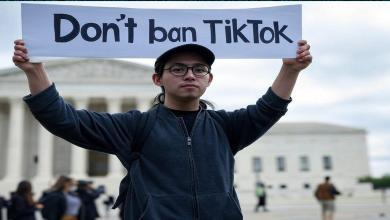
The Supreme Court did not save TikTok, and it did not kill it. On January 17, 2025, in an unsigned opinion in TikTok Inc. v. Garland, the justices left the Protecting Americans from Foreign Adversary Controlled Applications Act standing. The judgment was 9-0. Justice Sonia Sotomayor concurred in part. Justice Neil Gorsuch concurred in the judgment. Oral argument on January 10 had already shown the real question. It was not whether teenagers may record dances. It was whether Congress may force a foreign parent to sell a communications platform or watch that platform lose the app stores and cloud vendors that keep it alive. Everything after that day — a short blackout, a year of delays, and a joint venture that closed on January 22, 2026 — sat on that holding. The deal that followed did something the opinion did not do. It rewrote the cap table and left the algorithm’s owner on the other side of a license.
TikTok’s lawyers argued the statute punished speech based on the speaker. The government answered that the law targets ownership, data access, and operational control, not viewpoint. The Court applied intermediate scrutiny, not the strict scrutiny a content ban would invite. It called the government’s interest in keeping a foreign adversary from harvesting data on American users important and well grounded, and it treated divestiture as a way to make the law no broader than necessary. A user dancing in a kitchen is not the speaker the statute names. ByteDance is. Once the justices accepted that frame, the First Amendment argument lost its grip. Gorsuch still worried about the breadth of the tool. Worry is not a veto.
The blackout was the statute working
The mechanism is indirect and brutal. The law does not smash phones. It tells U.S. firms they may not host, distribute, or update a covered application. Apple, Google, and Oracle become the enforcement surface. When ByteDance took the U.S. app dark on January 18, 2025, it was acting inside that architecture. Reporting put the outage at roughly 12 to 14 hours. Then-President-elect Donald Trump signaled that his Justice Department would not treat the blank screen as the start of a permanent ban. By January 19 the app was loading again. A platform can carry speech without the Constitution requiring the United States to accept a particular foreign corporate parent. That is the distinction the government sold and the Court bought. It is also the distinction critics say will be reused the next time Washington wants a domestic owner for a network it does not like. The AEGIS Alliance will keep that reuse on the record.
Once the Court was done, the remaining fight was commercial. The incoming administration declined to treat January 19, 2025 as a hard stop. Enforcement delays followed. Critics, including members of the Senate Intelligence Committee, argued the statute did not hand a president a pen to keep rewriting the calendar. The White House used one anyway. On September 25, 2025, an executive order recognized a framework as a qualified divestiture and put a political ceiling on a legal floor. The transaction was signed on December 18, 2025, and closed on January 22, 2026, one day before the administration’s last deadline. TikTok’s announcement and Reuters’ account of the close used the language of compliance. The app’s chief executive, Shou Zi Chew, told staff the venture was good news for a service he put at about 200 million U.S. users and 7.5 million U.S. businesses. The reported value of the U.S. business was about $14 billion.
A percentage is not source code
The ownership math is the legal trick. Oracle, Silver Lake, and Abu Dhabi’s MGX each took about 15 percent, a combined 45 percent in the managing group. Affiliates of existing ByteDance investors took the next large block, a list that has included Michael Dell’s family office, a Susquehanna affiliate, Alpha Wave Partners, and other funds. ByteDance itself kept 19.9 percent, a sliver under the 20 percent foreign-adversary cap written into the statute. American and global investors hold the other 80.1 percent. The new company, TikTok USDS Joint Venture LLC, is led by Adam Presser, previously the operations and trust-and-safety lead, and is governed by a seven-member board. Oracle is the trusted security partner. U.S. user data is supposed to sit in domestic cloud centers. The recommendation engine is supposed to be retrained on American data. CapCut, Lemon8, and a wider portfolio were swept into the same oversight story.
ByteDance did not sell the algorithm. It kept the intellectual property and licensed it to the joint venture, which is supposed to retrain, test, and update that code on data stored in the United States. Percentages are not access logs. A license can be true and still leave the recommendation engine on a leash held somewhere else. Members of Congress noticed. In a May 2026 letter, Senator Ed Markey asked Oracle what its employees would actually review, whether a source-code audit had been finished, and how an urgent security patch could be distinguished from a hidden change. He wanted answers by June 18, 2026. The questions are the right ones, because a press release cannot show a packet capture.
By summer the executive branch treated the new chart as enough to unwind a different ban. On July 16, 2026, the Justice Department’s Office of Legal Counsel told the deputy counsel to the president that the version of TikTok run by the U.S. joint venture is not a “covered application” under the No TikTok on Government Devices Act. The opinion said Congress had banned an app that shared ByteDance’s control, and that the venture was majority-owned by American investors and functionally independent. The department’s public line matched the memo: ByteDance no longer controls the platform. In August, the White House Office of Management and Budget rescinded the 2023 directive that had kept the app off government devices. Agencies may still block it for ordinary workforce reasons. The statute aimed at phones in a federal building is not the same statute the Supreme Court upheld. The administration is using the deal to answer both.
What the holding still does not settle
Trump had floated, early on, the idea that the United States itself should hold a large equity stake. The closed deal contains no government shares and no government board seat. Beijing and Washington both signaled they had signed off. China’s Ministry of Commerce spoke of a basic framework that still had to live inside Chinese law. Advertising, commerce, and what the companies call global interoperability were left, in important respects, with entities that are not the Culver City venture. That is how the app makes money. A feed can feel domestic and still be ranked by an engine whose core intellectual property lives on the other side of a contract.
Early talk of a mass American exodus did not hold. Usership steadied. Stability is not independence. The same political season produced a different platform decision that belongs in the same file: Meta dropped third-party fact-checking while Washington was deciding who may own a For You page. The night the feed actually died, and the morning it returned, are told in the account of the blackout and the restart. This page is the Court case and the license that survived it.
Supporters of the original law said the issue was a foreign parent with legal duties that can run toward Chinese intelligence services, sitting on the behavioral graph of a huge American audience. Opponents said Washington was willing to break a communications platform over an ownership theory it would not apply evenly. The justices picked a side in January 2025 and declined to pick a buyer. The buyer arrived a year later, 19.9 percent short of the line Congress drew, with the code still licensed rather than sold. The AEGIS Alliance will treat that as a political settlement dressed as a divestiture, not as proof the national-security question was answered. For the surrounding fights over platforms and power, see technology news, politics, and U.S. news.





they can just switch to supporting bitcoin for the method of payment on tiktok… and then they can give the middle finger to the US Government….
Just locate the servers outside of America and they’re all set
Only billionaire homegrown, S African and. Russian propaganda for us.
Oh yeah that will be 💯possible
Because trumpers are about freedom speech right? Oh that’s right only when Trumpers have the right to free soeech