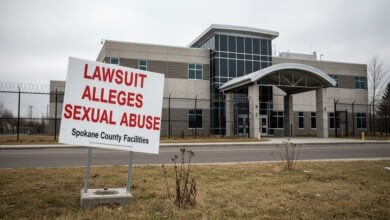
Lawsuit Alleges Thirty Years of Sexual Abuse at the Spokane County Juvenile Detention Center

Introduction: A Scandal Decades in the Making
In Spokane County, Washington, a lawsuit filed in October 2025 has exposed a chilling legacy of sexual abuse within the Spokane County Juvenile Detention Center—an institution that was supposed to rehabilitate troubled youth, not traumatize them. According to KHQ Local News, fifteen Washington residents have come forward, alleging that detention center guards engaged in sexual abuse spanning from 1983 to 2010.
The complaint, filed by Connelly Law Offices, not only details horrifying assaults but also accuses Spokane County of systemic negligence across generations.
“The abuse was the product of extraordinary negligence by Defendant Spokane County and leaves a legacy of traumatized victims,” the lawsuit states.
The Allegations: Abuse Spanning Nearly Three Decades
The heart of the lawsuit lies in testimony from fifteen former juvenile inmates, who were between twelve and seventeen at the time of their alleged abuse. From the accounts released so far, the sexual assaults were described as “brazen” and included acts of forced masturbation, oral sex, and both vaginal and oral rape.
The accused guards—William Lamb and Rafael Gray—served long tenures, reflecting deep institutional failures. Lamb worked from 1999 to 2016 as a supervisor, while Gray began his employment in 1983 and remained “for decades.” What’s most alarming is that the victims’ stories, though spanning twenty-seven years, share strikingly similar details—suggesting patterns of predatory behavior that were never addressed.
These incidents were reportedly not isolated. According to KHQ, over two dozen separate assaults form the basis of the case, many of which “were only the beginning of repeated acts committed inside the facility.” The plaintiffs claim the abuse persisted because Spokane County “failed to take even minimal precautions in supervising its employees and protecting youth in its custody.”
Institutional Failures: Negligence and Cover-Ups
The lawsuit claims that despite multiple warning signs, Spokane County administration ignored complaints, disciplinary history, and observable misconduct among detention officers.
Investigators from Connelly Law Offices described the case as emblematic of deeper systemic failures:
“This pattern of child sexual abuse did not occur in isolation. It thrived in an environment where oversight was superficial and accountability was nearly nonexistent.”
This echoes broader findings across Washington’s juvenile justice system. InvestigateWest’s “Guarded by Predators” series, first published in October 2025, uncovered a pervasive culture of silence and impunity among corrections staff not just in Spokane, but in juvenile centers throughout the state and neighboring Idaho.
The system reportedly prized loyalty and secrecy over the welfare of detained minors—creating conditions where complaints from children were ignored or buried under bureaucracy.
The Survivors’ Accounts
Each of the fifteen plaintiffs endured unique but eerily consistent experiences. Their statements reveal years of hidden trauma now resurfacing.
One survivor, identified in court filings only as J.D., described being groomed by guard William Lamb beginning at age thirteen.
“He told me I was special, that he wanted to ‘teach me maturity.’ I didn’t know what that meant until it was too late,” the survivor’s statement reads.
Another, known as K.C., recounted similar experiences under Rafael Gray’s supervision:
“I was a child. I didn’t have a voice in there. When I tried to tell another staff member, they laughed and said, ‘You think anyone’s going to believe a delinquent?’”
From grooming to retaliation against those who spoke up, these stories paint a picture of institutionalized abuse where children were routinely dehumanized and silenced.
The Broader Legal Landscape: A Pattern Across Washington
The Spokane County case is not isolated. It follows a string of similar lawsuits filed across Washington State, accusing various government agencies of neglecting their duty to protect children in state custody.
Earlier in 2025, Oslund Udo Little, PLLC filed a massive complaint representing 188 plaintiffs subjected to sexual abuse within state-run juvenile facilities, some dating back to the 1960s. These include the Echo Glen Children’s Center, Green Hill School, and Naselle Youth Camp.
Attorney Vanessa Firnhaber Oslund, representing those plaintiffs, remarked:
“The State of Washington had a legal and moral duty to protect these vulnerable children. Instead, these kids were subjected to depraved sexual abuse at the hands of those who were supposed to care for them.”
Such systemic issues reveal how deeply ingrained this culture of abuse became in Washington’s youth justice system.
Connelly Law’s Pursuit of Accountability
The Connelly Law Offices, which filed the Spokane County lawsuit, has positioned itself as a leading advocate for survivors of institutional sexual abuse. Founded in Tacoma and with offices in Spokane, the firm has represented hundreds of victims in abuse cases against schools, churches, and government entities.
In their public statement on the Spokane County case, the firm emphasized:
“This case demonstrates the extraordinary negligence of an institution that for decades failed to protect children from sexual predators under its employment.”
They have also opened outreach lines for other potential survivors and witnesses to come forward, signaling that the 15 plaintiffs may only represent the beginning of a larger wave of accountability.
(Contact Connelly Law: https://www.connelly-law.com/news/spokane-county-juvenile-detention-center-lawsuit)
Spokane County’s Silence and Potential Response
As of late October 2025, Spokane County officials have not issued a comment regarding the allegations. It’s common for county governments to refrain from statements pending litigation, particularly in cases involving pending civil suits.
However, legal analysts suggest that even silence can carry reputational risk. According to defense attorney Michael Ruiz, a Spokane-based legal expert on governmental liability:
“When county agencies remain tight-lipped, they’re often trying to avoid saying something that could be framed as an admission of liability later. Still, the public perception of such silence is often taken as indifference.”
The County’s legal defense is likely to hinge on the statute of limitations and whether county supervisors had “reasonable knowledge” of the alleged activities—a standard that can be difficult to prove across decades.
Cultural and Systemic Analysis: How the System Failed
Experts in juvenile justice say the Spokane County case illustrates classic institutional denial. The typical mechanisms include:
Disbelief toward child complainants: Staff often prioritized institutional image over truth.
Lack of external oversight: Juvenile detention centers historically operated with little public scrutiny.
Training deficiencies: Guards often lacked child protection or trauma-informed instruction.
Normalization of misconduct: “Boundary violations” (e.g., inappropriate comments or isolation tactics) were tolerated, paving the way for escalation to abuse.
As documented by Sokolove Law, such conditions are not unique to Spokane. Across the U.S., detention facilities have faced decades of class action suits linking sexual violence to underfunded systems, lack of vetting, and minimal psychological evaluation of staff.
The Human Toll: Lasting Trauma Across Generations
The psychological and social impact on survivors is immense. Clinical psychiatrist Dr. Lauren Hines, who has counseled survivors of juvenile detention abuse, notes:
“Many of these individuals exhibit signs of complex PTSD, depression, chronic anxiety, and lifelong trust issues. The nature of their trauma is compounded by the betrayal of authority figures who were supposed to protect them.”
The lawsuit describes how survivors now in their fifties still struggle with employment, relationships, and substance use stemming from the unresolved trauma inflicted in adolescence. As one plaintiff stated in a press release:
“They took more than my innocence. They took decades of my life.”
The Search for Justice
The plaintiffs seek financial compensation for emotional and physical damages, along with formal acknowledgment of wrongdoing by Spokane County. More importantly, many have stated that the purpose of their lawsuit is not solely monetary, but restorative—to prevent future generations from enduring the same horror.
The case may also compel Washington State lawmakers to revisit procedural safeguards in juvenile detention centers. Legislators have already debated implementing independent oversight boards, anonymous reporting hotlines, and mandatory psychological health evaluations for correctional staff.
Broader Implications: A Call for Oversight Reform
The Spokane County case contributes to a national reckoning over the treatment of minors in custody.
Between 2022 and 2025, reports from the Department of Justice Office of Juvenile Justice and Delinquency Prevention indicated that over 9% of confined youth nationwide reported some form of sexual victimization by staff or peers.
Advocacy groups argue that independent watchdog bodies—similar to civilian police commissions—should oversee conditions in juvenile facilities. Without such measures, the walls of secrecy that protected abusers for decades may remain intact.
Moving Forward: Giving Survivors a Voice
Organizations like RAINN (Rape, Abuse & Incest National Network) and Justice for Youth Coalition have already begun outreach initiatives across Washington State following the lawsuit’s filing. Their goal is to amplify survivor voices and push for both compensation and systemic change.
According to RAINN’s spokesperson:
“When systemic abuse lasts for generations, it becomes a structural problem, not an individual one. Public outrage must translate into reform, otherwise these lawsuits will be just history repeating itself.”
Conclusion: Accountability After Silence
For nearly three decades, children inside Spokane County’s juvenile detention center were trapped in a nightmare that lasted long after their release. Their stories—ignored at the time—are now compelling courts to reconsider how justice systems protect their most vulnerable wards.
The lawsuit against Spokane County serves as both a quest for justice and a mirror reflecting widespread institutional rot that has persisted through apathy and neglect. Whether through civil courts or legislative reform, the survivors of this crisis are demanding what they were denied as children: safety, dignity, and belief.