The FBI Told Senators It Was Hunting a Criminal Enterprise in Jeffrey Epstein’s Cell. Prosecutors Are Now Asking About the Executors

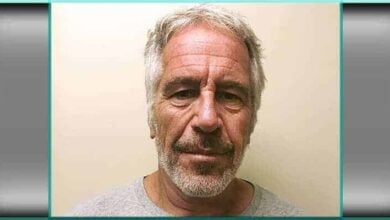
NEW YORK — On November 19, 2019, the director of the Bureau of Prisons sat before the Senate Judiciary Committee and confirmed that the FBI was looking at a “criminal enterprise” in the death of Jeffrey Epstein. Seven years later, federal prosecutors in Manhattan were reported to be looking at a different enterprise: not the noose, but the two men who kept Epstein’s money moving and then became executors of his estate.
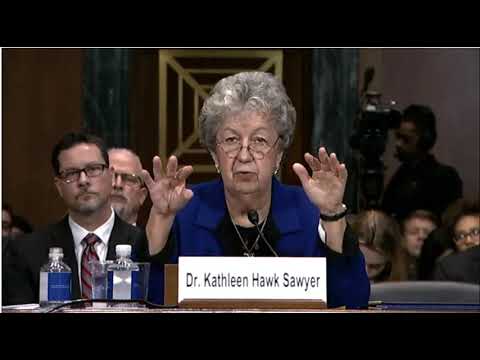
The jail question came first, and it came from Senator Lindsey Graham. Epstein had been found unresponsive in the Metropolitan Correctional Center on August 10, 2019. The New York City medical examiner ruled the death a suicide by hanging. Graham asked Kathleen Hawk Sawyer whether she agreed. “That was the finding of the coroner, sir,” she said. He asked whether she had evidence to the contrary. She did not. He asked how it could have happened. She said the death was still under investigation by the FBI and the inspector general, and that she could not discuss the specifics. Then he put the choice in one sentence: with a case this notorious, there had to be either a major malfunction of the system or a criminal enterprise that allowed it. Was the FBI looking at both?
“The FBI is involved and they are looking at criminal enterprise, yes,” Sawyer said. Senator John Kennedy told her the public was not buying the official account. Senator Ted Cruz said powerful men had wanted Epstein silenced before he could testify. Sawyer stayed with the medical examiner. “There’s no indication, from anything I know, that it was anything other than a suicide.” Both lines were true to her role. She ran the prisons. She did not run the FBI. She had just told the country the Bureau was hunting an enterprise, and that she personally had nothing that pointed away from suicide.
The malfunction half of Graham’s choice was documented in numbing detail. The Justice Department inspector general’s report in June 2023 ran 127 pages and found “numerous and serious failures.” Extra linen was in the cell. Officers appeared to sleep and browse the internet through long stretches of required checks. About half the cameras were not working. The two guards assigned to the unit, Michael Thomas and Tova Noel, were charged with falsifying the count slips they never made. In 2021 both entered deferred-prosecution agreements. A judge later dismissed the charges. No other Bureau of Prisons employee who signed a false count was prosecuted. MCC Manhattan was closed in 2021 and stayed closed. The inspector general did not find evidence of homicide. A broken jail and a suicide ruling can occupy the same file. They do not, by themselves, retire the word “enterprise.”
The public never treated the file as closed, and the politics of 2025 proved it. In February 2025, Attorney General Pam Bondi spoke on television about an Epstein “client list” on her desk. The department then handed “Phase 1” binders to influencers at the White House. Much of what was inside was already public. In July 2025 a two-page joint memo from the Justice Department and the FBI said an “exhaustive review” had found no incriminating client list, no credible blackmail evidence, and no basis to charge additional uncharged third parties. It affirmed the suicide finding. FBI Director Kash Patel and Deputy Director Dan Bongino, both of whom had questioned that finding before they took the jobs, echoed it. The memo tried to end the argument. Congress reopened the archive instead.
The Epstein Files Transparency Act cleared the House 427 to 1 and the Senate by unanimous consent. President Trump signed it on November 19, 2025, six years to the day after Sawyer’s testimony. The department began posting records in December. On January 30, 2026, it said the production had passed 3.5 million additional pages drawn from the Florida and New York cases, the prosecution of Ghislaine Maxwell, the jail-death investigative files, and the FBI and inspector-general work. The statute still allowed withholding where a release would identify victims or compromise an ongoing investigation. The omissions were not a footnote. They were an admission that some part of the file was still a live case.
On August 25, 2026, U.S. District Judge Paul Engelmayer told Maxwell the newly public paper did not save her. In a 67-page ruling he denied her petition to throw out the 2021 sex-trafficking conviction and the 20-year sentence. He called the filing lengthy and rambling, wrote that nearly all of the claims were procedurally barred, and said the evidence at trial had established her guilt. Material she cited from the released files, he wrote, incriminated her or reinforced the rulings she was attacking, rather than undermining them. The Supreme Court had already refused to hear her direct appeal, on October 6, 2025. She remains at the federal prison camp in Bryan, Texas, with a projected release eligibility in July 2037. Maxwell is still the only person besides Epstein himself to have been criminally convicted in the United States for the trafficking operation.

That is the fact that makes the September 2026 reporting land so hard. On September 23, 2026, The New York Times reported that federal authorities in Manhattan, including FBI agents and prosecutors in the Southern District of New York, had begun examining activities of Epstein’s longtime lawyer, Darren Indyke, and his longtime accountant, Richard Kahn. The next day CNN added that investigators had been interviewing people who dealt with Epstein, including survivors, and collecting emails and checks. Both men are co-executors of the estate. Both have denied knowing about the sexual abuse. Their lawyers said the two were aware that the U.S. Attorney’s office had recently asked to speak with at least one person who provided services to Epstein, and that they did not know the scope. They have not been charged. A report of an inquiry is not a verdict.
The paper trail around them is nonetheless why survivors have spent years saying the enterprise was never one man in a cell. The Times reported that released files and court records show Indyke and Kahn were deeply involved in wire transfers and cash withdrawals that reached some of the women Epstein abused. Both denied knowledge under oath before a House committee examining the department’s handling of the case. Epstein’s will, drafted while he was in jail, put them in line for enormous sums if the trust pays out: $50 million for Indyke and $25 million for Kahn, according to the Times. Federal authorities did not interview either man after the 2019 arrest. The jail death ended the prosecution of Epstein. It did not end the question of who signed the checks.
Other pieces of the public record moved on their own clocks. Andrew Mountbatten-Windsor, stripped of his royal titles on November 3, 2025, was arrested on February 19, 2026, on suspicion of misconduct in public office after Thames Valley Police examined whether he shared confidential trade-envoy material with Epstein. Virginia Giuffre, whose account sat at the center of the public case for years, died by suicide in Australia in April 2025 at 41. Her memoir, Nobody’s Girl, was published that October. The fight over what the department still has not produced, including journalist Katie Phang’s lawsuit and the fight over handwritten FBI notes, continued in the same courthouse culture that produced Engelmayer’s order. None of that identifies a murderer in the MCC. All of it describes a network that kept functioning, on paper, after the defendant was dead.
Sawyer’s word, “enterprise,” was dangerous because it was accurate to more than one theory. An enterprise can be a plot to kill a prisoner. The inspector general said the evidence did not show that, and nobody has been charged with killing Epstein. An enterprise can also be the structure that recruited, paid, scheduled, and then legally survived him: the company names, the transfers, the executors, the non-prosecution decisions that ran for years before MCC. The July 2025 memo said the review found nothing new worth charging. The September 2026 reporting says Manhattan prosecutors are asking questions of the estate’s inner circle anyway. Those two sentences are allowed to sit next to each other until somebody is charged, or until the inquiry is closed in public.
The cell is not a mystery because the public enjoys mysteries. It is a mystery because the institution that held the most important witness in a trafficking case failed the checks, failed the cameras, and then offered the country a suicide ruling alongside an FBI enterprise investigation it never resolved out loud. The files law forced millions of pages into the open and still reserved the pages tied to live investigations. If Indyke and Kahn are only witnesses, the department can say so. If they are targets, the seven-year gap between Sawyer’s testimony and a reported look at the executors is its own scandal. The enterprise Graham asked about may not have been standing in the tier that night. It may have been the one that never needed a key to the cell.
The AEGIS Alliance has followed the paper for years, including the 60 Minutes autopsy photographs, Mark Epstein’s challenge to the official narrative, the Bank of America settlement with survivors, and the court-record archive. More sits in Crime News and Politics.