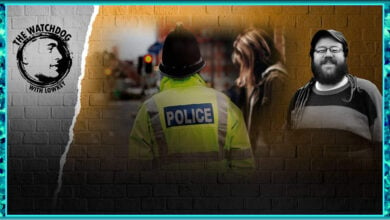
An Undercover Officer Admitted He Lied to Britain’s Spycops Inquiry About a Sexual Relationship, and the Campaigners Caught Him
LONDON — Britain’s undercover policing scandal is usually told as a history: a squad born in 1968, about 1,000 political, environmental, and social-justice groups entered, dead children’s names stolen for cover, women deceived into sexual relationships, and children born to officers who then vanished. That history is true, and it is no longer the most revealing part. The revealing part is what the public inquiry did with a lie in September 2026, more than a decade after Theresa May, then home secretary, ordered the inquiry into existence. An officer admitted he had not told the truth about a sexual relationship. The people who forced the admission were not the inquiry’s lawyers. They were the campaigners who had been spied on. The officer kept his anonymity. The government, at the same time, was still talking about whether the rest of the inquiry should change format.
The Special Demonstration Squad, and later the National Public Order Intelligence Unit, were the units the inquiry was built to examine. Officers were deployed for years, often around four, inside groups that organized protests, anti-racism campaigns, environmental actions, and family justice campaigns, including those for Stephen Lawrence, Ricky Reel, and Jean Charles de Menezes. The official record is at ucpi.org.uk. Sir John Mitting, a former High Court judge, has chaired it. The inquiry has said it is looking at the conduct of 139 undercover officers. It has published more than 9,000 evidential documents. Its interim report on the first tranche, released June 29, 2023, covered SDS deployments from 1968 to 1982 and found that long-term infiltration of left-wing and anarchist groups did help police manage public order, and that a significant part of that help could have been got by less intrusive means. The inquiry was once expected to take about three years. It did not start hearing live evidence until 2020. A House of Lords briefing put total spending, through the end of March 2026, at £137,067,000.
The hearing calendar shows how a decade disappears. Tranche 3 opening statements ran October 13 to 15, 2025. Phase 1 evidence ran from October 17 to December 17, 2025. Phase 2 ran from February 2 to March 26, 2026. Phase 3, the managers, opened on June 15, 2026. A closed phase was set for autumn 2026 so Mitting could hear officers whose identities stay hidden. He is due to stand down after a second interim report, expected in 2027, limited to the SDS and to questions that include miscarriages of justice.
On August 2, 2026, the inquiry heard from Jon Boutcher, now chief constable of the Police Service of Northern Ireland, about the months in which he inherited the SDS as a detective chief superintendent in Scotland Yard’s counter-terror command. The Guardian reported his conclusion. Within months he decided the squad had to be shut. Most of the political groups it had entered, he said, posed no threat to public order, let alone to democracy. Pro-Palestinian supporters and left-wing groups were in the files. Very few officers had been aimed at terrorist organizations, even while the threat from international terrorism was rising. He described a toxic atmosphere and a siege mentality, an insular unit that resisted change, officers who mostly refused further training, and accounting so loose that overtime had become a culture. When cuts were suggested, people threatened to resign. He said the useful intelligence was extremely limited and that claimed successes had been embellished until they were akin to fairytales. He shut the squad quickly, with his superiors’ agreement, and called that decision groundbreaking. He also named the harm that civil claims had already been paying for: abusive and inappropriate behavior, sexual abuse of vulnerable women through relationships in which the officer’s identity was a lie, and intrusive reporting on the friendships and home lives of protesters, including grieving families. He called the damage incalculable and intolerable. The SDS had run, in his account, for about 40 years from 1968.

Then came the officer the inquiry knows as HN60, who used the cover name Dave Evans. He was deployed from 1998 to 2005 into left-wing and animal-rights circles, including the Socialist Workers Party and London Animal Action, with a legend as a landscape gardener. In a statement signed about four years before the hearing, he wrote a flat denial: “I did not engage in any sexual activity whilst in my undercover identity.” The inquiry scheduled his Tranche 3 evidence for September 21, 2026. By the time The Guardian published on September 27, he had signed a second statement and admitted a relationship with a woman known in the proceedings as Olivia. He met her in 1998 while he was on a college course in his false name. They went to social events with animal-rights campaigners and at least one demonstration. The relationship lasted at least six months. Under questioning he said it was possible it lasted two years, and that he could not recall. His explanation for the omission was that she was not an activist and not part of a target group, so he did not think the relationship was relevant. He accepted that the first statement was “not completely truthful with hindsight.”
The evidence did not surface because an investigator went looking. Campaigners put it in front of the inquiry. Helen Steel, a defendant in the McLibel case who was herself deceived into a two-year relationship by the undercover officer John Dines, was among those who pressed the point. That detail matters more than the officer’s faulty memory. A statutory inquiry with a nine-figure budget and a staff of lawyers had a denial on file. The women and activists who have spent years reconstructing their own files were the ones who could say the denial was false. Four undercover officers have fathered, or are alleged to have fathered, children while deployed. Sexual deception is not a side issue the inquiry stumbled into. It is one of the reasons the inquiry exists. An officer who classified a six-month relationship as irrelevant because the woman was not on a target list was describing the culture Boutcher had called abuse. He was also describing a filing system in which the crime against the woman does not count unless she was the mission.
The consequence, as campaigners immediately pointed out, was another statement. He did not lose the anonymity cipher. There is no public finding, in the reporting of that week, of a charge, a pension hit, or a disciplinary result. The observer account that has tracked these hearings for years put it bluntly: when there is no meaningful cost for lying to the inquiry, “I don’t recall” is a rational strategy. They are laughing at Mitting, the post said, and they are laughing at the people who were spied on. A public inquiry can survive delay. It cannot survive a reputation for being lied to without a sanction, because the officers still to come can read the transcript.
The Home Office opened a consultation in July 2026 on the inquiry’s future. The government has been considering whether the remaining stages, after more than ten years, should continue in a different format. Victims’ representatives have said a shorter or redesigned ending would be a cover-up of the chapters not yet heard, including the managers and the deployments that are still behind anonymity orders. A consultation is not a shutdown. It is a signal, sent in the same season as Boutcher’s evidence and the Evans admission, that the political patience for finishing the record is up for debate. The Metropolitan Police has spent years apologizing in civil claims and paying damages to women who proved they were deceived. Apologies in individual cases are not a substitute for a finding about the institution. The institution’s own former supervisor has already said, in public, that the squad was spying where there was no public-order threat and inventing the value of the product.

The AEGIS Alliance has treated infiltration as a method rather than a slogan. The FBI’s file on Anonymous and Project Chanology is one American version of the same instinct, to put political dissent in an intelligence product. WikiLeaks’ Spy Files Russia is another state’s version, at industrial scale. The British case is more intimate. The officer did not only watch a meeting. He stood in a kitchen, used a dead child’s name or a borrowed one, and in some deployments became the father of a child whose mother did not know his real name. That is why the September admission landed harder than another document dump. The lie was small enough to fit in one sentence, and the inquiry did not catch it. Further reading is in Police Accountability and Activism.
Mitting still has a report to write, and the officers still to be heard still have statements to sign. If the Evans hearing is the template, the statements will be as complete as the campaigners can force them to be. £137 million bought a process that can put a chief constable under oath and still miss a relationship until the targets of the spying do the detective work. That is not a reason to stop. It is the reason the remaining tranches have to be heard in public, by the chair the statute appointed, and not folded into a format designed to be finished.