Harry Wait Lost His Own Ballot After a Jury Refused to Call His Absentee Requests a Security Test

Harry Wait built a brand on the idea that Wisconsin’s absentee system was a sieve. A jury agreed he had ordered two ballots in other people’s names, called three of the four counts crimes, and left him unable to cast a ballot of his own until probation ends. The camera did not turn the statute into research.
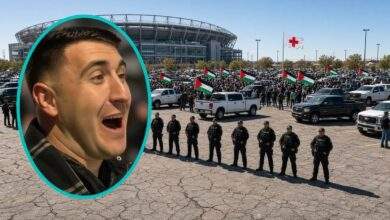
On March 24, 2026, a Walworth County jury sitting in Racine County convicted the Union Grove activist on two misdemeanor election-fraud counts and one felony count of misappropriating identification information. Jurors acquitted him on a second felony, the identity-theft count tied to Assembly Speaker Robin Vos. The conduct was not in dispute. In late July 2022, at the Racine County Fair, Wait used the state’s MyVote Wisconsin portal to request absentee ballots in the names of Vos, a Republican, and Racine Mayor Cory Mason, a Democrat, and he had the mail directed to his own address. Mason’s ballot went out. Vos’s request was flagged and stopped. Wait filmed himself with the document, called Sheriff Christopher Schmaling, and told anyone listening that he had tested the system on purpose. Wisconsin Public Radio put the trial on the record.
The AEGIS Alliance is interested in the gap between what the stunt proved and what the press conference claimed. A flagged request is a control that worked. An issued ballot is a control that missed a public figure’s name typed by a stranger at a fair booth. Both facts can be true. Neither fact turns the typing into a vulnerability scan.
He Made Himself the Exhibit
Wait leads H.O.T. Government, short for Honest, Open, Transparent Government, a group that has spent the years since 2020 arguing that Wisconsin’s roughly 20,000-vote presidential margin was rotten. He is a retired consultant living with the aftereffects of a stroke. He staffed fair booths, fought Vos over the refusal to decertify the 2020 result, and fought Mason over outside election grants that a 2024 constitutional amendment later restricted. The Wisconsin Department of Justice charged him in September 2022. Trial opened March 23, 2026, before Judge Daniel S. Johnson. Supporters packed the room in “Free Harry Wait” shirts. Wait testified for about an hour. Defense attorney Joseph Bugni sold public-interest motive. Assistant Attorney General Adrienne Blais sold spectacle. After more than three hours, the jury split the charges.
Wait told reporters he had put the panel “in a very hard spot because I admitted I ordered the two ballots.” He also said he would do it again. “I tested the system and the system failed.” That sentence is the brand. It is also the problem. Using another person’s name on a government portal, then filming the result, is identity theft with production values. Election clerks can argue, correctly, that the stopped Vos request shows a check functioning. Mason’s envelope leaving the building shows a check that did not catch this particular request. A man can still be guilty of making the request. Vos testified. Mason’s office documented the envelope. The fair-booth video did the rest. Bugni asked the panel to treat intent as a shield. Blais asked the panel to treat the film as a confession. The split verdict is what a jury does when the facts are ugly and the politics are louder than the statute.
Probation, a No-Threat Order, and No Ballot
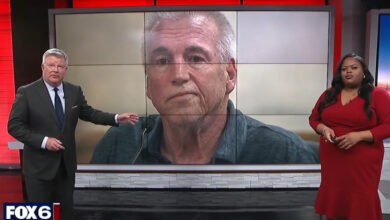
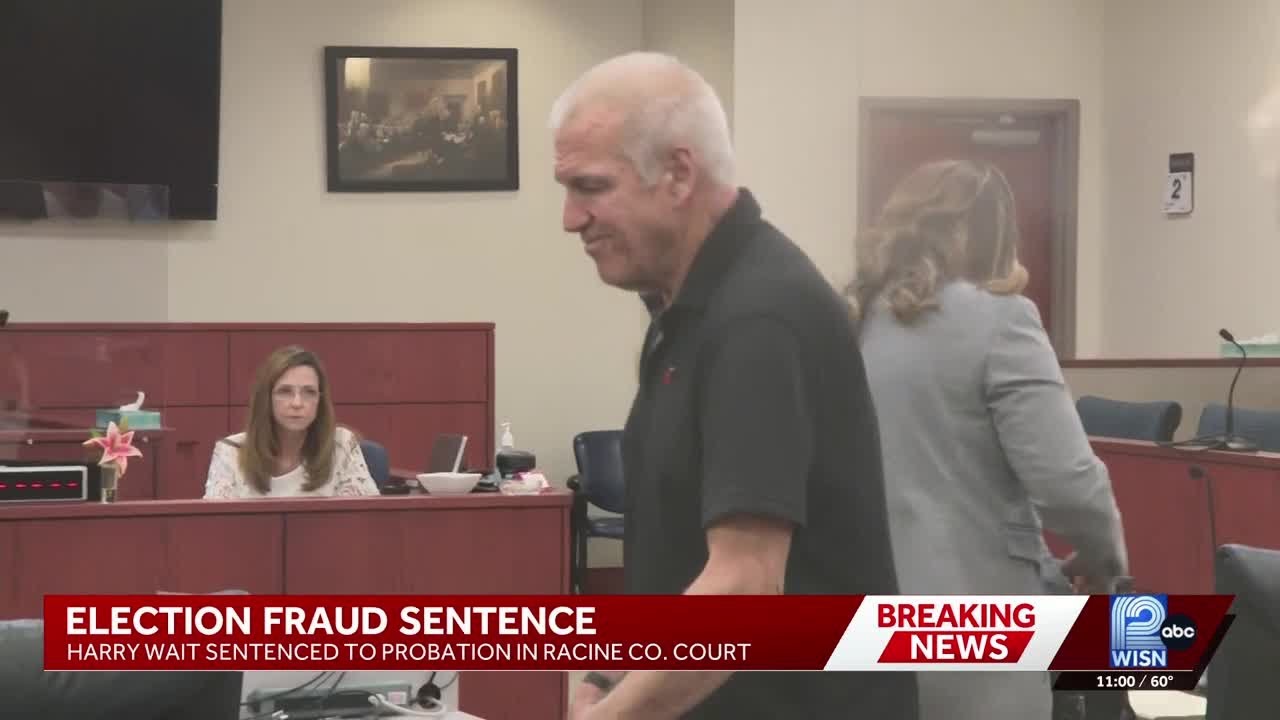
On June 2, 2026, Johnson sentenced Wait, 72 according to FOX6, to three years of probation on each count and refused jail. “I am not going to impose jail in this case,” he said, citing age, health, and a clean record. The felony had carried years in prison. The misdemeanors carried up to a year each. Prosecutors had asked for 90 days. Assistant Attorney General Leigh Neville-Neil told the court that Wisconsin sentences conduct, not beliefs, and that the conduct was serious. Wait left to cheers. His lawyer told WPR an appeal is coming. WPR’s sentencing report and the Racine County Eye recorded the same core terms: three years, no cage.
The conditions are the part the rally skipped. Probation requires that he commit no new crimes and that he not threaten physical harm against election officials. The judge imposed a limited no-contact order with Vos and Mason, except when Wait is dealing with them in their official capacities as elected officials. Those are not symbolic lines. They are the court’s way of saying the “test” had victims, and that the next performance cannot include a threat. Under Wisconsin law, a felony pauses the right to vote for the length of the sentence, probation included. The right returns automatically when the term ends. Unless an appeal wipes the conviction, the man who built a brand on election integrity cannot cast a ballot in the state until 2029.
Wait told FOX6 he had spent something like $130,000 on legal fees and still would not recommend the stunt, then added that he did it “for the people.” A defendant who tells a jury he would repeat the crime, then prices the lesson at six figures, is not confused about the stakes. He is keeping the bit alive until a higher court writes a different caption.
The Road Show Did Not End at the Courthouse
On September 25 the sentence had become a booking. Independent broadcaster Ivory Hecker promoted a Liberty Summit appearance with Wait in the Wausau area and described him as a man who had exposed a flimsy portal, then been punished for the exposure. The post repeated the claim that a name and a birth date were enough to have a ballot mailed anywhere, and it scolded television outlets for covering the conviction instead of the alleged flaw. That is the political design of these stunts. Force the state to prosecute an older man with a stroke history, then hold up the prosecution as the exhibit. The jury still found three crimes. The judge still declined to cage him. The voting pause is the part neither summit nor shirt can talk away.
Wisconsin remains a razor-margin state with unfinished fights over absentee rules, drop boxes, and voter ID. Groups that spent five years insisting the 2020 count was itself a crime now have a local conviction that is actually on the books, and it belongs to their own volunteer. That does not prove the 2020 canvass was clean. It also does not prove MyVote is a sieve waiting for a partisan army. It proves one man ordered two ballots in other people’s names, filmed it, and asked a jury to call the filming research. Clerks can tighten identity checks on absentee requests without adopting the claim that the last presidential count was a criminal enterprise. Those are different arguments wearing the same hat at the same booth.
There is a narrower systems point Wait’s allies keep skipping, and it cuts against both rallies. If a stranger at a county fair can get a sitting mayor’s ballot mailed to a third address, the portal’s identity check is too thin, and the state should fix the thinness in public, with a paper trail, without deputizing activists to commit the crime they say they are measuring. A flagged request for the speaker of the Assembly shows the opposite risk: a control that depends on a clerk recognizing a famous name will not recognize a quiet one. Reform starts from those two outcomes. It does not start from a confession video.
The AEGIS Alliance will keep covering how official systems get probed, gamed, and then cited as proof of whatever the probe’s author already believed, on the politics, U.S. news, and crime news desks. Related files include the White House monument fight over which past gets a pedestal and older accountability reporting such as the Senate roll call against a Federal Reserve audit.
A stress test that ends with the tester losing his own vote is still a conviction. The shirt does not change the jury form. The summit does not restore the ballot. Wait said he would do it again. Wisconsin said he cannot vote while he thinks about it.