
Five Israeli units committed gross violations of human rights against Palestinians in the occupied West Bank before October 7, 2023. The United States State Department said that out loud on April 29, 2024, and then did the thing it has done for years when the abuser is Israel. It found a way not to apply the law. Four of the units were waved through as “remediated.” The fifth, understood by officials and reporters to be the Netzah Yehuda battalion, was given more time. Time, in Washington, is how you keep American weapons flowing to a military that is carrying out a genocide.
The Leahy Laws, written in the late 1990s and named for former Senator Patrick Leahy, bar U.S. assistance to a foreign security unit when there is credible information that the unit committed a gross violation and the responsible people have not been brought to justice. Gross violations include torture, extrajudicial killing, and rape. On paper the statute is a ban. In practice, successive administrations have carved Israel a hole in it large enough to drive the baseline of about $3.8 billion a year in military financing, plus the wartime supplemental packages, straight through. Vedant Patel, then the department’s principal deputy spokesperson, told reporters on April 29 that the standards were applied “consistently” and that the partnership would not be touched. He also said the five incidents were “much before October 7th and none took place in Gaza.” That sentence was the tell. The department was willing to discuss a handful of older West Bank cases. It was not willing to discuss the war it was funding.
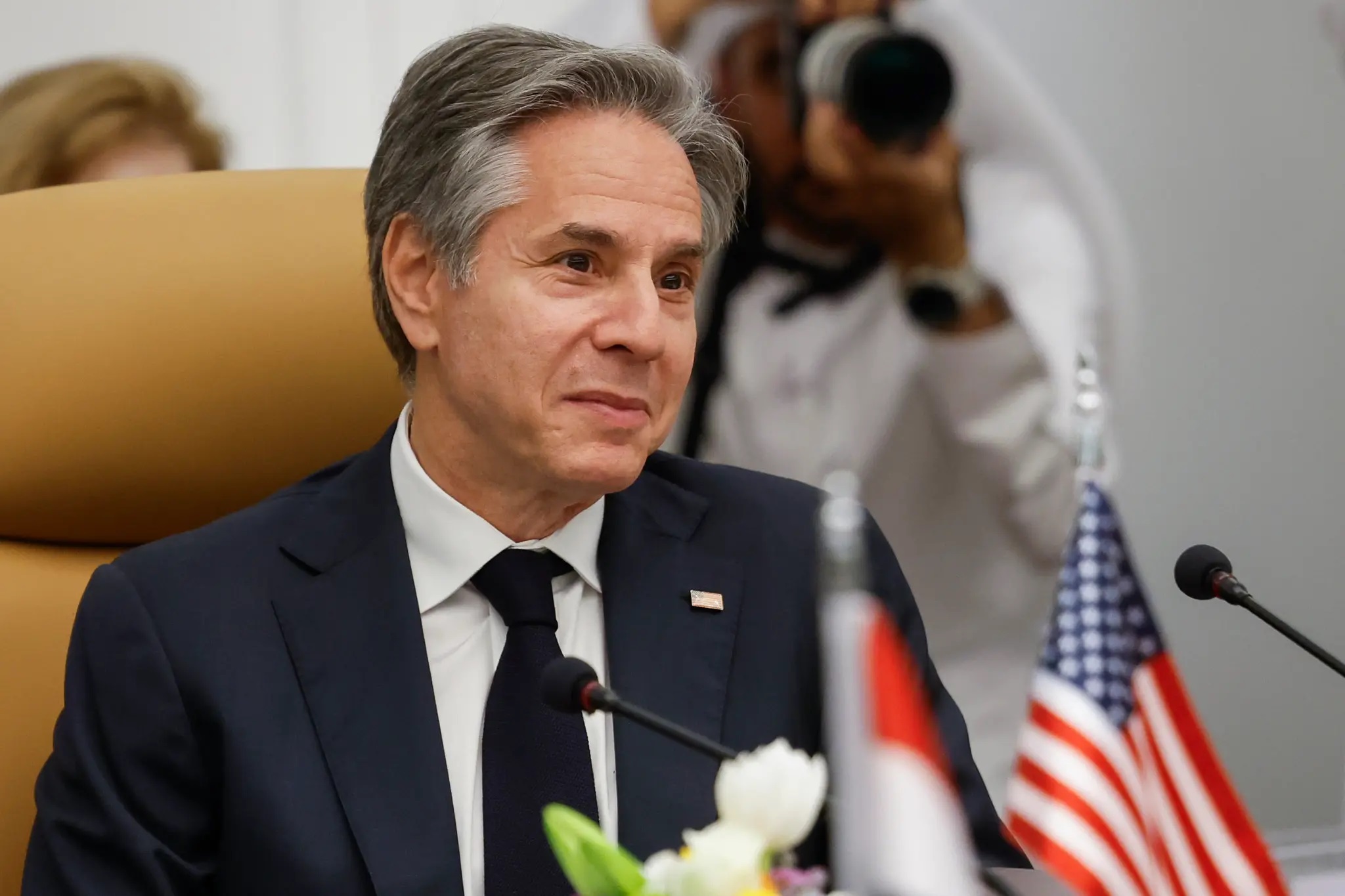
Secretary of State Antony Blinken had said on April 19 that he had reached “conclusions” on the West Bank claims. Then he wrote House Speaker Mike Johnson that new information had arrived about the fifth unit. Patel said Israel had “submitted additional information” and that the department was “engaging with them in a process.” He would not say when the process ended. He denied that Israel was getting preferential treatment. The units, including the one still under review, remained eligible for U.S. security assistance while the consultations dragged on. A law that is supposed to stop the money was being used as a reason to keep sending it.
Omar Assad, Left Gagged in the Cold
Netzah Yehuda’s American problem had a name, and the name was a U.S. citizen. In January 2022, soldiers from the battalion, an ultra-Orthodox nationalist unit then operating in the occupied West Bank as part of the Kfir Brigade, stopped Omar Assad at a sudden checkpoint in the village of Jiljilya. Assad was 78. Witnesses and the army’s own review said he was handcuffed, gagged, and left lying on the ground in near-freezing weather. The soldiers left. He was found dead of a heart attack. An IDF commanders’ investigation called it a moral failure and a lapse in judgment. It did not call it a crime. No one was charged. A commander was reprimanded. Two soldiers were reportedly removed from combat roles. That is what “remediation” looks like when the dead man is Palestinian and the people who bound him wear Israeli uniforms.
The political reaction in 2024 was not shame. It was a full-court press to make sure the battalion never lost a dollar. Johnson went on Hugh Hewitt’s radio show and said he had already called the White House, before the House even finished the Israel aid package. If the administration sanctioned the unit, he said, Congress would intervene. Benjamin Netanyahu posted that sanctions on the Israel Defense Forces were “the height of absurdity and a moral low,” and vowed to fight the idea with all his strength. Defense Minister Yoav Gallant and war-cabinet minister Benny Gantz lobbied Blinken directly. Gallant’s office said the battalion operated according to the IDF’s values and international law. The values, in Jiljilya, had been a gag and a cold night.

On August 9, 2024, spokesman Matthew Miller announced the result Blinken’s callers wanted. The secretary had decided Israel “effectively remediated” the violations. Netzah Yehuda stayed eligible. The department did not publish a charge sheet, a court-martial, or the names of anyone held responsible, because there was no criminal case to publish. What Israel offered, according to the account Miller and later reporting described, was administrative: soldiers shifted out of combat duty, tighter screening of recruits, a short educational seminar. Charles Blaha, who previously directed the State Department office that actually runs Leahy vetting, called the decision an outrage and another case of special treatment for Israel. Omar Assad’s family told Al Jazeera the decision was unjust and that they were not done seeking accountability. Sarah Leah Whitson, the former executive director of Human Rights Watch’s Middle East division and of DAWN, put the same point more bluntly in March 2026. Blinken had personally kept the battalion off the sanctions list on the excuse that he trusted Israel to police itself.
A Law That Does Not Apply to the Genocide It Is Funding
While the department performed that consultation, Israel was destroying Gaza. The Leahy review Patel described was careful to locate the five incidents before the war and outside the Strip, as if the statute had a date stamp and a map that stopped at the fence. It does not. Credible information of extrajudicial killing, torture, and the starvation of civilians is exactly what the law was written to catch. Washington’s answer, for two years, was that the International Criminal Court had no jurisdiction, that Israel investigates itself, and that American bombs were a separate subject from American law.
The court record moved anyway. On November 21, 2024, a pre-trial chamber of the ICC issued arrest warrants in the Palestine situation for Netanyahu and Gallant, charging starvation of civilians as a method of warfare, murder, persecution, and other inhumane acts as crimes against humanity. Those warrants are not genocide counts. They are still a prosecutor’s judgment that the men running the campaign belong in a dock. South Africa’s case at the International Court of Justice, accusing Israel of genocide, remains underway. In September 2025 a United Nations independent commission of inquiry said there were reasonable grounds to conclude that Israeli authorities had committed four of the five acts in the Genocide Convention against Palestinians in Gaza, and named Netanyahu, President Isaac Herzog, and Gallant for direct and public incitement. Israel rejected the finding, as it rejects every finding, and said its forces follow international law.

The commission returned on June 23, 2026, with a report focused on children. It said Israeli authorities and security forces had deliberately inflicted death and severe harm on Palestinian children, that this was part of the genocide, and that the killing did not stop when a ceasefire was announced in October 2025. The BBC, citing Gaza’s health ministry and noting that the United Nations treats those figures as reliable, reported at least 73,035 people killed in Israeli attacks since October 2023, including more than 21,280 children. The commission put children at about 30 percent of the dead. Between the start of that ceasefire and June 2026, Israeli fire killed more than 1,000 people in Gaza, among them hundreds of children. A ceasefire that still produces a four-figure death toll is not a peace. It is a slower phase of the same campaign, fought in part with U.S.-supplied munitions. The AEGIS Alliance has covered pieces of that record as it happened, including gunfire near a U.S.-backed food site, the ceasefire breaches Qatar, Egypt, and Jordan condemned, and the killing of Palestinian athletes whose futures the war erased.
Netzah Yehuda was not left behind in the West Bank as a bad memory. After October 7 the battalion was sent into Gaza. Commanders associated with it were later promoted. The “remediation” Blinken accepted in August 2024 was a seminar and a reassignment, followed by a deployment into the genocide the seminar was never meant to stop. A federal complaint filed in December 2024 by Palestinian families, including people from Gaza, asked a U.S. court to make the State Department obey the Leahy Law instead of inventing an Israel-only path in which a unit stays eligible while diplomats look for a “roadmap.” The roadmap was the exemption. ProPublica had already reported that Blinken sat on internal recommendations to cut units off. The August decision was the sitting, made official.
Patel’s line that none of the five incidents happened in Gaza was true and beside the point. The law does not expire when a unit changes theaters. A battalion credibly implicated in the death of an American citizen, never subjected to a criminal charge, was cleared to keep receiving U.S. assistance and then used in a war that U.N. investigators, genocide scholars, and a mounting pile of civilian dead have described as genocide. The Leahy Law was written for this file. The file was closed without a single unit losing a dollar. That is not a partnership under law. It is a patron refusing to see what its weapons are doing, and calling the refusal a process.
The politics of that refusal are tracked on The AEGIS Alliance’s Politics and International News desks.