The Cash, the Vials, and the Twenty Years: How Takeshi Ebisawa’s Drug Sting Became a Plutonium Prosecution

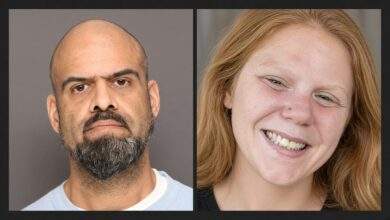
Takeshi Ebisawa did not walk into a Manhattan courtroom with a warhead. He walked in as a 61-year-old Japanese national who had already admitted, on January 8, 2025, that he conspired to move nuclear material, narcotics, and weapons. On March 3, 2026, U.S. District Judge Colleen McMahon gave him 20 years in prison and five years of supervised release. The term sits between a 10-year mandatory minimum and a life exposure. What makes the file worth reading is not the round number. It is the order of the business. Drugs and missiles came first. Plutonium was the upgrade he offered once he thought he had a buyer.
The Justice Department and the Southern District of New York say the investigation ran for about three years before agents arrested Ebisawa in Manhattan on April 4, 2022, alongside Thai co-defendant Somphop Singhasiri. The Drug Enforcement Administration’s Special Operations Division and IRS Criminal Investigation built the case with undercover officers who presented themselves as people who could move product and pay for hardware. U.S. Attorney Jay Clayton, DEA Administrator Terrance Cole, and Assistant Attorney General for National Security John A. Eisenberg announced the sentence together. That lineup is the tell. This was never only a narcotics case, and it was never a finished bomb case either.
Four transactions, one costume
Prosecutors say Ebisawa and his associates negotiated four sets of transactions with an undercover officer. The nuclear pitch was one of them, and it had a costume. Ebisawa intended to sell material to the undercover officer’s associate, who was posing as an Iranian general in charge of a weapons program. After first offering uranium, he proposed plutonium that would be even “better” and more “powerful” for that supposed program. The general was not a general. The buyer was the sting. That distinction matters. A headline that says he tried to arm Iran describes what he believed. It does not describe a confirmed purchase by Tehran.
The sample meeting came later, in Thailand, in or about February 2022. Ebisawa and two co-conspirators met the undercover officer. One of them produced samples. Thai authorities seized them and turned them over to the United States. A U.S. nuclear forensic laboratory later reported detectable quantities of uranium, thorium, and weapons-grade plutonium. Court papers and subsequent reporting described two vials of yellow powder that were shown, stored, and then tied to a May 2022 search of an office in Bangkok. Detectable quantities are a laboratory sentence, not a stockpile. They are also enough to take a broker out of the realm of bar talk and into a nuclear-trafficking statute.
The other deals explain why anyone believed him. In or about November 2021, the DEA transferred $100,000 into U.S. bank accounts controlled by one of his co-conspirators. Ebisawa then delivered the yen equivalent of about $85,000 in cash in Tokyo. That is not cinematic. It is bookkeeping, and bookkeeping is what makes a transnational pitch look real to the person on the other side of the table. Separately, prosecutors say he tried to broker heroin and methamphetamine out of the Golden Triangle toward New York, with narcotics offered as a way to pay for heavy weapons, including surface-to-air missiles, for ethnic armed groups in Myanmar. Nuclear material was the line that made the indictment famous. The cash and the drugs were the lines that made the relationship possible.
Eisenberg’s office put the theory in one sentence: “Takeshi Ebisawa tried to sell uranium, thorium, and plutonium to fuel a purported nuclear weapons program, along with deadly drugs destined for U.S. streets. In exchange, Ebisawa hoped to procure battlefield weapons for insurgent groups and profit for himself.” The word “purported” is doing quiet work. So is “hoped.” The AEGIS Alliance reads both as the honest limits of a successful sting. Intent and a seized sample are in the record. A delivered device is not.
A warehouse in Copenhagen, a label in Tokyo
The photograph that traveled with the sentence was not taken in a courtroom. The New York Times published an image, credited to the Justice Department, of Ebisawa holding a rocket launcher during a 2021 meeting with undercover officers in Copenhagen. A Danish newsroom, Frihedsbrevet, later reported that Danish police had a role in that stage of the case and that the nuclear plan was already in motion before the warehouse meeting. The geography is the point. Japan, Thailand, Myanmar, Denmark, and a Manhattan docket were one conversation.
American prosecutors called him a leader in the yakuza. Japanese wire copy and Nippon.com described a senior figure in a crime organization said to operate in Japan, Thailand, and Sri Lanka. Jake Adelstein, the Tokyo reporter who wrote Tokyo Vice, pushed the other way after the sentence. His reporting, carried by The Guardian, did not place Ebisawa inside a recognized syndicate. Adelstein described a confidence man who may have been introduced to the DEA as a yakuza figure and then treated as one. Both descriptions can survive contact with the plea. The statute does not require a family crest. It requires the conspiracy and the material.
Public biographical notes fill in a life that does not look like a movie boss. Reference accounts say he was born in 1964 in Utsunomiya, Tochigi Prefecture, into a middle-class family, left school before finishing, worked manual jobs, and later became a construction manager. He has also been reported under the given name Tsuyoshi. Organized crime in Japan has spent years losing members, bank accounts, and public cover. That squeeze produces people who can imitate the old brand while selling whatever a buyer will fund. Nuclear material is not a typical product. That is why a construction-manager-turned-broker became international news, and why readers should hold the brand loosely and the laboratory report tightly.
What twenty years actually measures
Twenty years is a long term for a man who never delivered a finished weapon. It is a short term if a person treats the Iranian costume as a real pipeline into a state program. Judge McMahon had the plea and the forensic finding. She did not have to decide whether Tehran would have used the powder. She had to decide what the offer, the samples, the narcotics plan, and the weapons brokerage were worth. Public records have placed Ebisawa at FCI Cumberland. Singhasiri and the other names in the undercover meetings remain part of the chart even when they are not in the same sentencing paragraph. These cases rarely end with one man. They end with a map that investigators keep after the lead defendant is gone.
The policy lesson is narrower than the headlines and more useful. Customs services, energy ministries, and organized-crime units do not usually share a file. This one forced them to. A broker who can talk heroin in the morning and plutonium in the afternoon is a single person sitting on three enforcement systems that were built to ignore one another. The AEGIS Alliance will not dress two vials as a bomb. It will not shrug them off as theater. “Weapons-grade” in a lab report is a specific claim about isotopic character in a detectable amount. It is not a blueprint, and it is not nothing.
Readers who follow how contraband actually crosses a border, rather than how it is pitched in a hotel, can look at the backpacks of cocaine found in the woods near the Canadian line. The same desk covers crime news, international news, and U.S. news. Ebisawa’s file belongs with them because the danger was not a mushroom cloud in the indictment. It was a man who thought restricted material was just another commodity, and a government that decided to buy the pitch long enough to write it down.