Worcester Judge Dismisses Kidnapping Charges in Assumption University To Catch a Predator TikTok Case Involving a Soldier

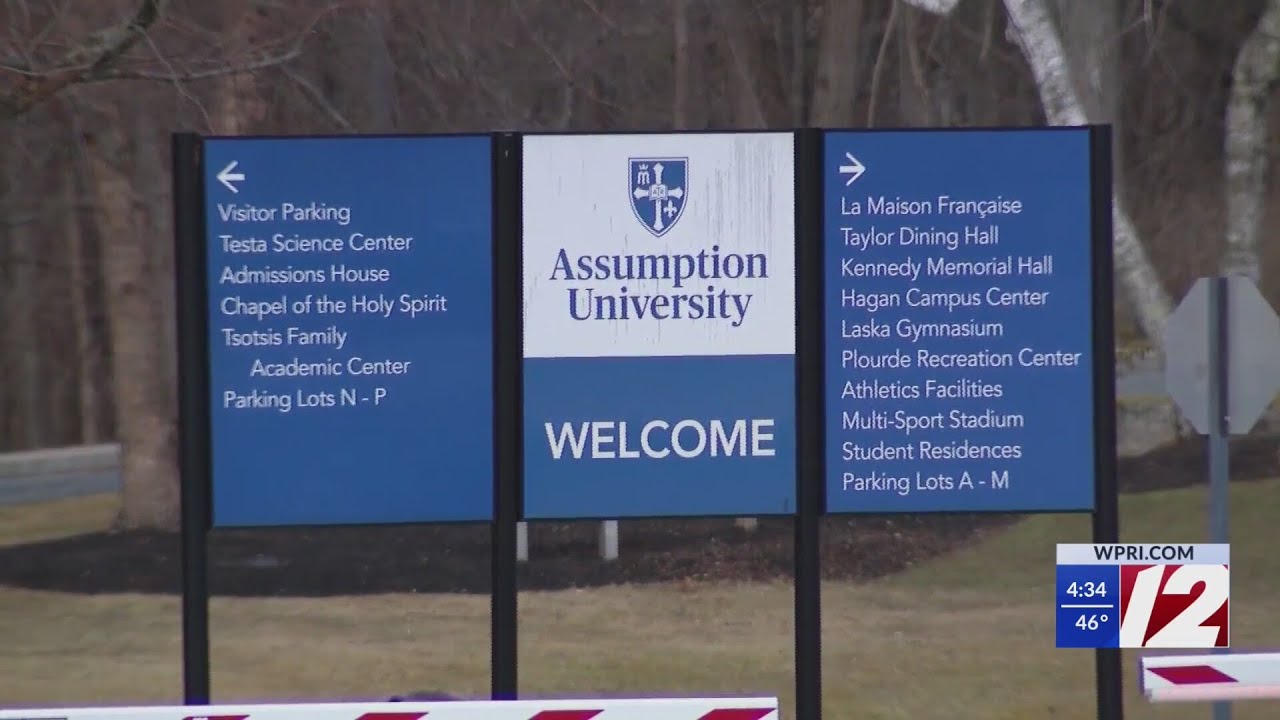
Five Assumption University students were accused of using a dating app to lure a 22-year-old active-duty service member to their Worcester campus and then seizing him as part of a “To Catch a Predator” imitation circulating on TikTok. They were arraigned in January 2025 and pleaded not guilty. On April 8, 2025, Worcester District Court Judge Michael Allard-Madaus dismissed the kidnapping and conspiracy charges against Kelsy Brainard, Easton Randall, Kevin Carroll, Isabella Trudeau, and Joaquin Smith.
A dismissal is not an endorsement of the stunt. It is a ruling that those particular counts could not proceed as charged.

What the Campus Report Said
Assumption University is a private Catholic campus in Worcester. In the fall of 2024, according to campus police and later court filings, a woman on a Tinder account began corresponding with a soldier. He was invited to a basement lounge. When he arrived, a group of students confronted him on camera in the style of the old NBC franchise and the newer TikTok copies. They presented the moment as public service. He presented it as being jumped.
The students named in adult court were teenagers or just past it: Brainard, 18; Randall, 19; Carroll, 18; Trudeau, 18; and Smith, 18. A sixth defendant, a juvenile, was arraigned separately. Worcester County prosecutors initially charged kidnapping and conspiracy. Those are not prank labels. Kidnapping in Massachusetts is a felony built for cases in which a person is confined against their will. Conspiracy is the agreement to do it.
Platform incentives reward the gap between those two descriptions. A clip that looks like justice to a For You page looks like an ambush to the person in the frame. Due process does not trend. A basement confrontation does.
What Survived After the Felonies Fell
After a hearing, Judge Allard-Madaus threw out the kidnapping and conspiracy counts on April 8, 2025. NBC News and CBS Boston reported the dismissals the next day. The Worcester District Attorney’s Office confirmed the felonies were gone and then identified what remained.
Brainard, whose Tinder account had been used to draw the soldier in, still faced a charge of intimidating a witness or court official. Carroll still faced assault and battery. Those are smaller boxes. They are also the boxes that actually describe a messy physical confrontation instead of a television plot.
In May 2025, a Worcester judge agreed to drop Brainard’s remaining count if she stayed out of trouble for a year. In June 2025, Carroll, then described as a former Assumption student from Holden, took a plea on the assault count. The Telegram & Gazette reported that on June 23 he received probation and community service. The most serious theory of the case — that a pack of students kidnapped a soldier for content — did not survive contact with a motion to dismiss. The leftover theory — that someone put hands on a man who did not agree to be theater — did.
That split is the honest ending. It is also the ending social media will ignore, because probation does not look like a perp walk.
Vigilante Theater Is Not a Police Report
If there is a real allegation against anyone in a clip like this, it belongs with police. If there is not, the camera was the weapon. Amateur predator-hunting is not a new impulse. What is new is the distribution system. A group of freshmen can assemble a set, a script, and an audience before a detective has a complaint on a desk.
The original television franchise at least had producers, lawyers, and a police partner off camera. TikTok copies often have none of those. They have a dating profile, a group chat, and a belief that humiliation is a civic good. When the target is an active-duty service member, the optics get worse. The military already polices its own on a separate track. A campus crew does not get to deputize itself because a trend sound is available.
The AEGIS Alliance file on Meta’s retreat from institutional labels belongs next to this one. Both stories are about who gets to declare someone guilty in public without a filing. One is a platform changing its rules. The other is a basement changing a stranger’s night.
Worcester is not unique. Copycat “predator” stunts have produced lawsuits, counter-charges, and at least one category of clip in which the hunters picked the wrong person and then discovered that false imprisonment still has a statute. Campuses that want to avoid the next version of this file need a simpler rule than a seminar on media ethics. If students are going to accuse someone of a sex crime, they can call campus police. They cannot build a set.
What the University and the Army Still Own
Assumption never had to try the kidnapping counts. It still has to live with the fact that the confrontation happened on its property, in a lounge its students could access, using an account that pulled a visitor onto campus. Catholic colleges market themselves as moral communities. A viral ambush is a branding problem even when the felonies evaporate.
The soldier’s chain of command has its own questions. Was he off duty. Was he reported internally. Did anyone in uniform treat a campus sting as a safety issue rather than a meme. Those answers are not in the Worcester docket. They are in a command climate that does not issue press releases for dating-app nights that go wrong.
Readers who want the Massachusetts crime lane on this desk can move from this Worcester file to the Quincy elder-services embezzlement case. One is a group of students playing detective. The other is a city official playing accountant. Both ended in a Massachusetts courtroom, and both ended smaller than the first headlines.
For a wider look at how platforms reward accusation without process, see the U.S. news and crime news archives. The AEGIS Alliance will not pretend a dismissed kidnapping count means the night was harmless. It means the Commonwealth could not prove confinement as charged. Harm and proof are different machines.
The students who walked out of Worcester District Court without felonies still have the clip hanging over them, or they would if the platforms kept it. The soldier still has the memory of walking into a room that had already decided what he was. A judge can dismiss a count. A judge cannot unsay a confrontation that was staged for strangers.
The AEGIS Alliance will keep the original author on this post and the original image in the layout. The update is the docket, not the pose. Vigilante theater is content. A police report is a document. Only one of those belongs in a charging packet, and even that one did not carry the kidnapping theory across the finish line.