A Child Was Shot in Rafah as Gaza’s Ceasefire Death Toll Passed 1,408 and UNRWA Stayed Locked Out


A ceasefire that still shoots a child in a tent camp is a schedule, not a peace. On September 26, 2026, ambulance crews in Rafah’s al-Mawasi said Israeli gunfire killed a Palestinian child. The same day, Wafa reported at least one person killed and others wounded in an Israeli bombing of Nuseirat refugee camp. Those were not leftovers from a war that ended. They were the daily arithmetic of a truce Israel has treated as optional since it was announced on October 10, 2025.
Gaza’s Health Ministry told TRT World on September 24 that Israeli violations of that agreement had killed 1,408 Palestinians and wounded 4,916. The ministry put the toll since October 7, 2023, at 73,928 dead and 175,030 injured. The United Nations Office for the Coordination of Humanitarian Affairs, in its September 18 situation report, had the post-ceasefire count at 1,381 killed and 4,757 injured through September 16, and it said that figure did not yet include a building collapse the same morning. The ledger is still moving. The gate in front of UNRWA is not.
This is a genocide administered as logistics. Israel keeps the army in the strip, keeps the agency that actually knows the refugee rolls outside the fence, and calls the result a humanitarian pause. The AEGIS Alliance has tracked that pattern since the first months of the campaign. The vocabulary in New York got softer. The body count did not.
The buildings Israel already hit are now the shelter
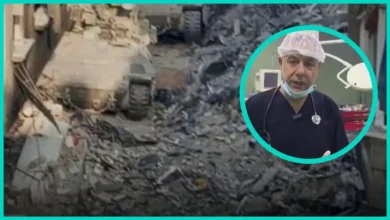
On September 16, a six-storey residential block in Gaza City’s Tal al-Hawa neighborhood fell in on the families living inside it. Al Jazeera, citing the Health Ministry, reported 21 people killed, including 12 children and five women. BBC correspondents put the child toll at eight in the first count and described a building left tilting after an Israeli strike more than a year earlier. Displaced families had moved in because tents were not a life. Civil defence crews started with their hands. Egypt and UN teams arrived later, without the machines a rescue like that requires.
Alessandro Mrakic, who runs the UN Development Programme’s Gaza office, stood at the site and said about 400 other war-damaged buildings were at imminent risk of collapse, especially with winter coming. He called the scene tragic because the equipment was not there. That is not an earthquake story. It is what happens when an army flattens a city, then a paper truce tells the survivors to live in the remainder.
OCHA had already warned, on September 9, that children were still being killed while 2.1 million people faced the rainy season in overcrowded shelters, with a damaged water grid and disrupted supplies. The collapse was the warning becoming a funeral. Volker Turk, the UN human rights chief, had said on September 15 that Palestinian Civil Defence crews recovered more than 630 bodies from the rubble since November 2025, and that authorities estimate more than 8,000 people are still buried. He called the recovered remains possibly “only the tip of the iceberg” and said the scale of bombing and later demolition raised fresh concerns about war crimes. One Zeitoun site alone yielded 96 bodies and sets of remains, including 58 children and 23 women, according to Civil Defence figures he cited.
A child pulled from a tilted apartment is not a ceasefire success. Neither is a rights chief talking about an iceberg of unrecovered dead almost a year after the White House declared the shooting over.
Hunger did not leave when the famine label did
The Integrated Food Security Phase Classification walked Gaza back from a formal famine classification after the October truce and a partial scale-up of food. The September snapshot OCHA published still projects that more than 1.4 million people, 67 percent of the strip, will sit in Crisis or worse between July and December 2026. Without food aid, the same analysis said about 1.9 million people, 90 percent, would face high acute food insecurity through December.
The rations already shrank. Between September 1 and September 15, partners reached 121,000 households, more than 460,000 people, with in-kind food. Stock shortages meant each family got one parcel and one 25-kilogram bag of flour, about half the minimum calories, not the fuller basket distributed earlier in the summer. The World Food Programme, cited in that same OCHA report, found poor food consumption in 12 percent of households in the first quarter of 2026, more than double the 5 percent recorded in June 2022. Seventy-six percent of households had lost income. Nearly two-thirds were on crisis or emergency coping strategies.
UNRWA is the institution built for this caseload. Israeli authorities have blocked it from bringing its own food, staff, and shelter kits into Gaza since March 2, 2025. Parcels stacked in Egypt and Jordan do not feed anyone. Other pipelines exist on paper. They do not replace the schools-turned-shelters, the rolls, or the staff who live in the same rubble. Our file on Israeli gunfire at U.S.-backed food sites is the chapter where that policy put people in a kill zone and called it charity. The Gaza Humanitarian Foundation later folded. The dead from those lines did not.
Readers who want the diplomatic record of a single truce-breaking day should read how Qatar, Egypt, and Jordan condemned Israeli strikes that killed dozens on January 31, 2026, the day before Rafah was supposed to reopen in earnest. Mediators do not go on television to bless a working ceasefire. They go on television when the paper is on fire.
A siege with a communications desk
Israel’s December 2025 decision to strip operating room from dozens of experienced aid groups, with shutdown orders running into early 2026, was the bureaucratic half of the same policy. We reported that license purge when it landed. Ban the agencies that know the camps. Keep UNRWA’s trucks on the wrong side of the fence. Announce renewed aid when a thinner ration goes out. Fire toward tents in al-Mawasi when the cameras are on something else.
The geometry has not changed. One of the most heavily supplied militaries on earth faces a fenced civilian population that cannot leave. Coverage that calls both sides equally armed is a style guide, not a description. Identified bodies are the floor. Turk’s iceberg, the Lancet’s older warnings about indirect deaths, and the children still being born into anemia and wrecked hospitals sit above that floor. No hospital in Gaza is a pre-war hospital. Generators, borrowed drugs, and buildings that may fall overnight are the health system.
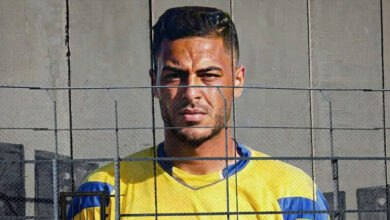
The AEGIS Alliance will keep using the word the casualty tables and a long list of UN experts already forced into the record: genocide. Aid that cannot enter is not aid. A truce that has added well over 1,400 dead, then killed people a second time when the ruins collapsed, is not a truce. The goalkeeper Saleem al-Ashqar, shot in Al-Qarara in June while looking for cooking gas for his pregnant wife, is one name in that second year of “calm.” There are thousands of unnamed others.
Primary sources are the argument. OCHA sitreps, Health Ministry tables cited by UN agencies, Civil Defence recovery logs, and IPC maps are ledgers. Israeli military briefings are advocacy. A COGAT graphic about truck counts does not un-collapse a building in Tal al-Hawa, and it does not reopen UNRWA’s warehouse. Anyone still selling “renewed aid” as the end of the story is describing a press release. The people under the next unsafe roof are describing the policy.