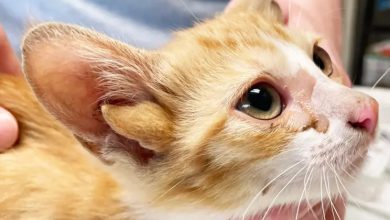
The carrier opened in late July 2024 at True Rescue in Mount Juliet, Tennessee, and the intake conversation stopped. An orange tabby, about nine weeks old and a little over two pounds, had two extra ear flaps folded toward his canals. Four ears. Not a costume, not a torn pinna from a fight, not something a groomer could shave into a trick. Staff named him Audio because the extra flaps looked like a second set of speakers, and because “the kitten from the taped box” was too grim a name for an animal who still needed antibiotics.
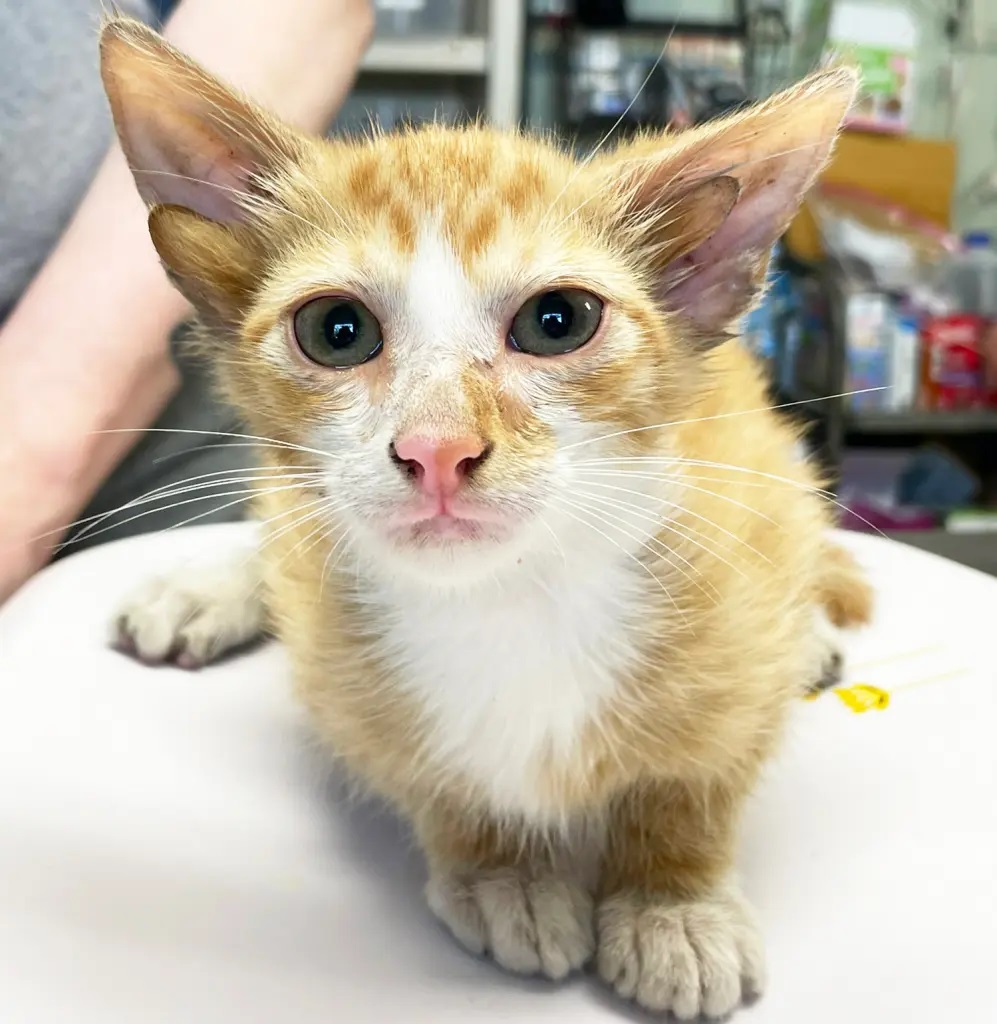
Kristin Condit, True Rescue’s director of operations, told reporters the extra tissue showed up the moment a coworker lifted him. “Whenever we took him out of his carrier, my counterpart said, ‘What’s on his ear?'” Condit recalled. “It appears as if Audio has actually four ears on his head, so he has two right-facing and two rear-facing.” The extras are small flaps. They do not seal the canal. A veterinarian confirmed normal hearing and, according to a Main Street Media interview that August, each side of his head shares one ear canal. The shelter said it would not cut the flaps off unless they ever caused harm. That medical line got flattened when the photos went national. Audio was a respiratory case with unusual cartilage, not a circus booking.
A box with no air holes, and a rule against breeding the look
Audio did not arrive famous. On July 30, 2024, a passerby found him and three siblings dumped in a duct-taped box with no air holes at a Nashville-area car lot. All four needed antibiotics for an upper respiratory infection. Two sisters showed a hint of the same genetics, a small “mini ear flop,” but not a full four-ear set. The flaps on Audio face inward. A four-eared cat documented in Turkey years earlier had extras that pointed outward. Direction is how a clinic separates a developmental extra pinna from an injury or a bad crop. The Tennessean and local television ran the photos while the shelter was already underwater from flooding and foundation trouble in the heaviest kitten weeks of the year.
The mutation is often described as something like one in 600,000 cats. That figure is a shelter estimate, not a census. What the staff did with it matters more than the odds. Condit told Main Street Media there were well over 100 adoption applications and more arriving daily, and that the shelter would be “super-super-picky.” Colleague Amy Simcik said they wanted a home with other cats, maybe one of the siblings. Then Condit added the line the viral posts mostly skipped: Audio would be neutered, because “some weirdo owner might want to breed him to make more anomalies. We won’t let that happen.”
A 1957 paper in the Journal of Heredity described a recessive “four-ears” mutation in a small research colony. Those cats sometimes had smaller eyes, an undershot jaw, and a lethargic manner, and many affected kittens died before birth. Most four-eared cats who reach a clinic now are otherwise healthy, which is why geneticists suspect more than one pathway: a classic recessive allele in some lines, a one-off developmental glitch in others. Audio’s sisters, with a partial flop in the same litter, fit the second picture. Breeding the look on purpose is how a cute rescue photo becomes a dead kitten. True Rescue’s answer was surgery that ends the bloodline, not a stud fee.
Adopted, then a shelter that kept flooding without him
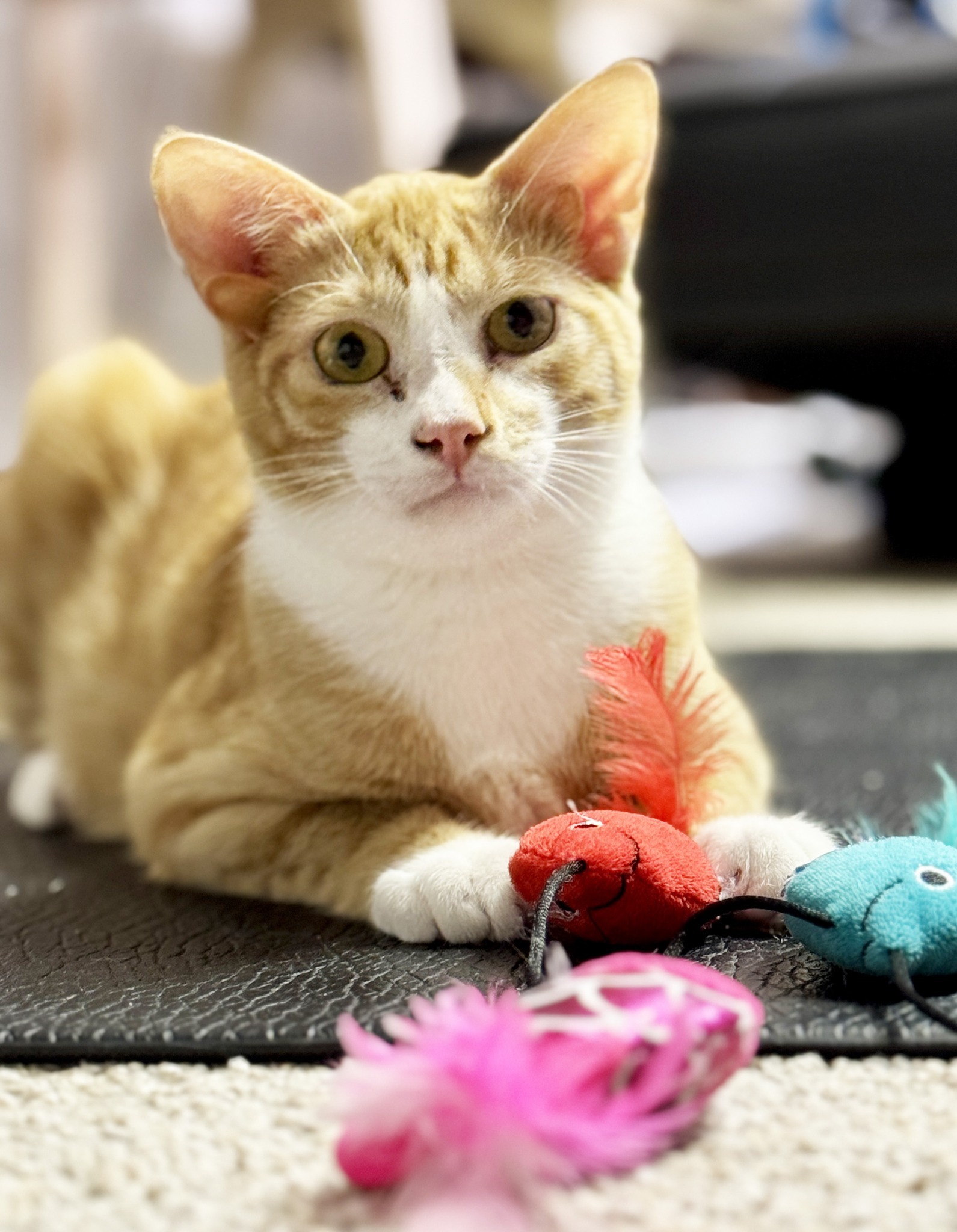
True Rescue posted the outcome on Facebook on December 30, 2024. Audio, then seven months old, had been adopted. “We love how much you guys supported and loved Audio when he first arrived at our shelter, and we just really wanted you to know that he is in the best home now, and will never have to worry for anything the rest of his 4-earred life!” the shelter wrote. Public updates after that have been quiet. A private home is not a content studio. The AEGIS Alliance is not going to invent a check-in the family did not give.
The building he left did not get quiet. Founder and executive director Amy Simcik told Main Street Media that the 7,000-square-foot shelter and adoption center on Lebanon Road had flooded half a dozen times in five years. On July 8, 2026, Mount Juliet took about three inches of rain in less than a day, then two more days of rain. Parts of the facility sat under five inches of water. More than 300 cats climbed towers, shelves, chairs, and desks. “No cats were injured or evacuated,” Simcik said. In less than two weeks the shelter raised more than $50,000 for repairs. Staff counted about 318 cats in the building and 170 more in foster homes, and they kept taking animals while ruined towers were replaced. Audio’s photos had once filled the donation shelf. The July storm showed what the shelf is actually for.
The work kept looking like the taped box, only larger. In late September 2026, True Rescue and Macon County Animal Control pulled at least half a dozen cats and kittens from a hoarding property where the floor was buried in trash. The nonprofit said dozens of animals had been left after a foreclosure more than a year earlier, and that crews still believed more cats were on the land. Staff called it their first case of chewing lice. Disease, not extra ears, is the ordinary intake. Audio was the rare week when a mutation made strangers look at a shelter they otherwise scroll past.
Another four-eared cat, a different ending
Four-eared cats keep turning up, which is how a Tennessee rescue story stays in the science file instead of a one-week odd news item. In early 2026 a black domestic shorthair in the Birmingham suburbs, nicknamed Dobby, drew a second wave after Kitty Kat Haven and Rescue in Hoover, Alabama, placed him with foster Stephanie Brown. Veterinarians told Brown the trait is on the order of one in a million. Dobby’s extra flaps sit in front of the working ears. Only two ears function. He also had an underbite that needed dental surgery, scheduled around April 20, 2026, and a short curled tail. As of late June 2026, published interviews still described him as waiting on a local family, preferably one with children. He and Audio are not related. They are proof the mutation is rare without being mythical, and that “four ears” is not one medical chart.
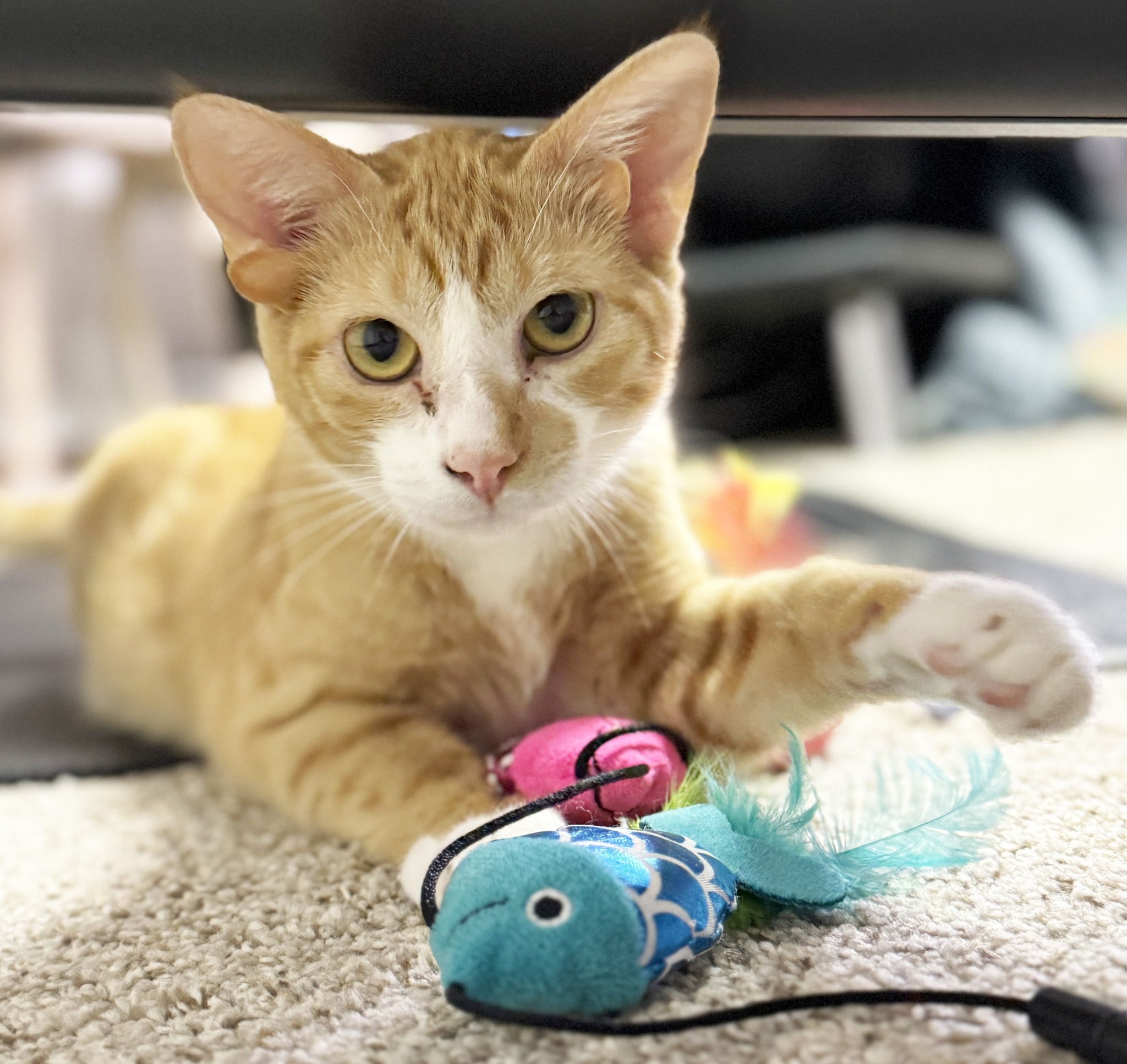
Audio’s vet chose to leave the flaps, confirm hearing, treat the infection, and neuter him so the trait would not be copied. Dobby’s foster team had to fix a jaw before any adoption application could be honest. The internet treated both cats as the same photograph. Clinics did not. That split is the new angle under the ears: rarity is not the same thing as health, and a shelter that goes viral still has to decide whether the animal is a patient or a product.
The leftover story in Nashville is the box. Four kittens sealed in tape at a car lot is a dumping that happens every kitten season in every metro with parking lots and people who want a problem to disappear. Audio’s ears made that particular box visible. His siblings, without a full extra set, would have been four more respiratory cases in a crowded ward. The mutation bought the publicity. The antibiotics bought the lungs. The neuter closed the door on anyone who wanted to manufacture another Audio. The adopter closed the public file.
Related reporting from the same stretch of the archive includes a Tulsa house fire started when a dog chewed a lithium power bank, a viral animal clip that ended in damage instead of a home, and, on a darker ledger, the sentencing of a youth tennis coach who used access to children as cover. Audio’s extra flaps did not make him a medical emergency. They made him visible long enough for someone to take him home. Support for the shelter that pulled him from the box, and that was still pulling cats out of flooded rooms and lice-infested houses long after he left, is at truerescue.org. Mount Juliet still has kitten season. The next box will not have a name until somebody opens it.