Dale County Tennis Coach Leroy Thomas Joyner Jr. Is Serving 25 Years at Yazoo City After the Jury, a Transcript Fight, and a Denied Stay

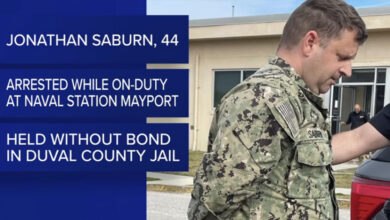
Leroy Thomas Joyner Jr. is in federal prison in Mississippi under register number 18079-002. On August 8, 2024, a judge in the Middle District of Alabama sentenced the Columbus, Georgia, tennis coach to 300 months, 25 years with no parole, after a jury in Dothan convicted him of transporting a minor across state lines with intent to engage in illegal sexual activity. The court added lifetime supervised release and left restitution for a later hearing. The judge also said he should be designated to a facility where sex-offender treatment is available. The Bureau of Prisons placement that shows up on his own Supreme Court filings is FCC Yazoo City Low. The 300-month term is what he is serving. No public order has cut it.
Joyner ran the Grassroots Tennis Association in Dale County, Alabama, a program that advertised lessons for underprivileged children and teens. WDHN reported that the Ozark-based association, which also offered homeschooling, operated from about 2013 until his 2018 arrest, and that it shut down after that arrest. Ozark sits inside Dale County, a short drive from Columbus across the Chattahoochee. That geography is the case. A man could hang a “free lessons” flyer in one state, put a teenager in a car, and be in Georgia, Louisiana, or South Carolina before a county line felt like a warning. The U.S. Attorney’s Office for the Middle District of Alabama announced the sentence on August 9, 2024. That press release is the official spine. The paddle, the tournaments, and the years between arrest and prison hang off it.
The complaint that started with a board
Investigators first received reports in September 2018 that Joyner had been hitting a 15-year-old female student. Court records say he took a special interest in her in late 2015, when she was 13, and used his authority as her coach, including a wooden board, to compel her compliance. Corporal punishment dressed up as coaching is how a lot of youth-sports abuse stays invisible. Parents hear “discipline.” A child hears a threat attached to the ride home and the next tournament entry. The FBI Mobile Field Office and the Dale County Sheriff’s Office followed the paddle complaints and found a longer pattern.
Prosecutors said he took the girl to out-of-state tennis tournaments and committed sexual offenses in Georgia, Louisiana, and South Carolina. The exploitation continued until the 2018 investigation. WDHN, citing federal prosecutors, reported more than 20 sexual encounters and said Alabama was among the states. The Justice Department press release names Georgia, Louisiana, and South Carolina and does not publish a count. The AEGIS Alliance is keeping those two descriptions separate on purpose. What both accounts share is the structure: travel plus a child who had been hit with a board to make her obey. A federal jury returned the guilty verdict on January 23, 2024, on the Mann Act count. District court docket 1:22-cr-00242-ECM-JTA-1 is the case number. The paddle was the door. The state line was the statute.
United States Attorney Jonathan S. Ross said the term “reflects the harm that Joyner inflicted upon his young and vulnerable victim.” He credited the victim’s decision to come forward and the work of the investigating agencies. “Through the actions of all involved, a predator is off of the street, and our communities are safer,” Ross said. FBI Special Agent in Charge Paul Brown called the sentencing the product of a collective effort to protect children and thanked the U.S. Attorney’s Office and the Dale County Sheriff’s Office.
What the appeals actually decided
Joyner has litigated hard since the verdict, often on his own. On July 29, 2025, a three-judge panel of the U.S. Court of Appeals for the Eleventh Circuit, Judges Robin Rosenbaum, Jill Pryor, and Nancy Abudu, summarily affirmed the district court’s refusal to order a broader set of transcripts in appeal No. 25-10616. The unpublished opinion says Joyner had asked for transcripts he said he needed, that he received transcripts of the court proceedings, and that the law does not require a court reporter to transcribe audio or video exhibits that were already admitted. The panel also wrote a sentence that matters more than the transcript fight: his direct appeal of the conviction and sentence was still pending in that court at the time. Summary affirmance of a transcript order is not an affirmance of the guilty verdict. It is the court saying the paper record he already had was the record the rules require.
From Yazoo City he took that transcript ruling to the Supreme Court. Application 25A568, Leroy Thomas Joyner, Jr. v. United States, was filed October 22, 2025, and submitted to Justice Clarence Thomas. Justice Thomas denied it on November 18, 2025. Joyner refiled on December 1 and the application went to Justice Ketanji Brown Jackson. It was distributed for the conference of January 16, 2026, referred to the full Court, and denied on January 20, 2026. The application was tied to Eleventh Circuit case 25-10616 and to petition 25-6087, an emergency certiorari petition aimed at the transcript decision. A further filing dated May 22, 2026, docketed among materials for No. 25-7446, still listed him at FCC Yazoo City Low, P.O. Box 5000, Yazoo City, Mississippi. He wrote that the Court had denied the relief he wanted. None of those orders is a published reversal of the Dothan jury.
There is no parole in the federal system. A 300-month sentence means 300 months unless a later court changes it. Lifetime supervised release, if he lives to serve it, keeps travel limits, contact rules, treatment mandates, and monitoring a county probation office cannot match. The Grassroots program that gave him access to children did not reopen.
Why a charity flyer is not a background check
Youth programs sell a story donors want: a racket, a responsible adult, a child who would otherwise never see a court. That story is often true. In Dale County it became the reason Joyner had unsupervised hours, overnight travel, and a ready explanation for a teenager in his car. Access is the product. The mission statement is the camouflage. Federal prosecutors did not have to win a separate sex-offense trial in every hotel along the tournament map. They had to prove transportation with intent. That is why a Dothan jury could close a case that touched three other states. The Mann Act is old law on a modern coaching circuit. It exists because state lines are how offenders shop for weaker supervision.
Youth-sports cases often start with the injury adults are willing to name. A bruise from a paddle can be discussed at a kitchen table. Sexual abuse cannot, especially when the adult holds the schedule and the keys. The 2018 hitting reports were not a separate case that later “turned into” a sex case. They were the visible edge of the same control. Families who have had to prove adults were lying have used their own records before. See the account of a teenager who installed cameras after no one believed her.
The AEGIS Alliance has covered the same question in other rooms. A Colorado swim coach was convicted of sexually abusing underage athletes who were supposed to be safe at practice. In Alabama, a Lee County man, Adrian Dabney, was convicted of sex crimes against a six-year-old. The older Hollywood record collected in An Open Secret asked who held the keys to buildings where children were sent to be seen. Different venues. Joyner’s file is the Middle District of Alabama’s documented example of a coach who used tournaments and a charity-framed club as the keys.
Background checks on volunteer coaches are only as good as the database they search and the date they are run. A man with no prior felony on the day he prints a flyer can still be the adult a child is told to obey. After this conviction, any club that still uses a wooden paddle as “discipline” is advertising the same control method that first brought deputies to Dale County. Hitting a child with a board is not a tennis drill. The AEGIS Alliance will keep saying that in plain language.
The victim should not have had to wait from 2015 to a January 2024 verdict for a jury to hear the travel. She did. The sentence is what the trial court did with that wait. The appeals that followed, as of the public orders The AEGIS Alliance has read, have fought over transcripts and stays while the register number at Yazoo City stayed the same. Parents shopping a “free” lesson program still have the only screening tool that works before a badge gets involved: ask who travels with the kids, who sleeps in the same hotel block, and who is allowed to punish with a board. The AEGIS Alliance reports the case in crime news and U.S. news because the first complaints were about beatings, and the federal charge was about what those beatings were hiding. A 25-year term will not rebuild a childhood. It does take the coach off the court and off the interstate.
If you or someone you know is a survivor of child sexual abuse, confidential help is available 24/7 through the National Sexual Assault Hotline at 1-800-656-4673 (RAINN).