Two Black Backpacks North of Lynden Held 78 Pounds of Cocaine, and the Courier Never Came Back

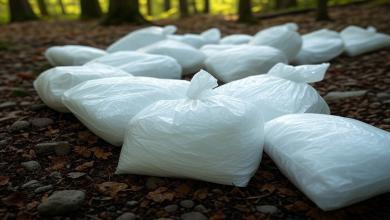
The bags were already sitting there when the agents walked the tree line. On December 19, 2024, Border Patrol agents assigned to the Blaine Sector were working a wooded stretch north of Lynden, Washington, a few miles from the Canadian line and not far from a land port of entry. They found two black backpacks on the ground. Nobody was standing over them. Nobody ran. The load had been left in the open, which is a strange way to move a fortune and a very ordinary way to lose one.
Inside the packs, agents counted 30 brick-like packages of a white powder. Later testing described by U.S. Customs and Border Protection identified the powder as cocaine. The weight came in at about 78 pounds. CBP put the street value above $1.1 million and turned the narcotics over to the Drug Enforcement Administration. Spokesman Jason Givens laid those figures out in a statement the following Monday. Chief Patrol Agent Rosario “Pete” Vasquez credited the agents with keeping the drugs out of nearby towns. A CBP spokesman later told USA TODAY that the cocaine had been smuggled in from Canada and that no suspected couriers had been caught.
That last detail still governs the case. A seizure without a defendant is a photograph, not a prosecution. The bricks can be weighed, photographed, and destroyed under the usual federal practice of keeping only what a future case might need. The person who carried the packs through the timber, or who was supposed to meet them on the American side, was not in the frame. Public reporting in the days after the find, including accounts from the Bellingham Herald and ABC News, did not name a suspect. Later coverage did not produce an arrest announcement tied to these two packs either. The woods north of Lynden kept the secret the backpacks could not.
Why a million-dollar load gets left under the trees
Lynden sits in northern Whatcom County, on flat farmland that rises into second-growth forest as the border approaches. The line itself is not a wall. In long stretches it is a cut through timber, a ditch, a road, or a marker a person on foot can step past in the dark. Backpack loads are the method that fits that landscape. A vehicle at a port of entry can be run through an X-ray. A person who crosses between the ports, drops two packs, and walks back, or who never crosses at all and leaves the drop for someone already on the U.S. side, does not have to explain a duffel bag to an officer at a booth.
Thirty bricks is a planned shipment, not a personal stash. Cocaine pressed into kilo-style bricks is the form wholesalers use because it stacks, hides in fabric, and can be split later into retail amounts. Seventy-eight pounds is roughly 35 kilograms. At the valuation CBP used, each pound was being treated as worth something on the order of $14,000, a street-side number that assumes the powder would have been cut and sold in small amounts rather than moved again as a wholesale block. Valuations like that are estimates. They are useful for a news release. They are less useful for understanding who financed the load, because the people who front money for a cross-border drop rarely stand in the trees waiting for a patrol.
The abandoned-pack pattern has a few plain explanations, and investigators have not said which one fits Lynden. The courier may have heard agents, dropped the bags, and fled back toward Canada. A lookout may have waved off a pickup after seeing a marked vehicle on a logging road. The handoff time may have slipped, and the person who was supposed to collect the packs decided the risk of going back was higher than the loss. Or the bags were a decoy, left where they would be found, while a larger load moved somewhere else. Commenters on local television clips reached for that last theory immediately. It is possible. It is also the kind of story that cannot be proved from two packs and a press statement. What can be said is narrower: on that Thursday, the handoff failed, and the failure was discovered by a routine patrol rather than by a tip that named a crew.
The northern line does not look like the southern one
Most American political talk about drug smuggling still points south. The southwest border produces the huge truck and tunnel cases, the ones measured in tons. The northern border produces a different set of files: smaller weights, foot traffic, winter weather, and ports that most of the country could not name. Blaine Sector covers the Washington stretch of that line, including the Peace Arch and the Pacific Highway crossings and the woods between them. Lynden is not a crossing. It is a town whose northern edge is close enough to the boundary that a walk through the trees can be a smuggling route.
Cocaine moving south from Canada is not a new trade. British Columbia has long been both a consumption market and a transit point, with powder arriving by sea or air and then pushed toward U.S. buyers who will pay more per gram than customers in Vancouver. A backpack load of this size is consistent with a mid-level crew, not with a cartel press conference. That is why the absence of a named organization in the CBP statement matters. Vasquez’s quote, released with the seizure, praised vigilance and said the narcotics were kept from communities. It did not claim a network had been mapped. Treating every northern seizure as proof of a new corridor oversells a single find. Treating it as a curiosity understates how often drugs move by foot where the tree cover is thick and the traffic is thin.
What the DEA actually inherits
Once CBP turns a load over to the DEA, the criminal case, if there is going to be one, leaves the border agency’s press shop. The DEA can compare packaging, purity, and any markings with other seizures. It can check whether a confidential source already described a drop north of Lynden in the same week. It can ask Canadian partners whether a crew lost a load around December 19. None of that work has been described in public. Under the Controlled Substances Act, cocaine is a Schedule II substance: high potential for abuse, and a narrow accepted medical use. That scheduling explains the federal interest. It does not identify a defendant.
For the communities on the U.S. side, the practical question is whether this powder was headed for Whatcom County or was only passing through on the way to Seattle, Portland, or farther east. Seventy-eight pounds is too much for a single local retail market and too little to rearrange the national supply. It is the size of a regional wholesale drop. If the pickup had worked, the bricks would likely have been broken down within a day or two, the packs discarded, and the couriers gone. The failure of the pickup is the only reason the public ever saw the bricks at all.
Readers looking for a similar pattern of contraband that moves through trusted hands, rather than through a dramatic raid, can look at how The AEGIS Alliance has covered other trafficking files in which the commodity changed and the method did not. A nuclear-materials sting built on a drug negotiation showed how brokers treat cocaine, cash, and worse as interchangeable inventory. Older reporting on a Florida distribution point made the same point from the street side: the product is only as exposed as the person holding it.
The questions a press release does not answer
A careful reading of the December statements leaves a short list of open questions. Were the packs wet, muddy, or freshly set down, which would suggest the drop happened during the patrol rather than days earlier? Did agents find footprints leading back to the line, or tire tracks on a spur road? Was there a phone, a scrap of paper, a store receipt, anything that survived inside a pocket? CBP did not say. Those omissions are normal in an open investigation. They also leave room for the story to harden into a myth: a mysterious fortune in the forest, villains unspecified, threat implied.
The more honest version is plainer. Two people, or one person making two trips, moved about 78 pounds of cocaine to a spot north of Lynden and did not complete the transfer. Agents working a routine check found the load on December 19. The DEA took custody. No public charging document has connected a name to the packs. Vasquez was right that the powder did not reach a street corner that week. He was not in a position to say the crew that owned it stopped trying.
Northern-border cases rarely produce the imagery that dominates cable news, which is why a pair of backpacks can carry a million-dollar headline and then disappear from the docket. The test of whether this seizure mattered is not the valuation in the release. It is whether a later lab report, a later arrest, or a later Canadian seizure ever matched the bricks. Until that match is announced, the Lynden find remains what the agents actually walked up on: a finished product, an unfinished crime, and a stretch of woods that still does not have a defendant attached to it.
More reporting on cross-border crime and drug cases sits in the crime news, U.S. news, and international news sections.







I bet they will find out who’s it was before they ever find out who’s coke was at the white house 🙄
Hows u fucken boy your anon karma doing he got a ass kicken i see u crooked fucken cops😂😂😂😂😂😂😂😂😂😂😂😂😂😂😂😂😂😂😂😂😂😂😂😂😂😂 hows ur tech kyle lee james😂😂😂😂😂😂😂😂😂😂😂😂😂😂🤌🤌👑👑 Luke Sdesdl Matthew Markle Dwight Wabbit
I wish I would have found it
That’s not how cocaine is packed, that is meth. And that amount would be like 2 million in cocaine.
Bryan DuBois There was no real photo of the cocaine, so The AEGIS Alliance created their own image with X/Twitter Grok2 AI. It says Grok 2 AI in the image description on the site too. But the story is real.
Imagine that.