Suffolk County Seized 89 Dogs From a Fighting Ring, and a Four-Year Maximum Outlasted the Headlines

RIVERHEAD, NEW YORK — On August 9, 2021, Suffolk County District Attorney Timothy D. Sini stood with the ASPCA, the New York State Police, the Suffolk County Police Department, the NYPD, the Nassau County district attorney’s office, Nassau police, and the Nassau SPCA and described a business. Ten men were under arrest. Eighty-nine dogs, mostly pit bulls, had been taken out of yards, basements, garages, and sheds across Long Island, New York City, Connecticut, and Massachusetts. Sini called it one of the largest dogfighting takedowns in New York history. The ASPCA, ABC7, and the New York Post all printed the same ledger. The ledger was the easy part. What a court later did with the ten men is harder to find than the photograph of the treadmills, and that gap is the story that outlived the press conference.
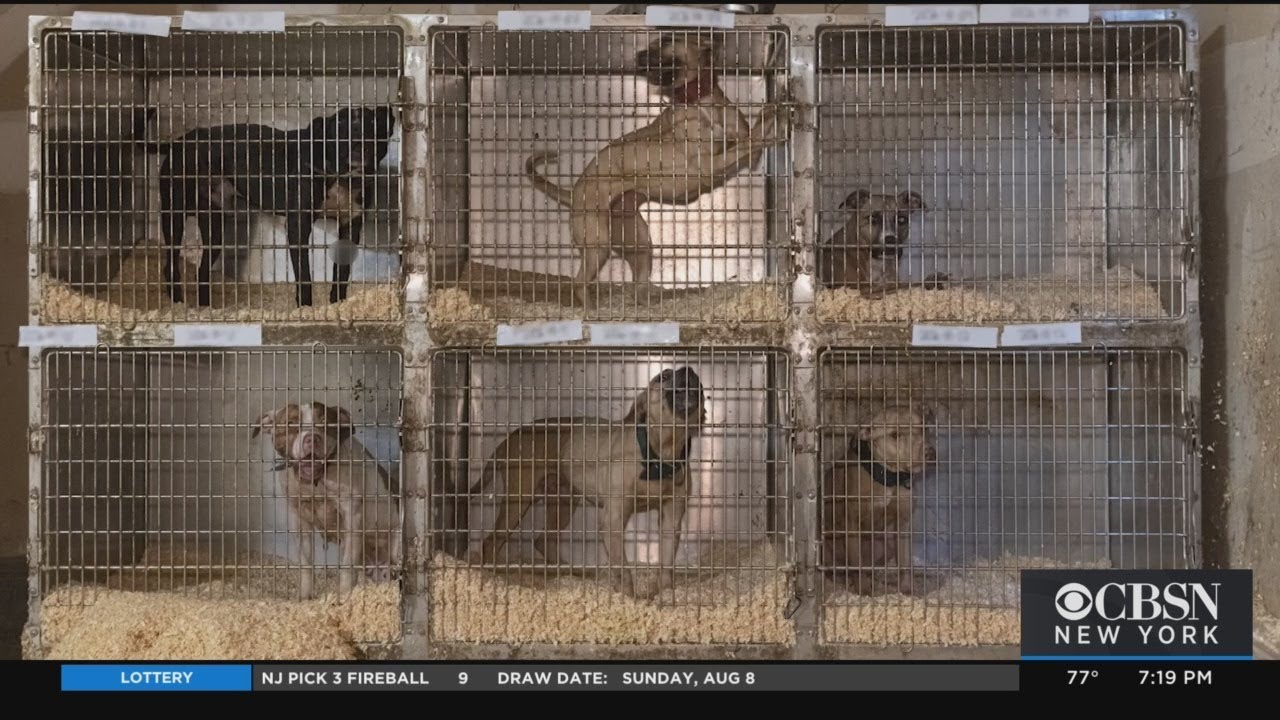
Investigators said the case had been open since early 2021. Search warrants were executed on July 31 and August 1 at nine places in Suffolk County, three in Nassau County, and one in Brooklyn. Eighty-one dogs were taken in New York. Eight more were taken in Connecticut. Many had scars and broken teeth. Some had no food or water. The ASPCA moved the New York dogs to an emergency shelter for forensic exams, medical care, and behavior work. Elizabeth Brandler of the ASPCA said the hope was that most of them would reach safe homes. Hope had a legal brake on it. Because the defendants had not given up ownership, the dogs could not simply be adopted while the criminal case was alive. The animals were evidence and inventory at the same time.
The business model, as prosecutors described it, is worth writing down because “dogfighting ring” is a phrase that hides the bookkeeping. Puppies as young as six months were put into practice bouts, called rolls, to see which ones would fight. A broker then matched adults by height and weight. An owner paid a buy-in, called a forfeit, to enter a dog. The winner’s owner took the pot. Spectators bet on the side. Dogs that were badly hurt, or that would not fight well enough, were killed. Prosecutors said the methods included electrocution. The same dogs were bred. Puppies from winners were sold as bloodlines, which is a marketing word for a pedigree of injuries. Alongside the animals, searches turned up weighted collars, treadmills fitted so a dog could be run while chained, break sticks used to pry jaws apart, skin staplers, steroids and supplements, devices for electric killing, and stands used to immobilize female dogs for breeding. Acting Suffolk Police Commissioner Stuart Cameron called it one of the most disturbing cases he had seen in the county. Sini’s line was plainer. The network bred dogs, tortured them, and put them in harm’s way to make a dollar.
The ten defendants ranged in age from 32 to 80. They pleaded not guilty. Most were released on their own recognizance. Paul Whelan, 57, of Shirley, was accused of hosting fights at his house. Prosecutors said there was evidence he electrocuted a dog that had been badly hurt in a bout, and that 19 dogs and fighting gear were taken from the address. Edward Hodge, 74, of Uniondale, was among those named at a second location neighbors later told reporters had not sounded, to them, like anything but a house with dogs. Darrel Madison, 44, of Mastic, was accused of hosting rolls. Twelve dogs and a fighting pit were recovered there. He was also charged with first-degree criminal possession of a controlled substance after investigators said they found more than half a kilogram of cocaine. His bail was set at $75,000. On the drug count he faced up to 20 years. On the top animal-fighting count, prosecutors said each of the ten faced up to four years, a fine of up to $25,000, or both. The drug charge was the only count in the announcement that carried a sentence a violent felony usually carries.
The other names on the complaint were Jeffrey Spencer, 65, of Wyandanch; Charles Macwhinnie, 52, of Hampton Bays; William Ashton, also known as Mr. Bill, 80, of Mastic, accused of animal fighting and of possessing fighting paraphernalia; Joseph Owens, 49, of Amityville; Jontae Barker, 32, and Jerome Chapman, 39, both of Bay Shore, described by prosecutors as breeders and sellers; and Timothy Eury, 43, of Hempstead. An attorney for Owens said his client was not part of any ring and that a dog seized at the home was a pet visiting from out of state. That claim is a plea, not a finding. It is also a reminder that a press conference names everybody in the same paragraph, and a trial, if it happens, is supposed to split them.
Sini used the announcement to empanel a special grand jury on crimes against animals, with a brief to recommend stronger laws. He said the cruelty had to be treated seriously and that recommendations would follow. New York’s top count of four years for the fighting offense was the reason that brief existed. A state that seizes 89 dogs and then offers, as the ordinary maximum, a term shorter than many burglaries, has already told prosecutors what the legislature thinks the crime is worth. The grand jury was an admission that the statute was the soft point. Whether its recommendations became law is a separate public record. This desk will not pretend a 2021 microphone answered it.
Other courts, later, treated similar facts as if the animals were the point and not a prop. In February 2025 a Paulding County, Georgia, jury convicted Vincent Lemark Burrell, 57, of 93 counts of dogfighting and 10 counts of cruelty to animals. The judge stacked the maximums. The sentence was 475 years. The case began with an Amazon driver who saw dogs chained in a yard in November 2022. Prosecutors who specialize in animal cases said the number was meant to be noticed, because the fights themselves rarely are. On September 10, 2026, a federal judge sentenced LeShon Johnson, a former NFL player from Broken Arrow, Oklahoma, to five years in federal prison, three years of supervised release, and a $30,000 fine after a trial conviction on six dogfighting counts. The Department of Justice said testimony showed he had run a breeding and sale operation since at least 2007. He had already pleaded guilty to Oklahoma dogfighting charges in 2004. In England, on June 3, 2024, a Chelmsford jury convicted a group that included a man known in the trade as Dr. Death. Prison terms of five years, four years, and three and a half years followed, with a fourth defendant given unpaid work and all of them banned from keeping dogs for a decade. None of those defendants is a substitute for a Suffolk County judgment. They are the comparison that makes the New York maximum look like a policy choice.
The 89 dogs were the evidence a camera can understand. A scarred dog in a kennel does not require a jury instruction. The implements on a table, laid out the way police lay out guns, tell a viewer that this was a craft with tools. What the tools do not tell you is whether William Ashton, at 80, or Paul Whelan, or the Bay Shore breeders, ever served the four years the statute allowed. Years after the rescue, the arrest list is still easier to retrieve than a sentencing sheet. That is not proof the cases were dropped. It is proof that the public record of punishment did not keep up with the public record of the raid. Animal cases often end in pleas that never earn a second headline. If that is what happened here, the four-year maximum was a ceiling the bargains sat under, and the cocaine count was the only charge built to scare.
Sini said many people keep dogs as family and that this network had treated dogs as a way to make money. Both things can be true without making the prosecution a sentimental story. Dogfighting is a gambling business that uses an animal until the animal loses, and then destroys the inventory. The rolls exist to test product. The bloodline sales exist to monetize the winners. The electrocution, if proved, is quality control. Calling it a hobby is how neighbors miss a pit in a garage. The neighbors in Uniondale told reporters they had heard nothing unusual. A quiet street is not an alibi. It is how a business that depends on not being heard prefers to operate.
The AEGIS Alliance has covered other fights over what the law will allow people to do to animals, including the breeding ban on killer whales and dolphins that treated captivity itself as the harm. A dog chained to a treadmill is a different industry and the same argument about whether an animal is property with no further claim. More of the crime file is in Crime News. The Suffolk announcement promised accountability and a special grand jury. The dogs got a shelter, a vet, and a legal status that kept them in limbo. The men got bail conditions and a statute that topped out, for the fighting itself, at four years. Until a judgment says otherwise, that is the whole public ending, and it is a thinner ending than 89 dogs deserved.