
Alexander Townley Got Paid to Watch The Simpsons for Predictions, and Al Jean Called the Hits Educated Guesses
Couch Potato Prophecy: The Curious Case of the Paid Simpsons Predictor

NOTTINGHAM, ENGLAND — Alexander Townley was 26, a lifelong Simpsons watcher in Nottingham, and in early 2022 somebody offered to pay him to keep doing it. The fee, reported at the time as about £5,000, or $6,804, came through a promotion tied to an online casino and reached the press by way of Jam Press. The New York Post and LADbible wrote it up as the job nobody believes until the proof arrives in a box. Townley’s brother had tagged him in an advert seeking people to sit through the series and pull out the jokes that later looked like prophecy. He told Jam Press he had wanted that arrangement for years. “I’m a diehard Simpsons fan and watching it for money is something I’ve always dreamt of.”
The work, as he described it, was not a couch and a remote. He was asked to analyse each episode for anything aimed at the future, which on this show is most of the background. He said nobody believed the gig was real until vegan doughnuts started showing up in the mail, a weekly delivery that did more for his credibility than the invoice. When the February 2022 stories landed, he was on season 18 of what was then a 33-season run, with hundreds of episodes still ahead of him. He had already noticed the joke folding back on the job. There are scenes of Marge sitting in front of Itchy & Scratchy with a notepad, treating a cartoon cat-and-mouse short as if it were evidence. Townley said that was, uncomfortably, his Tuesday.

The list he was hired to extend was already a folk genre. “Bart to the Future,” season 11, episode 17, aired March 19, 2000. Bart is shown a vision in which his sister Lisa is president of the United States and tells her staff, “As you know, we’ve inherited quite a budget crunch from President Trump.” Milhouse, as a cabinet secretary, answers that the country is broke. Writer Dan Greaney later told The Hollywood Reporter the name was chosen because a Trump presidency “just seemed like the logical last stop before hitting bottom,” and because it matched a joke about America going off the rails. Trump had already flirted with a Reform Party run while the episode was in production. The laugh was at a blowhard, not at a calendar.
Other entries in the folk list are real gags that aged into headlines, and they should be separated from the ones that are just a freeze-frame with a caption. A 1998 episode includes a sign reading to the effect that 20th Century Fox is a division of Walt Disney, decades before Disney bought most of Fox. Gadgets in the background have been lined up, with varying honesty, against autocorrect, smartwatches, and video calls. A Lady Gaga Super Bowl performance became another entry after she actually played the halftime show in 2017. In 2024, writers and fans set the 2016 episode “Friends and Family” next to Apple’s Vision Pro, because the show had already put a bulky face-computer on a Simpson and let the joke be about how isolating it looked. Volume is the uncredited co-author. A series that began in 1989, and that by late 2025 was in a 37th season with roughly 800 episodes, has had more chances to hit than a prophet who issued a few hundred quatrains and then died.
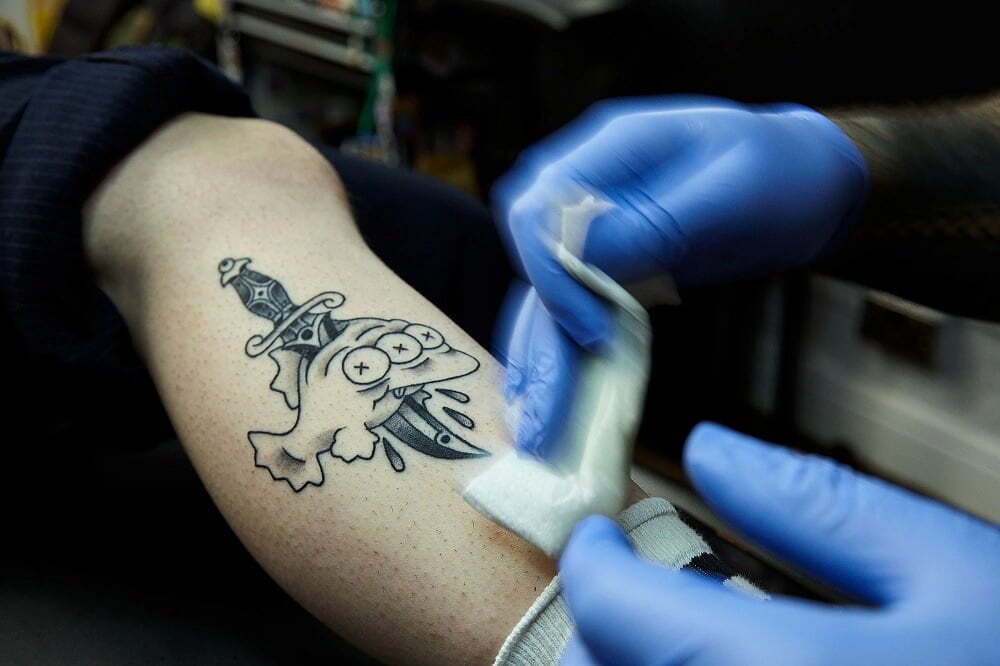
The man who has actually run the writers’ room for more of those years than anyone else does not talk like a mystic. Al Jean, the longest-serving showrunner, sat down with MIT Technology Review for a piece published October 30, 2025, as he prepared to leave the job. He said the Trump gag “definitely got huge” after the 2016 election. The original pitch for the line Lisa speaks had been Johnny Depp. Depp stayed in the script for a while. Trump was funnier. Jean’s memory of the year 2000 is the part the listicles skip. Trump really was talking about running. “Like a lot of our ‘predictions,’ it’s an educated guess,” Jean said. He declined to say whether the real presidency was a good thing. He did say Lisa was written as the president who comes after that disaster, and that with Trump elected again he still hoped the show’s version, a Lisa administration, might be the next turn of the wheel.
Jean also described the short that turned the gag into a minor industry. In July 2015 the show posted “Trumptastic Voyage,” a minute-and-a-half in which Homer is paid to hold a sign, gets too close to a hairpiece, and is thrown out the other side of a campaign announcement. Jean told MIT Technology Review the short predicted Trump would run in 2016, 2020, 2024, and 2028, “so we’re three-quarters of the way through that arduous prediction.” By the autumn of 2025, three of those four cycles had in fact included a Trump campaign, and the third of them had returned him to office. The 2028 line is still a joke sitting in a drawer. It is not a result. People who clip the short and call it “Bart to the Future” are making a second, smaller error that fact-checkers have already flagged. The 2000 episode and the 2015 short are different pieces of television. Mixing them is how a sight gag becomes a scripture.
Jean’s account of how the reputation feels is the most useful thing anyone hired to catalogue the hits could have been handed. Apart from what the elections did to the actual world, he said, the staff were amused that a line came true. He likes the idea that strangers think he knows the future. It is, in his phrasing, a pleasant reputation, and it only takes a handful of lines that land, or land a little too close, before a cartoon is treated as an oracle. That is the whole business model of the paid watcher. The misses never circulate. The hits get a thumbnail, a countdown, and a sponsorship. Townley’s doughnut boxes were the honest version of the arrangement. Somebody wanted a fresh reel of coincidences, and a fan in Nottingham was happy to be the clerk.
The coincidences Jean still finds strange are not all political, and not all of them survive contact with a pause button. He has mentioned a brochure in a 1997 New York episode with a price that, next to a drawing of the towers, can be stared at until it resembles an 11. Internet culture did the rest. Claims that the series predicted a specific death, a specific disaster date, or a private scandal usually collapse when someone opens the episode instead of the screenshot. PolitiFact and other checkers have spent years swatting versions of “The Simpsons predicted this exact week,” including false rumours that the show depicted a particular death that is simply not in any episode. The AEGIS Alliance will not baptise a writers’ room as an intelligence agency. A room that reads the newspaper, exaggerates the vice it just read, and then keeps the show on the air for four decades will collide with the future. That collision is a mirror. It is not a source.
There is a meaner reading, and it fits the show better than the spooky one. The Simpsons has spent its life mocking a country that repeats itself. A tycoon with a television habit runs for president. A corporation swallows a studio. A phone finishes your sentence wrong. A headset promises a better world and delivers a living room. None of those jokes required a time traveler. They required staff who assumed the greediest or laziest version of a trend would win, because that version is funnier and, often, correct. Greaney’s line about “the logical last stop before hitting bottom” is a theory of American politics disguised as a throwaway. Jean’s hope that Lisa might still be next is the same theory, told from the other side of two elections. The comedy is the argument that institutions drift toward the bit.
By the time Jean gave the MIT interview, the series he was leaving had outlived the job description Townley answered. Season counts had moved. Episode counts had moved. The Trump line had gone from a one-off shock to a reference people quote without having seen the episode, which is the final stage of a television joke. Jean said he likes being thought of as someone who knows the future. He also described the mechanism as a guess made by people who were paying attention in the year 2000. Both can sit in the same interview. The paid fan in Nottingham and the showrunner in Los Angeles were doing versions of one task: noticing which gags the culture would be willing to call magic. The AEGIS Alliance’s preference is to keep the gags, lose the magic, and remember that a country predictable enough to be written three decades early has a worse problem than a cartoon.
Related from The AEGIS Alliance: Trevor Moore and The Whitest Kids U’ Know, Richard Cove and the NHS 111 calls, and more Odd News.







My kind of job.