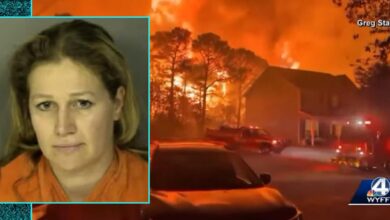
Carolina Forest’s 95-Day Covington Drive Wildfire Scarred Myrtle Beach Homes With Smoke While Alexandra Bialousow’s Case Ended in Diversion


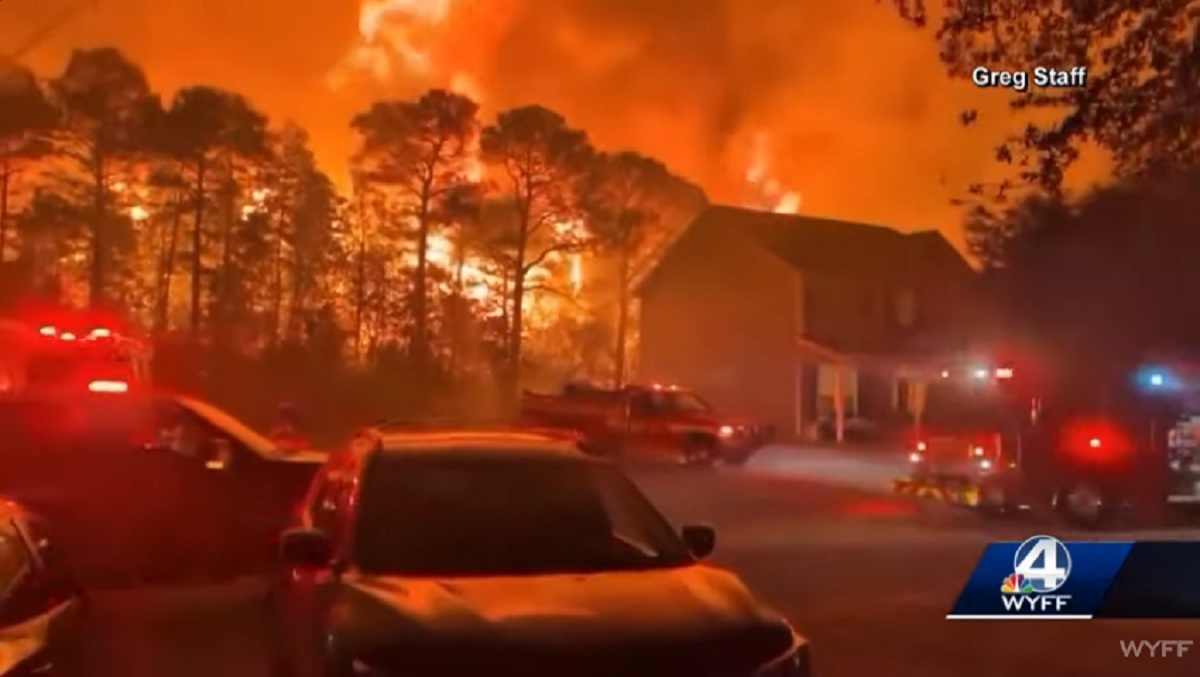
A backyard debris pile on Covington Drive did not look like a state emergency when it was lit on the afternoon of March 1, 2025. Horry County was already under a burn ban. The National Weather Service had posted a Red Flag Warning. Within hours, crews were pulling families out of Walker Woods and Avalon, and the glow behind Carolina Forest was running through pine that sits cheek to jowl with subdivisions. Governor Henry McMaster answered the next day with a statewide burning ban and a state of emergency. What followed was not a one-night scare. The South Carolina Forestry Commission did not call the Covington Drive fire controlled until June 4, 2025, the 95th day, at 2,059 acres. Local desks later called it the longest-burning wildfire in state history.
No homes were lost. No injuries were logged in the official tallies. That luck is the part neighbors still argue about, because the absence of a collapsed roof did not mean the absence of a bill. On the criminal side, the state never charged arson. Six days after ignition, the Forestry Commission booked 40-year-old Alexandra Bialousow, a Myrtle Beach native who works in health care and as a substitute teacher, into the J. Reuben Long Detention Center on two misdemeanors: regulation of fires on certain lands, first offense, and negligently allowing fire to spread to lands of another. Investigators said a fire pit sat too close to a tree line without an adequate water source or garden tools. She posted a $15,000 bond and went home. A conviction at trial would have meant up to 60 days in jail and a $400 fine. The woods had already consumed a summer.
The Clock the Public Saw, and the Clock the Duff Kept
Containment numbers moved in public and lied in the soil. Crews reported the fire about 30 percent contained by March 4 and near 55 percent around March 8 and 9, after nearly a week of wind. By April 7 it was listed near 90 percent. The statewide burn ban lifted on April 2. Full containment did not arrive until May 21, day 82. Control, the word that means the heat in the duff is finally dead, waited until June 4. Pine straw and organic ground hold fire the way a sponge holds water. A line that looks black at dusk can smoke again at noon. Mutual-aid units spent those weeks chasing spots that the first photographs never showed.
County Councilman Dennis DiSabato told colleagues the worst structural damage he had seen was melted siding, and he credited that outcome to something closer to providence than to planning. Chairman Johnny Gardner called the firefighters heroes and said “Team Horry” was a vow, not a slogan. Schools stayed open. Superintendent Cliff Jones defended that call as a way to give families a fixed point while roads shifted. About 20 homes were evacuated early, with a gathering point at the Carolina Forest Community Center. The Forestry Commission’s arrest release tied the start to the Covington Drive debris burn. WBTW’s anniversary timeline and WPDE walked the same dates.
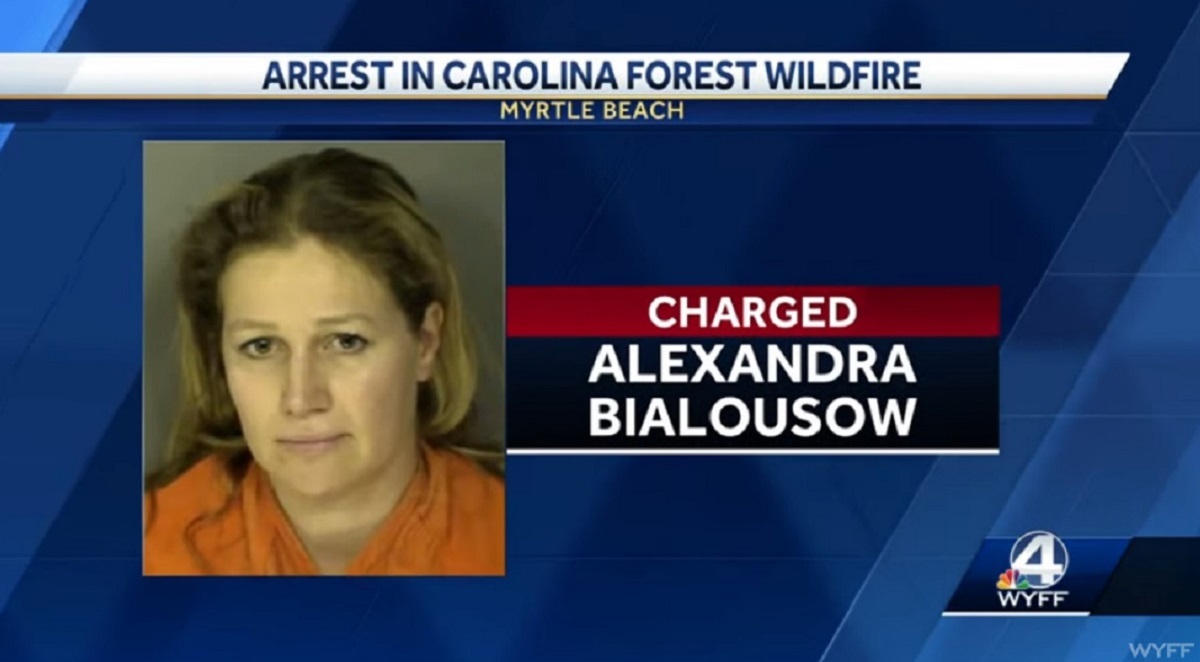
Neighbors were not reading the charging statute. One resident told WMBF, “She deserves to have consequences.” National write-ups turned a misdemeanor warrant into a portrait of a woman who had torched 2,000 acres on purpose. The commission’s language was narrower. She allegedly let a fire get away during a ban. The Post and Courier later noted a sharper oddity: she was not charged with violating the statewide burning ban, and she was not among the people cited for the county ban. The story the county told at the microphone and the counts on the warrant were not the same document.
A Diversion on the Morning a Jury Was Supposed to Sit
Bialousow denied she caused the Carolina Forest fire. Attorney Jonny McCoy demanded a jury and later moved to dismiss. His theory was simple and aggressive. The warrants, he said, accused his client of missing a hose and tools, not of choosing to burn a forest. He said investigators “lied about her not having gardening tools” and “lied about her not having a water hose.” He called her a sacrificial lamb. On October 22, 2025, with trial set to open in Myrtle Beach, the Forestry Commission offered a diversion program instead. She took it. Community service or a class. No guilty plea. If she finishes, the misdemeanors are dismissed and eligible for expungement. Horry County and McCoy both stressed the same line to WPDE: diversion is not a conviction and not a finding of innocence. Commission spokesman Doug Wood confirmed the deal and declined to narrate it.
“It’s a very traumatic experience,” Bialousow said afterward, describing gossip, fear of going home, and children bullied over the arrest. “My chest is lighter now.” McCoy was not finished with the politics of the booking. Standing outside court, he told reporters she was arrested because “somebody powerful wanted the investigation in the Carolina Forest fire to stop,” and that the stop had worked. He said what remained was “conspiracy and speculation.” He also said that if the commission failed to put out a public statement resolving the case without a guilt finding, the defense would head back toward a trial date in January. Anniversary coverage in March 2026 did not describe that January trial opening. The criminal file, in the public record neighbors can actually read, stayed parked in diversion while the trees did not grow back on a press release.
That split is the story The AEGIS Alliance keeps finding when a disaster needs a face before it needs a mechanism. A name travels farther than a docket. The same habit shows up when a complicated scene gets reduced to one defendant, whether the file is a wildfire or a fatal police call in rural Alabama. The public gets a villain. The statute book gets a misdemeanor written when fines were still priced for the 1960s.
The Houses That Did Not Burn Still Sent Invoices
A year after ignition, the recovery that mattered to homeowners was happening in living rooms, not in a courtroom. WPDE followed Carolina Forest resident accounts of smoke that got into walls, carpet, and windows even where flames never crossed a threshold. One homeowner, identified in that reporting as Scholl, said workers did not replace siding until September 2025, six months after the fire. Carpet came out. Walls were scrubbed and repainted. More than a dozen windows and vinyl siding had to be replaced. Contractors wanted payment before insurance and the mortgage company finished arguing. She took out loans. She described being threatened with a lien. “It was not a process, a journey that I would wish on anyone,” she said. “I’m still fighting.” The full private cost of a fire that “destroyed no homes” may never be totaled, because smoke loss hides inside claims files.
State Representative Tim McGinnis used the burn to demand a statute with teeth. He said millions of dollars had been spent fighting a debris fire and that people should think twice before they burn outside. State Forester Scott Phillips agreed the ticket amounts were old, most of them born in the 1960s, and said the Forestry Commission was ready to look at them with the General Assembly. McGinnis filed in that direction in March 2025, with Representative David Hiott among later co-sponsors. Whether that bill became a harder penalty is a separate legislative question from whether one household was the right defendant. A $200 ticket from another era does not explain a 95-day campaign. Neither does a diversion form.
By the summer of 2026 the fire had also become a line in political travelogues. The Sun News folded it into a look back at Senator Lindsey Graham’s stops, the kind of sentence that turns an evacuation into a campaign backdrop. Carolina Forest is not a wilderness unit. It is HOAs, rental traffic, and timber soils that store heat. A pit that looks finished at dusk can walk into the next tract by morning. The ban existed because March on the Grand Strand can do exactly what March 2025 did.
The AEGIS Alliance has covered other shocks where the first booked name swallows the ledger, from industrial spills that wipe out river life to sewage line failures that dump into public water. The pattern is civic, not botanical. Someone must pay, and the first person photographed in an orange jumpsuit becomes that someone. Bialousow’s deal does not prove she was blameless. It also does not prove the commission proved a theory a jury was never allowed to test. McCoy is still talking about civil action. Homeowners are still talking to adjusters. The needles are still missing.
Readers who want the wider file can follow environment reporting, crime news, and U.S. news from The AEGIS Alliance. A diversion class does not replant Carolina Forest, and a mugshot does not explain how a banned burn became the longest fire the state has had to count.