Pavel Durov Faces a French Investigation, a Russian Terrorism Warrant, and an Australian Court Case After Le Bourget


Paris wants a criminal defendant. Moscow wants a wanted man. Canberra wants a civil penalty. All three are talking about the same messaging app, and none of them has finished.
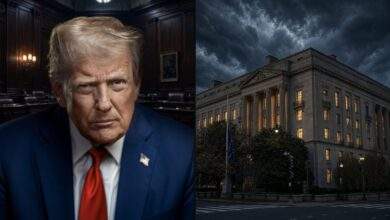
French officers took Pavel Durov off a private jet at Paris-Le Bourget on the night of August 24, 2024. He had flown in from Azerbaijan. Four days later, prosecutors placed the Telegram founder under formal investigation on twelve counts that include complicity in distributing child sexual abuse material, drug trafficking, organized fraud, and money laundering they say moved through the app. Bail was set at €5 million. Judicial supervision followed, with a travel ban and police check-ins. The AEGIS Alliance is less interested in the runway photograph than in what the file became after the handcuffs came off. Durov can fly. The French investigation has not closed. A Russian warrant and an Australian lawsuit arrived later, each using a different statute to argue that Telegram’s refusal to take things down is itself the offense.
Durov was born in Russia, built VKontakte, launched Telegram in 2013, and left that country in 2014. He holds French and Emirati citizenship. Reporting has also described a Saint Kitts and Nevis passport. He lives much of the time in Dubai, which has long functioned as the company’s operational home. French investigators did not claim he personally ran a trafficking ring. They claimed the product’s design, and the company’s answers to police, made other people’s crimes easier. President Emmanuel Macron called the arrest a judicial matter. That sentence did not stop governments from reading Le Bourget as a template.
Twelve counts, and a leash that eventually came off
The French theory is complicity through non-cooperation. A Carnegie Endowment analysis published on September 9, 2026, said prosecutors had described Telegram as systematically ignoring court orders, citing a figure of 2,460 disregarded orders between 2013 and 2024. Durov has called the case legally and logically absurd and has said many requests arrived with procedural defects. Statutory exposure discussed in French reporting has been described as reaching twenty years. That is a ceiling on paper, not a sentence. There has been no public trial and no verdict.
Judicial supervision is a set of conditions, not a cell. Through the winter of 2024 and into 2025, Durov could not leave France without permission. In March 2025 an investigating judge allowed a temporary exit. He left on March 15 and returned to Dubai. In the summer of 2025 the conditions loosened again, including short trips with notice. France 24 and POLITICO reported that on November 13, 2025, the travel ban and the Nice check-in requirement were lifted. Lifting a restriction is not an acquittal. French investigating judges can keep a dossier open for years. Anyone who writes that Durov “walked free” is skipping the cabinet where the twelve counts still sit.
After the detention, Telegram talked more openly about hashing for child-abuse imagery and about removing channels. Critics called the shift cosmetic. Supporters called the French case a backdoor campaign that could not get through parliament, so it went through a holding cell instead. The AEGIS Alliance has covered that instinct before, including the pressure around WikiLeaks founder Julian Assange, where states leaned on a person because they could not seize the publishing infrastructure.
Apple pulled the app, and Durov blamed an extortion trick
On August 4, 2026, the moderation argument stopped being abstract. Apple briefly removed Telegram from the App Store. Apple said its review found content that violated rules against child sexual abuse material, and that the app was restored after the developer removed the content and banned the user. Telegram told 9to5Mac that Apple had reported one user sharing that material, that the user was banned immediately, and that Telegram had removed more than 337,900 groups and channels tied to such material in 2026. Those are the company’s figures, not an independent audit.
Durov then published a longer account. He said Apple removed Telegram before contacting the company. He described a takedown-extortion scam in which an attacker edited an old message inside an active public group, inserting illegal material so that ordinary members would not see it and report it, then flagged the content to Apple in an attempt to knock communities offline when owners refused to pay. “If an app used by more than a billion people can be removed from the App Store without prior warning, any app can be,” he wrote. The French indictment and the Apple removal are not the same event. They rhyme. Both treat a public chat surface as something the owner can be made to answer for, on a clock set by someone else.
Moscow’s warrant, and a messenger already hard to open inside Russia
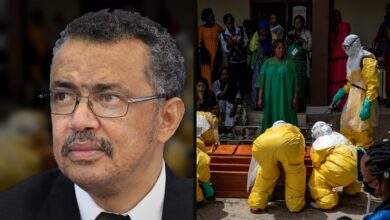
On July 29, 2026, Russia’s FSB said it had charged Durov with facilitating terrorist activity under Part 1.1 of Article 205.1 of the criminal code and was placing him on an international wanted list. The service said Telegram had failed to remove channels, chats, and bots used by Ukrainian special services and by groups Moscow labels extremist, and that those channels had been used to prepare sabotage, killings, and cyber fraud inside Russia. State agencies said the charge can carry up to fifteen years, with a path toward a life term in some readings. The BBC and Al Jazeera treated the filing as a sovereignty fight. Telegram’s account posted an old photograph of Durov raising a middle finger. His French lawyer, Philippe de Veulle, told state media that France does not extradite its citizens and that any Interpol notice would face extra scrutiny if it looked political.
The warrant did not arrive in a vacuum. Durov wrote in late February 2026 that Russia had already opened a criminal case and was “fabricating new pretexts” to restrict access. Meduza reported that Telegram had been effectively blocked inside Russia since the summer of 2025, with the blocks becoming widespread in 2026, so that the app was barely usable without a VPN. Two days before the July charge, Kremlin spokesman Dmitry Peskov said Moscow was still contacting Telegram’s administration and had not seen reciprocal steps. Using the app was not itself made a crime. The founder was. Readers who want the older map of Russian surveillance can start with The AEGIS Alliance file on WikiLeaks’ Spy Files Russia.
Australia sued the company, not the man
The same week, Australia’s eSafety Commissioner filed civil penalty proceedings in the Federal Court against Telegram FZ-LLC. Commissioner Julie Inman Grant said the case concerned material linked to the Christchurch and Buffalo attacks, including videos of terrorist executions and mass shootings that stayed up after Australian users reported them. The regulator alleged some posts remained available for as long as three weeks, and that known terrorist videos had in some instances sat online for nearly three months before removal. The maximum civil penalty cited was A$54.6 million. eSafety is not seeking to jail Durov. It wants a court to declare breaches of the Online Safety Act and to set a penalty.
Inman Grant said the agency had started asking what Telegram was doing about terrorist material in March 2024 and then endured months of what she called unresponsiveness. She also said the company became more compliant after the French arrest, and that a permissive environment for terrorist content remained. Australia had already fined Telegram A$1 million in February 2025 for failing to answer questions on time about child-abuse and extremist material. A fine for silence and a lawsuit over videos that stayed up are different tools. Together they show a regulator that decided correspondence was not enough.
Carnegie’s Maria Kolomychenko put the contradiction cleanly. France, Russia, and Australia all complain that Telegram will not remove material tied to terrorism, fraud, money laundering, or child sexual abuse. The political content of those complaints does not match. Paris is using the criminal code against a French citizen over crimes on the platform. Moscow is using a terrorism statute against a man it already pushed out, while squeezing the app at home during a war. Canberra is using a safety statute against a Dubai-based company, with a dollar figure instead of a cell. A Russian wanted-list entry does not compel France or the Emirates to arrest anyone. An Australian statement of claim does not decide the Paris dossier.
The precedent is the person, not the server
The Digital Services Act already gives Brussels a civil toolbox for platforms. France reached for the penal code and put a founder in custody. That choice is why encryption advocates, child-safety groups, and rival companies all treated Le Bourget as a hunt for precedent. If the French theory holds, weak identity checks can be argued as complicity. If it fails, prosecutors will have spent years proving that an app listing is not the same thing as a conspiracy. Russia wants the opposite political result from the same lever: more takedowns, of wartime organizing rather than of narcotics markets. Australia wants the takedowns without the extradition fight.
The AEGIS Alliance will keep this file beside other European attempts to put a human or a balance sheet on a product’s design, including the Dutch GDPR penalties against Uber. Different statutes. Same instinct. Related desks are International News, Tech News, and Crime News. Durov has his passport back in practical terms. He does not have a judgment. Until a French court, a Russian process that some other state is willing to honor, or an Australian penalty order says otherwise, the Le Bourget arrest is the opening scene of a three-country argument about who owns a chat.