Qatar, Egypt, and Jordan Call Israeli Strikes That Killed 31 in Gaza a Breach of the U.S.-Brokered Ceasefire


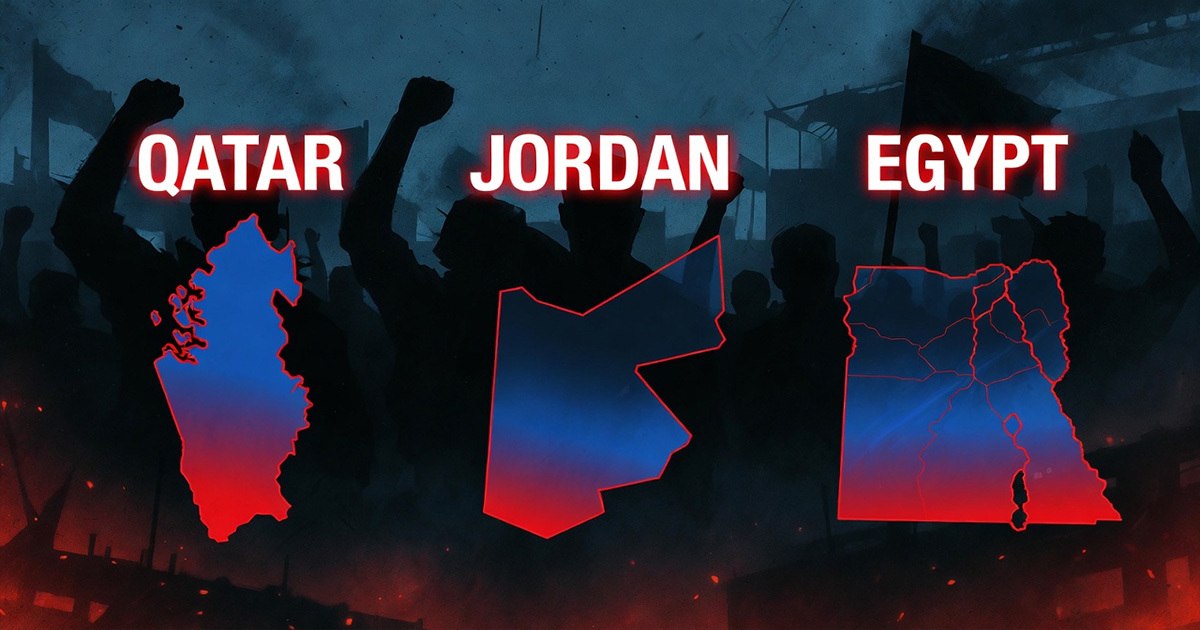
January 31, 2026, was sold as a logistics date. The Rafah crossing was supposed to reopen the next day. Instead, Israeli aircraft and ground fire tore through Gaza City and Khan Younis from dawn onward. Palestinian health authorities and regional desks put the day’s dead in the low thirties. Al Jazeera closed its live file at 31 killed, including six children and several Hamas-run police officers who had been treating the truce as a chance to stand in the open. Qatar, Egypt, and Jordan did not issue a courtesy note. They issued a joint condemnation and named the raids what they were: violations of the U.S.-brokered ceasefire that took effect on October 10, 2025.
Mediators do not scold the government they are hosting talks for unless the fiction of a truce has become impossible to sell at home. That is the angle this file keeps. Cairo, Doha, and Amman are not a protest bloc assembled for cameras. They are the rooms where the ceasefire text was written. When those rooms use the word violation after a 31-person day, the document is already thin. Israel calls the dead militants and the strikes a response to Hamas. The body count in residential blocks does not read like a surgical annex. It reads like a war that kept its aircraft after it changed its stationery.
A ceasefire that keeps producing graves
The October 10 truce was announced as the first phase of a twenty-point framework championed in Washington. Hostages were supposed to come out. Aid was supposed to go in. Reconstruction language was supposed to follow. What followed instead was a pattern UN officials later refused to dress up. On April 10, 2026, UN Human Rights Chief Volker Türk said Palestinians across the Strip were still unsafe six months after the announcement. His office counted at least 738 Palestinians killed by Israeli forces since the ceasefire took effect, with more than 2,000 wounded. “It is hard to square this with a ceasefire,” Türk said. By June, Gaza’s health ministry told NPR the post-truce death toll had passed 1,000. Independent tallies of the wider war had already crossed 71,000 Palestinian dead in late 2025 and kept climbing through 2026 as daily fire continued.
Israel’s answer is always the same paragraph. Hamas is reconstituting. Hostages remain. The army will hit what it wants. That paragraph does not explain why children keep appearing in the daily lists, or why police officers standing at a station in Gaza City are treated as lawful targets on a morning when Rafah is supposed to open. A state that needs a crossing open for optics and a bomb run on the same calendar is not confused. It is managing two audiences. One audience is the mediator table. The other is a domestic politics that treats Palestinian death as proof of resolve.
Arab News carried the three-capital statement the day after the January 31 raids. The language was careful and still damning. Repeated violations risked “dangerous escalation” and undercut “regional and international efforts to restore stability.” That is diplomat-speak for a warning that the people who built the ceasefire no longer believe Israel intends to live inside it. In August 2026 the same complaint returned with a fourth signature when Türkiye joined Egypt and Qatar to condemn another wave of strikes and to say Israel was undermining the Comprehensive Plan to End the Gaza Conflict at the exact moment a “Board of Peace” meeting was being shopped to reporters.
Starving the witnesses while the planes keep flying
The January raids did not arrive alone. The same winter Israel was pushing 37 international aid organizations toward a shutdown over staff lists the groups refused to hand over. The AEGIS Alliance report on that registration ban and High Court fight is not a separate story. It is the logistics half of the same policy. Shrink the number of foreigners who can count bodies. Keep the aircraft. Tell the world the crossing will open tomorrow. Bomb the neighborhood that would have used it.
Genocide is not a slogan on this desk. It is the word scholars, South Africa’s case at the International Court of Justice, and a growing list of states have already applied to a campaign that erased families, universities, hospitals, and football clubs while Washington sent munitions and talking points. Israeli units have been documented committing gross human rights violations across this war. The January 31 police-station strike sits in that ledger, not outside it. Killing civil police during a declared truce is how an occupying army turns “security” into a license to empty the street.
Readers who want the human cost without the mediator’s vocabulary should read The AEGIS Alliance file on Saleem al-Ashqar, the Khan Younis goalkeeper shot while looking for cooking gas, and the later reporting that compared Israel’s Lebanon playbook to the Rafah model. Those are not metaphors. Defense Minister Israel Katz said the quiet part about razing villages. Satellites showed the result. Gaza is where that model was stress-tested on a captive population.
Why the mediators matter more than the press release
Qatar hosts political offices and cash pipelines that Western capitals pretend not to see until they need a hostage deal. Egypt controls the Rafah gate and the Sinai buffer that every ceasefire treats as plumbing. Jordan carries the diplomatic language of a neighbor that already absorbed generations of Palestinian refugees and cannot absorb another engineered exodus without rupturing its own politics. When those three governments speak together, they are not performing solidarity. They are protecting the last remaining claim that they can still deliver a deal.
That claim is now a liability. Each dawn strike teaches Hamas and the Palestinian street the same lesson: the paper does not stop the jet. Each dawn strike teaches Israeli voters the opposite lesson: the paper does not restrain the cabinet. A ceasefire that requires three capitals to issue a condemnation after a single morning is a ceasefire in name. The United States can call it a framework. The graves in Gaza City do not.
There is a reason the January 31 death list included police. A truce that leaves Hamas’s civil order standing is a truce that admits Palestinians still live there. A strike on a police station during a logistics window is a reminder that Israel prefers rubble to municipal government. The same logic drove the aid-group purge. Witnesses complicate rubble. Mediators who keep showing up after the rubble are useful only if they keep pretending the next meeting will be different.
What the record looks like after the press cycle
By late summer 2026 the January statement looked less like a turning point and more like a template. New joint notes. New body counts. The same refusal in Tel Aviv to accept that a ceasefire is a restriction rather than a branding exercise. Palestinian authorities said more than a thousand people had been killed in the “ceasefire” window. UN rights officials said some of those killings may constitute war crimes. Washington kept talking about phases and boards and plans. The aircraft did not wait for the vocabulary.
The AEGIS Alliance will not launder that pattern into “clashes” or “crossfire.” Israeli forces fired. Palestinians died. Mediators who wrote the truce said the firing broke it. That is the whole story until a government that can stop the jets decides to stop them. Related international coverage and the politics desk will stay on that gap, including the later fight over who is allowed to speak for Palestine in Western capitals, from Rima Hassan’s barred Montreal trip to the courtroom that followed.
A ceasefire is supposed to be the day the killing slows enough to count the living. January 31 was the day three Arab capitals admitted they could not even sell that sentence. Rafah was on the calendar. The dead were on the ground. The planes came home. The statement was all the mediators had left to throw at a war that had already learned it could keep both the truce and the body count.