Fifty-Two Ghislaine Maxwell Documents Dropped in One Night, and the Same Civil File Still Could Not Undo Her Conviction

NEW YORK — On the night of July 15, 2021, a Thursday, the civil docket in Giuffre v. Maxwell gave the public 52 documents it had not been allowed to read. The case was already settled. Virginia Giuffre’s defamation suit against Ghislaine Maxwell, filed in 2015 in the Southern District of New York, had ended in 2017. What remained was a fight over the seal. U.S. District Judge Loretta Preska had spent the morning of July 1 on a telephone conference, walking through motions at docket entries including 345, 356, 362, 370, 422, 468, and 640, and ruling that the papers were judicial documents. Judicial documents carry a presumption that the public may see them. Maxwell’s lawyers had argued that unsealing would feed a tabloid. Preska’s answer, given in the conference and reported that day, was that “it is not the job of the Court to police press coverage,” and that “tabloid fodder doesn’t diminish the importance of materials that could reasonably affect the court’s decision on a motion.”
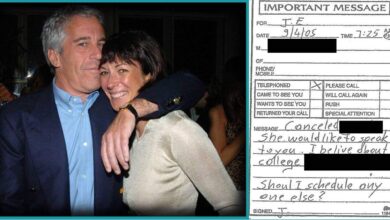
The documents hit the record as Filing 1219, a notice by Giuffre’s lawyers of the papers the July 1 order had unsealed. The New York Post’s readout, published July 16, described Giuffre’s side accusing Maxwell of a “convenient and near-total amnesia.” One passage said she could not recall a single flight with Giuffre on Jeffrey Epstein’s jet “even though flight logs show that [Maxwell] had 23 flights with Ms. Giuffre while Ms. Giuffre was underage.” Another ridiculed her claim that she could not remember the circumstances of a photograph of herself and Giuffre with a person whose name was still blacked out. Preska had ordered identifying information about non-party “Does” redacted, with two exceptions. Doe 2 was Alan Dershowitz, who had asked the court to unseal his own name. Giuffre wrote, in the hours after the drop, “Finally we are getting some transparency. There is hope.”
Unsealing is not a charge sheet
That Thursday-night pile was not the first paper The AEGIS Alliance had published on this docket, and it was not the last. The same civil case sits beside the fight, covered here, over files a judge had been asked to destroy, beside the archive this site obtained, and beside Maxwell’s arrest on July 2, 2020. Miami Herald reporter Julie Brown and her paper had intervened to pry the seal open. By July 2021 Maxwell’s criminal trial was pointed at November. She was convicted in December 2021 and, in June 2022, sentenced to 20 years. The civil unsealing and the criminal verdict are related the way a diary and a jury are related. One explains what the lawyers already had. The other is the only document that sent her to prison.
Preska’s later rounds, culminating in the January 2024 release that put on the order of 170 names into public PDFs, taught the same lesson to a much larger audience. Prince Andrew, Leslie Wexner, Bill Clinton, and Donald Trump were in those pages because Giuffre or other witnesses had already put them in depositions and exhibits. Being named in a defamation discovery file is not a charging decision. Some of the men had been accused. Some had been mentioned in passing. Some had denied everything and had never been indicted. The “list” was a docket, alphabetized by the internet into a morality play. The AEGIS Alliance has kept the flight-log arguments, the address book, and the prosecutor’s count of Trump’s trips on Epstein’s jet in their own articles, where a name can be tied to a document instead of to a rumor.
The statute that tried to finish the seal
Congress passed the Epstein Files Transparency Act on November 19, 2025, and the President signed it. The law told the Attorney General to make unclassified Epstein and Maxwell records public, with exceptions for victims and for open investigations, on a clock measured in days. Between December 19, 2025, and January 30, 2026, the Department of Justice described a production of nearly 3.5 million pages, more than 180,000 images, and about 2,000 videos. That production is what Judge Paul A. Engelmayer later looked at. It is also why an earlier fight on this site — the Department telling a court that less than 1 percent of the files were public — still matters. A percentage and a page count can both be true at different hours. “All” is a statutory word. Victims’ names, grand-jury secrecy, and ongoing matters are the holes the Department keeps driving through it. Journalist Katie Phang’s lawsuit is the argument that the holes are larger than the statute allows.
Maxwell tried to turn the new paper into a key. In a habeas petition she drafted herself, later unsealed in June 2026 and aimed at her 2021 conviction, she argued that the transparency-act documents showed withheld evidence, false testimony, juror problems, and lawyers for accusers acting as “de facto prosecutors.” She wrote that no reasonable juror would have convicted her if the material had been available to cross-examine. Assistant U.S. Attorney Lara Pomerantz, the last member of the trial team still in the office, answered in a filing of about 100 pages that the claims were speculative, wrong, and mostly too late. Giuffre, whose suit started the civil unsealing, died in April 2025. The docket she left did not die with her.
One judge opened the file. Another judge shut the door.
On August 11, 2026, Preska ruled that the transparency act beats the old protective order in Giuffre v. Maxwell, beats the sealing orders, and beats Maxwell’s privacy objections. The government had been blocked, years earlier, when it subpoenaed discovery from Giuffre’s lawyers and the protective order was waved in its face. Preska modified that order so the Department could publish the relevant materials. Bloomberg’s headline was the accurate one: victim-file material was cleared over Maxwell’s protest. The civil seal, the thing this 2021 article was about, lost.
The conviction did not. On August 24, 2026, Engelmayer filed a 67-page opinion denying Maxwell’s motion under 28 U.S.C. § 2255, signed the next day, and closed the companion civil case. He wrote that nearly all of the claims were procedurally barred, that “the overwhelming testimonial and documentary evidence adduced at trial conclusively established her guilt,” and that the petition was “demonstrably meritless, and generally based on speculation, distortions, and/or outright falsehoods.” There was, he wrote, “no fact that Maxwell fairly puts in dispute that has any potential to disturb the outcome of her trial.” The documents she called new, he said, incriminated her or confirmed rulings she had already lost. A selective-prosecution claim — that she was a scapegoat because other men were not indicted — was frivolous and should have been raised on appeal. The Supreme Court had already denied review in October 2025. The clerk was told to mail the opinion to her at the Federal Prison Camp in Bryan, Texas.
That is the split the Thursday-night documents grew into. Preska’s job, from 2021 through 2026, was to decide what the public may read. Engelmayer’s job was to decide whether anything the public has now read undoes a jury. He said it does not. The AEGIS Alliance will not treat a deposition excerpt as a fresh indictment, and it will not treat a prison denial as a reason to stop reading the file. The 52 documents were a down payment. The transparency act was a statute. The 20-year sentence is still the sentence. Related reading: the victims’ compensation program, the Bank of America settlement with survivors, and the crime desk.