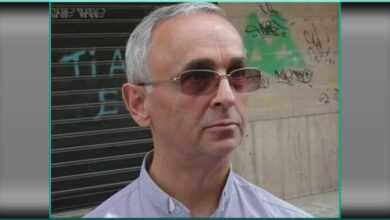
Father Michele Mottola Served a Prison Term for Abusing a Girl Who Recorded Him. Aversa’s Bishop Still Let Him Into a Jubilee Mass

AVERSA, ITALY — The phone recording that put Father Michele Mottola in a cell did not end the argument over where a convicted priest is allowed to stand. On December 28, 2025, Bishop Angelo Spinillo of Aversa let Mottola join the Mass that closed the Jubilee year in the cathedral, in a liturgy with other priests and with children serving at the altar. Days earlier, photographs from a Santo Stefano procession in Qualiano, Mottola’s hometown, had already put him back in the frame beside clergy and altar servers. By January 2, 2026, the Diocese of Aversa was issuing a written defense, a lawyer was collecting signatures for the bishop’s resignation, and a parish priest was warning that the loudest voices were about to injure the girl all over again.
That fight is the part of this case the arrest headlines never had to answer. Mottola, then 59, was taken into custody on November 8, 2019, for sexually abusing a girl in the parish of San Giorgio Martire in Trentola Ducenta, near Naples. Italian outlets did not even agree on her age, because the calendar kept moving: reporting from la Repubblica described an 11-year-old at the arrest; Le Iene later wrote that the abuse began when she was about ten and a half; sentencing coverage in 2020 called her 12 or 13. What did not move was the method. Adults around the parish did not stop it. She did, with a phone in her pocket.
The sequence, reconstructed from court-era reporting rather than from the diocese’s later press release, runs through the spring and autumn of 2019. The girl told people connected to the church. She was not believed, including, at first, inside her own family, where Mottola was the trusted priest. She recorded encounters in the rectory. In May 2019 those recordings reached both the Aversa police station, then led by Vincenzo Gallozzi, and the diocese. On May 25, 2019, Spinillo removed Mottola from San Giorgio Martire and a canonical process opened. Prosecutors in Napoli Nord were informed. Then, for months, almost nothing public happened.
The stall broke on television. On November 3, 2019, Nina Palmieri’s report on Le Iene put the girl’s audio, and her mother’s and sister’s account, in front of a national audience. Five days later officers notified a custody order from the court in Napoli Nord. In one recording later quoted by Il Fatto Quotidiano, the child told him, “Leave me alone, you must not touch me anymore.” He answered that it was only a game and that they were not doing anything wrong. Her sister told Palmieri that it takes a particular kind of desperation for a child to hide a phone and keep going because she was afraid of what he would do if he found it. The mother said, after the broadcast, that she was proud of her daughter, who had been “more cunning than the priest.”
Mottola did not confess in a straight line. At an evidentiary hearing while the investigation was still open, he claimed the girl was rambling. By the time a fast-track trial reached judgment, the story had changed. He did not come to court on September 24, 2020. He sent preliminary-hearing judge Vera Iaselli a letter admitting responsibility and arguing that not every accusation was true. He was, by then, under house arrest in a religious community. Iaselli convicted him and imposed nine years, with no mitigating circumstances, a permanent ban from public office, and damages to be set in a civil case. Prosecutor Paolo Martinelli, working under chief prosecutor Francesco Greco, had asked for nine years and six months. The parents appeared as civil parties. Their lawyer, Giuseppe Borrelli, told la Repubblica that a verdict cannot return what was taken, and he described Mottola’s conduct as a draining of the child’s soul.
On October 14, 2020, the disciplinary council of the Order of Journalists of Campania struck Mottola from the pubblicisti register. The order said his admissions and the nine-year conviction made him incompatible with the roll under article 55 of the professional statute, because the conduct had gravely compromised professional dignity. A priest who had also carried a press card lost both the pulpit and the credential. He did not lose the clerical state. Italian reporting in January 2026 was explicit on that point: the Church punished him and restricted him, and it did not dismiss him from the priesthood.
That is the hinge of the 2026 controversy. The diocese’s January 2 statement said Mottola had served the penalties imposed by the state court and by the ecclesiastical court. It said a bishop’s decree still bars him from ministry and from public events. It called the Jubilee Mass an exceptional permission, granted in the name of Christian hope in penance and redemption, and it said the exception did not cancel the restrictions. The diocese also corrected a December 30, 2025 article by lawyer Sergio Cavaliere, insisting the original report to authorities was the diocese’s initiative and that television came afterward. On the May 2019 timeline, that correction is fair. On the decision to put him in the cathedral on December 28, it does not answer the objection.
Cavaliere answered with a petition. By January 4, 2026, CasertaNews reported more than 220 signatures in about 24 hours demanding Spinillo’s resignation, arguing that a diocese should not display, or keep financially and morally supporting, a priest convicted of abusing a child. On January 6, Don Maurizio Patriciello published a defense that cut the other way. He called the petition a stab in the heart after 15 years of Spinillo’s pastoral work. He said the December 28 permission was given on a feast of pardon, in front of thousands of worshippers, with no trick and no intent to harm. And he said the thing that should worry the diocese most was the damage a fresh wave of headlines would do to the victim and her family. Both arguments can be true at once: a bishop can be wrong to stage a convicted abuser beside altar servers, and a fresh media cycle can still land on the girl who already did the evidentiary work the adults would not do.
The arithmetic of “he has served his time” deserves the same restraint. A nine-year judgment dated September 24, 2020, does not, on its face, expire before the end of the decade. Italian sentences move through pretrial custody, house arrest, good-time credits, and appellate adjustments that a press release does not itemize. The diocese and local reporters stated that the ordinary penalty had been served in full. Critics, including Cavaliere, talked as if a short term had been followed by a public rehabilitation. Readers can hold the documents that exist: a nine-year conviction, a clerical state that was never stripped, a decree that still forbids ministry, and a bishop who made exceptions anyway, including what the diocese itself called “some other exceptional occasion” before the Jubilee.
Cases like this keep turning on the same institutional habit. The person with the least power is the one who produces the evidence. A Florida teenager who installed cameras after nobody believed her, and a Bible teacher later charged in El Cajon, sit in the same file of adults who were trusted with children and then exposed by records the children, or the investigators, kept. Mottola’s letter to the judge tried to split the difference, admitting enough to seek mercy and denying enough to save a story. Iaselli did not split it. She took the prosecution’s case, shaved six months off the request, and wrote a sentence that included a lifetime ban from public office. The diocese’s later “derogation” handed him a public liturgy anyway.
Spinillo’s statement promised that attention to abuse by any other cleric would not slacken. Attention is not the same as a rule. A rule would have been simple: a priest convicted of abusing a child does not process, does not concelebrate, and does not stand in a sanctuary where children are serving, exceptional feasts included. Redemption, if that is the word the bishop wants, can happen without a photograph. The girl already understood the difference between a private harm and a public record. She made the record because the private appeals failed.
Patriciello asked the public to stop raising its voice when the victim would pay for the noise. The better request is narrower. Stop using her recording as a souvenir, and stop using the bishop’s mercy as a stage direction. The recording belongs to a criminal file. The stage direction belongs to a diocese that, six years after the verdict, still had to explain why a restricted priest was in the cathedral at all.
Related reporting from The AEGIS Alliance includes the 1,008-year sentence of Alabama evangelist Paul Acton Bowen, An Open Secret, and the Crime News archive. Anyone in immediate danger in Italy can call 112, or Telefono Azzurro at 1.96.96. In the United States the National Sexual Assault Hotline is 1-800-656-4673. In Britain the NSPCC helpline is 0808 800 5000.





The priests are the worst of them all they’re mostly made up of paedophiles. They are not honest men.
Sick pedo bastard
Jailhouse justice I see in his future.