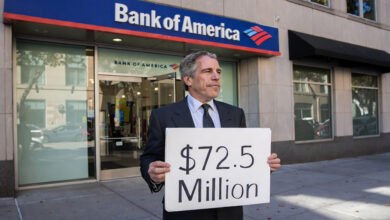
Judge Jed Rakoff Approved Bank of America’s $72.5 Million Epstein Survivors Settlement and Left the Bank’s Denial Intact


The women had to file before the judge decided they had won. The confidential questionnaire for Bank of America’s Epstein survivors fund was due June 12, 2026. The fairness hearing was not until August 27. On that Thursday in Manhattan, U.S. District Judge Jed S. Rakoff said he would grant final approval of a $72.5 million class settlement in Doe v. Bank of America, case 1:25-cv-08520. He called the money substantial. He called it justice, even if partial. He said no sum could repair what the women still carry. He rejected three accusers who argued the release was too wide because it forced them to give up related claims against the bank and other potential defendants without extra pay. A written judgment followed by the end of the week. The bank still says it did not facilitate sex trafficking. The class still says the wires did.
That sequence is the story The AEGIS Alliance is telling, not the press-release version in which a number appears and the argument ends. People who were trafficked were asked to bind themselves to a deal while the judge was still allowed to say no. He did not say no. He priced the case and closed it. About 30 percent of the fund was approved as fees for Boies Schiller Flexner and Edwards Henderson. Simone K. Lelchuk, who had administered the Deutsche Bank settlement before the same judge, is the fund administrator. The public face of the process is the 2026 Survivors Bank Settlement Fund site.
This was not JPMorgan’s client file
The complaint, filed in October 2025 by a Florida woman proceeding as Jane Doe, is built differently from the earlier bank cases. JPMorgan’s $290 million settlement and Deutsche Bank’s $75 million settlement grew out of Epstein’s own accounts. The Bank of America case, as Reuters described it, focused on use of the bank by “his co-conspirators, associates and victims,” including Ghislaine Maxwell, who is serving a 20-year federal sentence. Doe said she was living in Russia when she met Epstein and that he sexually abused her at least 100 times between 2011 and 2019. The class is not limited to women who banked where he banked. It is every woman sexually abused or trafficked by Epstein, or by any person connected to him or to any Epstein sex-trafficking venture, between June 30, 2008, and July 6, 2019.
That definition is why the objectors had a point even though they lost. A release that wide buys peace not only for one wire room but for claims that might have been aimed at other defendants who touched the same venture. Rakoff disagreed that the deal was overbroad, and he rejected the argument that it should not cover claims materially different from Doe’s. Class-action law often disagrees with holdouts. The holdouts were describing a design feature. Settlements of this size purchase institutional quiet and a haircut for anyone who wanted a narrower release and a trial story. Estimates of who is inside the class have moved with the telling: lawyers told the Associated Press as many as 75 women, other write-ups said nearer 60, and American Banker put the pool near 90. The administrator’s claim-by-claim work will be the number that matters. It will not move the bank’s sentence. Bank of America admits no wrongdoing.
How a motion to dismiss became a check
Rakoff spent the first weeks of 2026 keeping the core claims alive. He found that alleged reckless disregard could support a theory that the bank benefited from a trafficking venture. That sentence is why a general counsel settles. A Manhattan jury looking at transfers around a convicted sex offender is not a room a bank wants. The parties disclosed an agreement in late March. The AEGIS Alliance recorded that moment in the preliminary agreement piece and the figure itself in the $72.5 million announcement. Preliminary approval came in the spring. Final approval came on August 27, with the written order the next day. No banker was charged. No executive had to say the word “enabled” on the record.
Plaintiffs pointed at a Senate report’s description of roughly $170 million moving from Leon Black to Epstein, labeled in ways that sounded like tax and estate work, and at the bank’s alleged failure to file the suspicious-activity reports that statute requires once a registered sex offender is in the flow of funds. A lawyer for Black asked Rakoff in March to delay a deposition because the parties were close to settling. The delay was granted. The settlement arrived. That is how a deposition that would have put a billionaire under oath about payments to a trafficker becomes a line in a status report. The bank’s denial and the plaintiffs’ wire theory were never tried. They were priced.
The price list of looking away
Three banks. Three denials. Three funds. JPMorgan paid $290 million to survivors and, in a separate deal, $75 million to the U.S. Virgin Islands. Deutsche Bank paid $75 million. Bank of America comes in at $72.5 million and sits in the same moral neighborhood. Add the estate’s own victim payments, which have run past $200 million across the compensation program and later settlements, and the public math of this network is a stack of checks without a stack of executive prosecutions. Maxwell is in federal prison. The arrest that put her there did not pull a compliance officer in with her. The bankers who touched adjacent flows are in earnings calls. That disparity is the actual holding of these cases.
The banks are not the only institutions that took the money and the silence. UBS wired nearly $8 million toward the New Hampshire estate where Maxwell hid before her arrest. The island side of the same network is in the Virgin Islands trafficking case against the estate and in the earlier victims’ fund. The 2008 non-prosecution agreement that let Epstein plead to state charges and keep a private jet was not reopened by Rakoff’s order. Partial justice is the judge’s phrase. It is also a description of a system that prices a pipeline instead of jailing the people who kept the pipe open.
What the August order does not clear
The final approval puts an administrator between the fund and the class. It releases Bank of America from the claims the stipulation covers. It does not charge a compliance officer. It does not force a public admission. It does not answer the autopsy argument over how Epstein died in the Metropolitan Correctional Center, which The AEGIS Alliance has kept in the neck-fracture file because the body and the banks travel together in public memory even when they are different cases. Suspicious-activity reports exist so that a bank cannot say it did not notice large sums moving toward a man who had already been convicted of procuring a child. If the Senate figure the plaintiffs cite is right, the notice was available. If the bank’s denial is right, the statute is decoration. Rakoff did not resolve that contradiction. He ended the lawsuit that was asking him to.
Seventy-two and a half million dollars is a rounding error in Bank of America’s quarterly print and a life-changing figure for a woman who was abused across eight years of wires. Both facts can be true. The second fact is why the objectors lost on optics even when they had a point on scope. People who were trafficked need cash now. Institutions know that. The timing of the March deal, coming as Black’s deposition came due and as the files dump kept feeding headlines, was not an accident of the calendar. The admission that less than one percent of the Epstein files had been released and the Phang injunction against the department’s stall are the names chapter. This settlement is the money chapter. They are the same book.
For the running record, see the site’s crime news and U.S. news files. The questionnaire deadline passed in June. The check cleared the courtroom in August. It did not clear the pipeline, and The AEGIS Alliance will not write it as if it did.