
Montreal Call Floors, a Panama Collector, and Seven New Names Inside Vermont’s $21 Million Grandparent Scam Case


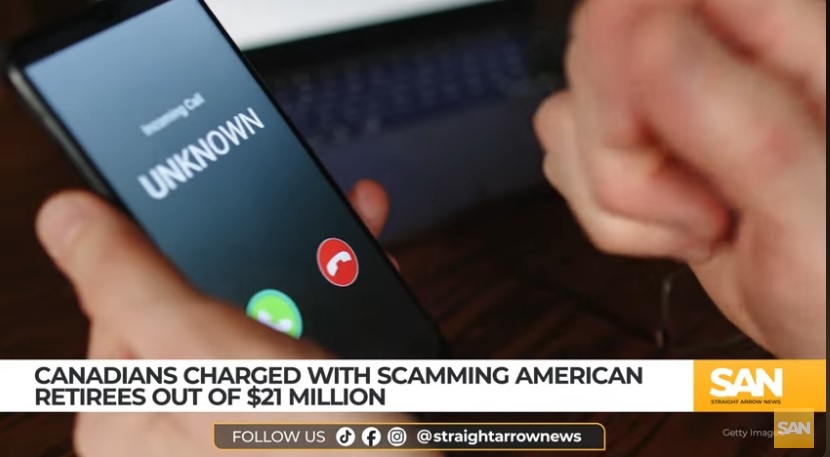
The Vermont indictment did not describe a clever cousin with a gift for voices. It described a product. On February 20, 2025, a federal grand jury in Burlington returned charges against 25 Canadian nationals. The indictment was unsealed on March 4. Canadian police provisionally arrested 23 of them that day. Two names were missing from the booking photos: Gareth West and Jimmy Ylimaki. Prosecutors say the group, from the summer of 2021 through June 4, 2024, worked phones in and around Montreal and took more than $21 million from elderly people in Vermont and more than 40 other states. Some Canadian reporting on the wider network has used a figure closer to $30 million. The number the U.S. Attorney’s Office was willing to put in the charging announcement was $21 million. That is the floor, not a promise anyone will be repaid.
The script is old enough to have a name in every state attorney general’s office. A caller claims to be a grandchild. There has been a crash, or an arrest, and bail is due today. A second voice gets on the line as a lawyer or a court clerk. The grandparent is told not to call anyone else. A person posing as a bail bondsman comes to the door and leaves with cash. The cash moves to Canada by courier, bank transfer, or cryptocurrency. The indictment says that movement was the point of the laundering counts: hide the source and hide the names.
That last step is what turns a phone lie into a company.
Who Prosecutors Say Ran the Floor
The indictment alleges the call centers were managed by West, Usman Khalid, Andrew Tatto, Stephan Moskwyn, and Ricky Ylimaki, and it charges those five with conspiring to launder the money as well as with the fraud. The aliases in the charging papers read like a shift schedule. West was “Buddy” and “Muscles.” Khalid was “Paul” or “Pauly.” Tatto was “Chevy” and “Truck.” Moskwyn was “HK.” Ricky Ylimaki was “Ruffles.” His relative Jimmy Ylimaki was “Coop.” Other defendants carried names like “Styx,” “Carter,” “Elvis,” “Brady,” “Parker,” and “Blondie.” The nicknames are not color. They are how a boiler room keeps a dozen voices from using their own.
If convicted on the top counts described in the government’s announcement, the five alleged managers face up to 40 years. The remaining defendants face up to 20 on wire-fraud theories. Those numbers are exposure. An indictment is an allegation. Most of the people arrested in Quebec in March 2025 were still fighting extradition more than a year later, which means a Burlington jury had not heard them.
West, who presented himself in Canada as a real-estate developer and a fitness personality, was arrested in July 2025 at an Airbnb in Saint-Colomban, Quebec, after months as the public face CBC had already profiled. Jimmy Ylimaki was the last of the original 25 still described as at large. In March 2026 he was arrested in Nicaragua, removed to the United States, and arraigned in Vermont. He pleaded not guilty. Vermont Daily Chronicle reported that he was, at that point, the only one of the original 25 who had actually been arraigned in the District of Vermont, because a defendant found outside Canada can move faster than a defendant contesting extradition at home. Assistant U.S. Attorney Nate Burris argued for detention and pointed to a seized call sheet that listed 34 Vermont targets by name, address, age, phone number, and a projected income range. The sheet is the opposite of a random robocall. It is a prospect list.
The Collector Who Got a Number First
The call-center defendants are not the only people who have been sentenced in this economy. Stefano Zanetti, a 44-year-old Canadian arrested in Panama and extradited, was the collector side of a grandparent-scam network prosecutors tied to the same Montreal calls. On May 4, 2026, U.S. District Judge J. Nicholas Ranjan in Pittsburgh sentenced him to 188 months, a day of supervised release, a $35,000 fine, and $780,870 in restitution. Through his plea, Zanetti accepted responsibility for losses the government put between $1.5 million and $3.5 million. Court papers described proceeds spent on a Porsche, boats, jet skis, private flights, and cocaine. Two other men who helped run the collection operation from abroad, Samuel David Ferrer Avila and Cesar Javier Chourio Morante, were convicted and sentenced after their own extraditions from Panama. The Justice Department’s announcement of Zanetti’s sentence pointed readers back to Vermont: a separate indictment there had charged 25 Canadians for the call centers feeding that conspiracy.
A Florida courier, Dave Leblanc, drew a different number in the same Burlington courthouse. On October 16, 2025, Judge William K. Sessions III sentenced him to a little more than three years and called the scheme one of the most serious frauds he had seen. Prosecutors wrote that Leblanc and the people immediately around him personally collected between $2.5 million and $3 million. The roles were specialized. Openers panicked the grandparent. A “lawyer” explained the bail. A courier took the envelope. A launderer moved it. Nobody in that chain had to be a genius. They had to be on time.
Zanetti’s restitution order is real and it is not $21 million. Luxury spending in Panama is the opposite of a recoverable asset. Porsches depreciate. The drug purchases do not come back as a check to a retiree in another state. Families who wired a grandchild’s supposed bail are not made whole by a press release.
Seven More Names, Same Script
The first indictment was not the last headcount. On November 18, 2025, a Vermont grand jury charged seven more Canadian nationals. The indictment was unsealed on May 7, 2026, the day after they were arrested in Canada. The new defendants, all presumed innocent, are Evangelos Lohaitis, also known as “Bucky,” of Saint-Eustache; Mitchell Burnett-Guarna, “Juice,” of Dorval; Kyle Lesser, “Brock,” of Notre-Dame-de-l’Île-Perrot; Luca Santalucia, “Rocco,” of Montreal, also referred to in local coverage as LaCosta St. Francis; Glen Crossley, “Buju,” of Kirkland; Cody Jodouin-King, “Lids,” of Vaudreuil-Dorion; and Panagiota Fountotos, “Nike,” of Laval. They face up to 20 years if convicted. The government says they worked the same grandparent script, in the same 2021-to-2024 window, against elderly victims in Vermont and more than 40 other states.
St. Johnsbury lawyer David Sleigh was reported as counsel for Santalucia. The others had not, at the unsealing, been appointed Vermont lawyers because they were still in Canada. The Montreal Gazette reported days later that three of the Montreal-area men arrested in the case had been granted release while the extradition fight continued. Release in Canada is not a dismissal in Vermont. It is a calendar. First Assistant U.S. Attorney Jonathan Ophardt credited Homeland Security Investigations, IRS Criminal Investigation, and Customs and Border Protection, plus local agencies across the states the calls touched and the Justice Department’s Office of International Affairs. The photograph of an arrest is easy. The flight to Burlington is the work.
Wire fraud is the statute built for this fact pattern. The call crosses a border. The money crosses a border. The victim never meets the person who wrote the script. Vermont became the venue because that is where the grand jury sat, not because one small state held every target. Rotating cities was part of the design. A police department that sees one cash pickup does not see a pattern. A federal file that sees hundreds of them does.
The AEGIS Alliance has tracked the industrial versions of this pitch for years. The Federal Trade Commission’s romance-scam tallies already showed billion-dollar losses before this indictment. The phantom-hacker cases used a tech-support voice and the same target, an older person with a balance and a phone. IRS-impostor mail dropped remote-access tools instead of a bail story. Different opening lines. Same product: urgency, secrecy, and a transfer that cannot be recalled.
The Tell Is the Request for Silence
The prevention advice is short because the scam is short. If a caller claims a grandchild is in jail, hang up and call the grandchild on a number already saved in the phone. Real courts do not send a stranger to a living room to collect bail in cash. A demand that you tell no one is not a legal strategy. It is the tell. Banks have gotten better at flagging a large cash withdrawal by an older customer. They have not gotten good enough. Couriers still arrive. Victims still hand over the envelope because, in that half hour, refusing feels like abandoning a child. That emotional math is why the industry survives every press conference.
Global News described cocaine, luxury toys, and private flights on the other end of those envelopes. The lifestyle only works if the people who sent the money never see the men who made the calls. The scripts are in English. The cash is in U.S. dollars. The organizers, prosecutors say, sold themselves as businessmen.
Readers who want the wider elder-fraud shelf can stay in crime news and on the U.S. news desk. The Vermont charges remain allegations for almost everyone on both indictments. Zanetti’s 15 and a half years are not an allegation. Leblanc’s sentence is not an allegation. The $21 million figure is what the government put in a press release, not a restitution check. Until extradition finishes, copying the call-center model is still easier than burying it.








About Fucken time ….. just saying!