Riverside County’s Reclaim and Rebuild Week Arrested Buyers by the Dozen and Rescued Two Women, Then Came Back With a Longer Local List

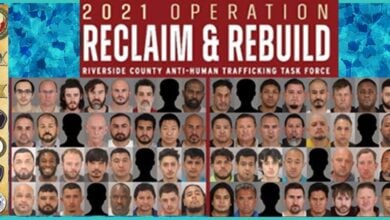
RIVERSIDE COUNTY, CALIFORNIA — The sheriff’s department did not describe a raid on a trafficking house. It described four days of advertisements. From late January 2021, Riverside County’s Anti-Human Trafficking Task Force, special enforcement teams from Palm Desert, La Quinta, Lake Elsinore, and Temecula, and officers from the Riverside and Murrieta police departments worked Operation Reclaim and Rebuild by posting decoy ads in the classified sections of sites people used to buy sex. When a man answered and showed up, they arrested him. On a parallel track, investigators answered existing regional escort ads, posed as customers, and interviewed the women who arrived. Women they did not classify as trafficking victims were arrested too. The county’s total, announced February 2, 2021, was 64 people in custody and two women rescued. KTLA put those figures on television the same day. Almost every arrest, the department said, was suspicion of soliciting prostitution.
That ratio is the story Riverside County actually published, and it is easy to lose inside the statewide banner. Reclaim and Rebuild is a week the Los Angeles Regional Human Trafficking Task Force puts on the calendar so more than 100 agencies can quote one number at one podium. In 2021 the statewide week produced about 450 arrests and 39 victims rescued, including children. Riverside’s 64 and two sit inside that stack the way a solicitation docket sits inside a trafficking headline. Two women believed to be sex-trafficking victims were pulled out. That number is real, and it is the part of the operation that matches the word “reclaim.” The other 62-odd bookings were, by the sheriff’s own description, mostly men who answered a fake ad, plus women who were interviewed and then arrested because investigators decided they were not victims.
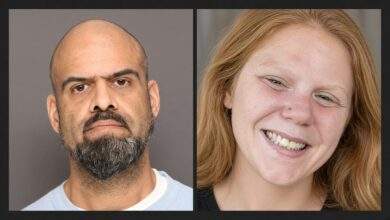
The department named two men whose charges were not the ordinary solicitation count. Issac Mciver, 26, of Lakewood, was arrested on suspicion of soliciting a minor for lewd purposes. Corey Wiggins, 20, of Moreno Valley, was arrested on suspicion of supervising or aiding a person to commit prostitution. The rest of the sheet was released on a written promise to appear. A promise to appear is not a trafficking conviction. A mugshot grid is not a sentence. The AEGIS Alliance will keep the two rescues and will not let a collage of booking photos do the work of a charging document.
The same week, a different county, a clearer split
Five years later the brand returned, and the statewide press conference finally separated the buyers from the people accused of holding victims. Between January 25 and January 31, 2026, Los Angeles County Sheriff Robert Luna said the week produced 611 criminal arrests and 170 people rescued, 156 of them adults and 14 of them children, some as young as 13. Of those arrests, 71 were suspected traffickers, 328 were sex buyers, and 16 were other sex offenses that were not human-trafficking counts. Los Angeles County’s own slice was 12 adults rescued, five children rescued, 18 suspected traffickers, and 79 sex buyers. A citizen tip about a house in Walnut started a surveillance thread that tied several suburban residences together. LAPD Deputy Chief Alan Hamilton said the children had come from Chicago, Oklahoma, Missouri, tribal land, and from California. Those are the sheriff’s and the deputy chief’s figures, carried by ABC7 and by the National Broadcasting Company’s Los Angeles station. They are also a confession the 2021 Riverside release never quite made in a single sentence: most of the “trafficking operation” is a buyer sting.
Riverside’s own later participation shows the same shape at county scale. During the 2025 edition of the operation, run from January 26 through February 1, the Riverside County Sheriff’s Department said 112 of the people arrested statewide were Riverside County residents, and that at least 13 victims were rescued inside the county. The department published 107 names and held the rest back for open investigations or to protect victims. Four of the named men were from Murrieta: Johnathan Salgado, 35; Marco Cota, 42; Charles Polhamus, 37; and Jeremiah Aprapeles, 45. Statewide that same week, agencies reported 547 arrests and 177 people identified as victims, 166 adults and 11 minors. LAPD Chief Jim McDonnell said the minors included one 14-year-old, three 15-year-olds, one 16-year-old, and two 17-year-olds. Riverside’s contribution, again, was a local arrest list measured in residents of the county, not in a published count of how many of those 112 were charged with trafficking a person rather than answering an ad.
The 2025 statewide sheet did try a different label. Organizers said 333 of the 547 were “exploiters.” That word can mean a trafficker, a buyer, or a man who paid for an act with someone police later decided was not a victim. Without the complaint, “exploiter” is a press-conference noun. Riverside’s 2021 release was more honest in its narrow way. It said the arrests were almost all soliciting. Honesty about the charge is not the same thing as a rescue, but it is better than folding a solicitation into the word slavery and hoping nobody reads the booking code.
Demand stings pad the week. They do not rebuild a life.
There is a policy argument for arresting buyers, and it is not ridiculous. Prosecutors say demand is what makes a child worth money to a trafficker, and a decoy ad is one of the few ways to put a buyer in a room without waiting for a victim to walk into a police station. Los Angeles County District Attorney Nathan Hochman used the February 2026 podium to ask Sacramento to treat trafficking of adults, not only minors, as a violent and serious felony. Hamilton, speaking about the Figueroa corridor in South Los Angeles, said his department made 192 arrests in the seven days and eight of them on that corridor, up from four the year before. The corridor is a real place where residents have spent years watching girls being sold in traffic. A sting that interrupts that block is not theater.
The theater starts when the buyer count is added to the trafficker count and the sum is announced as if it were one crime. In the 2026 statewide math, buyers outnumbered suspected traffickers by more than four to one, 328 to 71. In Riverside in 2021 the gap was starker: two rescues, and a stack of solicitation bookings released on a signature. A man who drives to a motel because he answered an ad may be guilty of a crime. He is not, on that fact alone, the person who recruited, housed, beat, or advertised the woman in the next room. Collapsing those defendants into a single “human trafficking arrest” number lets a sheriff claim a network was dismantled when the network’s customers were inconvenienced for an evening.
The women on the other side of the 2021 Riverside tactic deserve a separate sentence. Investigators did not only post decoys. They also answered real escort ads, directed women to meetings, interviewed them, and arrested the ones they concluded were not victims. That is a sorting mechanism with a jail cell on the wrong side of the sort. A woman who is afraid of a trafficker, who has been coached to say she is independent, or who does not trust the officer across the table, can fail that interview and become a defendant before she becomes a witness. The two women who were rescued are the evidence that the interview sometimes worked. The women who were booked are the evidence that the operation’s other product was more arrests. The department did not publish how many women fell on each side of that line beyond the two rescues and the overall 64.
Service providers who stood at the 2026 press conference described the week as a partnership with shelters and advocates, not only with handcuffs. That half of the brand, the “rebuild” half, is the half a booking photo cannot show. It is also the half that rarely gets a number as clean as 611. A rescued 13-year-old needs a bed, a medical exam, a guardian, and a prosecutor willing to charge the person who sold her, not the person who clicked the ad. If the only public accounting is an arrest total, the public cannot tell whether that bed existed.
Riverside County has run other operations that should not be stirred into this one. A child-exploitation warrant is not Reclaim and Rebuild, even when the same sheriff’s star is on the podium. Mixing them lets a department borrow the gravity of one crime for the press release of another. The 2021 Riverside week ended the way most of these weeks end. Sixty-four people had been arrested. Two women had been taken out of whatever they were in. The men, for the most part, had been told to come to court later. Whether Mciver, Wiggins, or any of the solicitation defendants were convicted is not in the press release, and a press release is where too many of these cases finish their public life. Count the rescues first. Then ask how many of the names were charged with trafficking a person, and how many were charged with showing up.
Related from The AEGIS Alliance: the statewide 2021 Reclaim and Rebuild accounting, the later California child-sex sweep, the Disney World employee sting, Operation Guardian in Snohomish County, and more Crime News.