Bethel Chief Chad Essert Resigns After a 70-Count Indictment as the Village Cancels His Removal Hearing


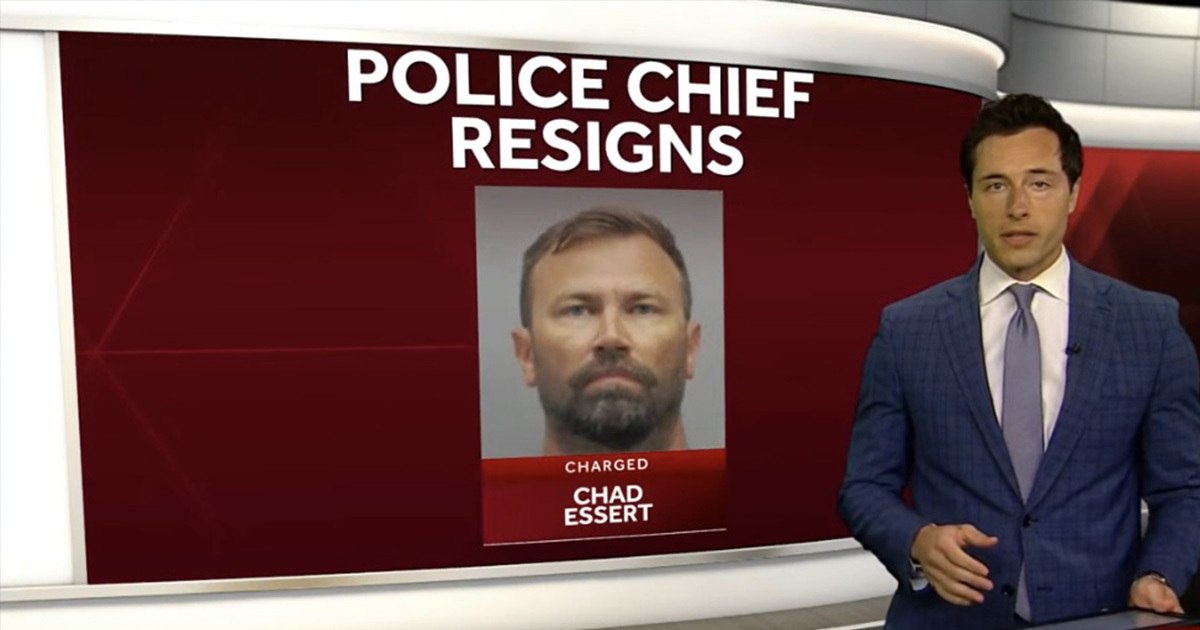
Bethel, Ohio, is a Clermont County village small enough that the police chief is a name people use at the grocery store. That name is no longer on the door. Chad Essert, 44, of Blanchester, was indicted on June 11, 2026, by a Clermont County grand jury on 70 felony counts: 56 counts of sexual battery and 14 counts of unlawful sexual conduct with a minor, all charged as third-degree felonies. The Clermont County Prosecutor’s Office says the alleged conduct ran from 2005 to 2010, when Essert worked as a Young Marines instructor and as a teacher at Scarlet Oaks in Sharonville, not during his years as a police chief. The victim named in the indictment was a student of his in that period. Prosecutors say the file is independent of an earlier local-media investigation into Essert. The AEGIS Alliance is not reprinting graphic charging language. The statutory list is in the prosecutor’s release.
Pinellas County Sheriff’s Office tactical investigators took Essert into custody without incident in Seminole, Florida, at 7:06 p.m. on June 11. He sat in the Pinellas County Jail until Clermont County deputies collected him at 4:27 a.m. on June 18 and booked him into the Clermont County Jail at 7:13 p.m. the same day. Judge Victor Haddad set a $500,000 surety bond after prosecutors asked for $1 million. Essert posted it later that week, pleaded not guilty, and, according to local television, was not placed on electronic monitoring. His lawyer, Jay Clark, told cameras the allegations are baseless and that Essert did not have an unlawful relationship with the accuser. Those are defense words. A jury will decide whether they hold.
WLWT and FOX19 reported the village end of the story on July 3. Mayor Jay Dee Noble II accepted a resignation effective July 9. Noble’s letter said the village solicitor had already been investigating after the sheriff’s office brought the allegations to the village, and that a council removal hearing had been calendared for the same July 9 date. Had Essert stayed, the hearing would have gone forward. The village is recording the departure as a resignation while under investigation, which is the Ohio formula that keeps the paper trail from reading like a clean goodbye. Noble had already filed village charges seeking removal and used the language of dishonesty, immoral conduct, neglect of duty, and malfeasance. That is a personnel file talking, not a verdict.
The Badge Arrived After the Dates in the Indictment
Ohio Attorney General officer-history records show Essert became Bethel’s chief in the fall of 2021 after leaving Fayetteville’s chief’s office in good standing. The indictment does not accuse him of committing the charged felonies while he held either chief’s job. That distinction matters for charging theory and it does not solve the command problem. A village police department is a building people walk into when they need help. For two and a half weeks after the Florida pickup, that building still had Essert’s title on it. Victims of any crime in Bethel, including people who might later become witnesses in this case, would have been asked to trust a department headed by a man facing 70 counts involving a former student. Noble’s move toward removal was the least a mayor can do once a sheriff has already done the harder work.
Sheriff Chris Stratton said a victim coming forward against someone who wears a badge takes a particular kind of courage, and that no title puts a person above the law. Prosecutor Mark Tekulve’s office framed the investigation as proof that the name on the door does not decide whether a case gets built. Assistant prosecutor Laura Baron Allen told cameras the alleged conduct stretched across years and counties and showed planning rather than a single lapse. Those are the words offices use when they want a jury to see a pattern. Clark’s reply is that the pattern is invented. Both sides will get their chance in Common Pleas Court. If a jury convicted on every count, Ohio’s stacking math on third-degree felonies would put the ceiling at 280 years. That number is a charging press-release device. Real sentences, if they come, will be a different conversation.
The AEGIS Alliance covers law-enforcement accountability as a standing beat, not a seasonal one. The same week this village story matured, a federal appeals court left a $21 million Taser judgment standing against an Atlanta officer. Earlier this summer, Washington State’s Missing and Exploited Children Task Force added 21 arrests in Snohomish County under Operation Guardian. Those files are not the same case. They are the same subject: what institutions do when the accused already holds, or used to hold, public trust. Readers who have followed this desk from early network reporting through later sweeps know the rhythm. An office announces a number. Local television films the mayor. Then the work moves into a courtroom that does not have a chyron.
What a Village Still Has to Answer
The criminal case belongs to Clermont County. The employment case closed at 12:01 a.m. on July 9. The civic case is not closed. WCPO caught Noble after the effective date calling the file a gut punch and saying the village would advertise for a replacement. He said he would do more diligence on background checks this time. Dawn Paul, a Bethel resident and business owner, told the station the hiring process itself needs more checks so the next search does not inherit someone else’s unfinished business. Those are the sentences a small town uses when it is trying to sound like it learned something. Learning would look like a public account of who inside Bethel or Fayetteville heard rumors during the teacher years and did nothing, and whether any parent or colleague tried to flag Scarlet Oaks or the Young Marines and got waved off.
Small departments hide behind scale. A village the size of Bethel can tell itself that a clean Attorney General printout and a farewell letter from another Ohio town are enough. The dates in this indictment are older than the badge. That is exactly why the hiring file matters. Hiring is a forward-looking act. It is also a decision to stop looking backward. If a department stops looking the moment a candidate produces a prior chief’s goodbye, it will keep inheriting other people’s unfinished business. Noble said he has no regrets about the past and is blown away by what the sheriff brought him. Both can be true. Only one of them is useful to the next search committee.
Essert is presumed innocent. That sentence is not a courtesy. It is the legal posture until a verdict. It does not require a village to keep him in command while the posture is tested. Local reporting put a further court date on the calendar in August. Bond conditions, device searches, and any additional victims those devices produce will decide whether this file stays a 2005-to-2010 teaching case or grows. Until a verdict, Essert is a defendant from Blanchester who used to run a village department. He is not the chief. The village has from July 9 forward to prove it understands why those two sentences are not the same thing.
Florida, Ohio, and the Geography of Delay
The Seminole arrest is not a subplot. People who face old allegations often live somewhere that is not the county that charged them. They take jobs, they take vacations, they keep a second address. A tactical unit in Florida and a dawn handoff at a county jail are the ordinary mechanics of making a 2005-to-2010 file show up in 2026. Seven days in a Florida jail before the Ohio transport is a week in which Bethel still had a chief on paper and no chief in the building. That vacuum is how rumors become policy. It is also how a department loses the people who would have been its best witnesses if a later case ever needed them.
There is a temptation, especially on cable, to treat every badge-and-indictment story as proof that policing itself is the crime. That is not this file. The file says a teacher and youth instructor is alleged to have abused a student across two counties over five years, then spent the next decade and a half collecting promotions that ended in a village chief’s office. If the state proves the first part, the second part is an indictment of every board that stamped the promotions. If the state fails, the second part is still a reminder that “good standing” is a phrase agencies use when they have not been forced to look.
The AEGIS Alliance will watch the Clermont County docket the same way it watches other crime news and police accountability files: for bond conditions, for school or youth-program records, and for whether Ohio’s peace-officer certification process treats a 70-count indictment as something other than a personnel inconvenience. Related U.S. coverage stays on the U.S. news desk. Until a verdict, the village’s job is narrower and harder than a press conference. It has to hire the next chief without pretending the last search was finished work.